Load management in return-to-sport: why continuity matters more than criteria
28
/
04
/
2026
5
min read

TABLE OF CONTENTS
auteur
Linde-Raven Depuydt
Share
Return-to-sport in team sport athletes rarely follows a linear path. While running is often a central component, their return is not limited to straight line running alone. It includes accelerations, decelerations, changes of direction, and sport specific actions layered on top of different injury profiles and rehabilitation pathways.
Within that process, load takes on different meanings depending on the environment. In rehabilitation, it is carefully controlled and progressively reintroduced. Once athletes transition back into training, it becomes more embedded in performance demands, where speed, intensity, and decision making start to drive exposure.
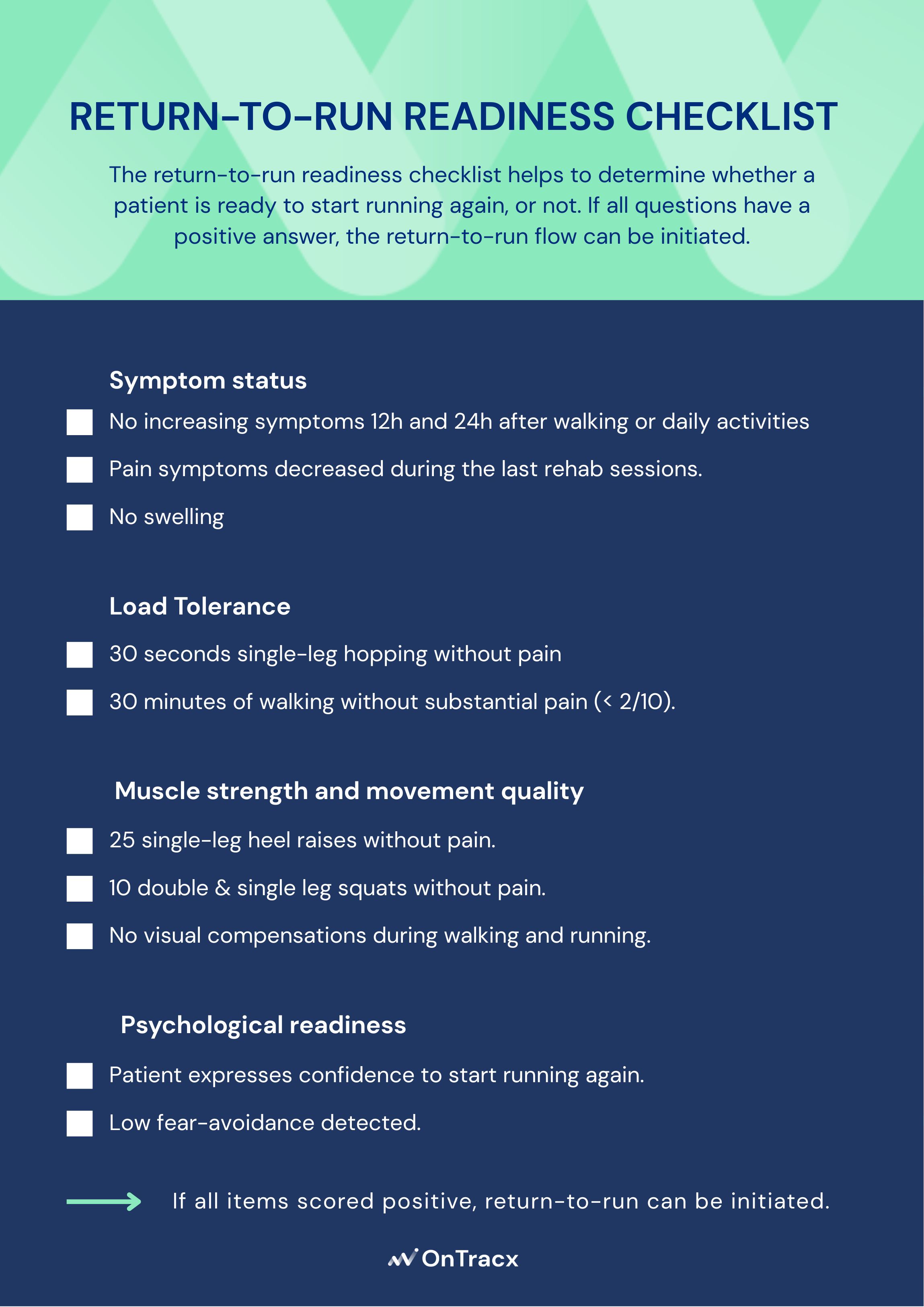
By the end of rehabilitation, most athletes have already progressed through structured criteria. Strength has improved, movement quality has returned, and return-to-run benchmarks are met. From a clinical perspective, the transition often looks successful.
However, the challenge is not what happens during rehabilitation, but how that progression holds up once the context changes and sport-specific demands begin to accumulate again.
Return to sport is not a moment — it’s a continuum
Traditionally, return to sport is treated as a milestone. Pass the tests, meet the criteria, and you’re back.
But in reality, returning to sport is not a single decision. It’s a gradual process where athletes move gradually from rehabilitation to return to run, to return to training, and eventually to full performance. Each phase introduces new demands and higher exposure to load.
Recent frameworks describe this as a continuum rather than a single clearance point. Mitchell and Gimpel (2024) highlight this well, describing return to performance as a staged process where responsibility evolves without any discipline ever fully dropping out.

What makes their framework powerful is not just the phases themselves, but how they connect. Early stages are medically led, focusing on diagnosis, acute management, and restoring movement. But even there, the goal is not passive recovery. It is already about limiting deconditioning and preparing for performance.
As progression continues, athletes move through gym reconditioning, return to running, higher speed running, agility work, sport specific drills, and finally full performance. It is a progressive exposure to increasing load, guided by coordinated decision-making across disciplines (Mitchell & Gimpel, 2024).
In theory this is well established. In practice, load management often becomes fragmented once athletes leave the structured rehabilitation environment.
The missing link: consistent load management across phases
Injury and performance both depend on one principle, the balance between load and load tolerance.
Rehabilitation focuses heavily on rebuilding tolerance. Strength improves, movement quality returns, and tissues are gradually exposed to controlled stress. But sport is not controlled. It is repetitive, unpredictable, and often high in volume.
Load management itself is not new, but it is often used to describe different things depending on the context. In return to running, OnTracx approaches it from a mechanical perspective, focusing on how load accumulates on tissues and contributes to overuse and injury risk. In team sport environments however, it is more often linked to physiological and performance parameters such as speed, accelerations, and decelerations. Both perspectives are valid, but they are often treated as separate concepts, with different bodies of literature that rarely connect. See also our blog on physiological vs mechanical load in running rehab.
What’s often missing is continuity. Load is managed in isolation within phases, rather than consistently across them. As a result, athletes move from a structured low load environment into a high load sport environment without a clear progression strategy linking different phases.
Why return-to-run is the critical bridge
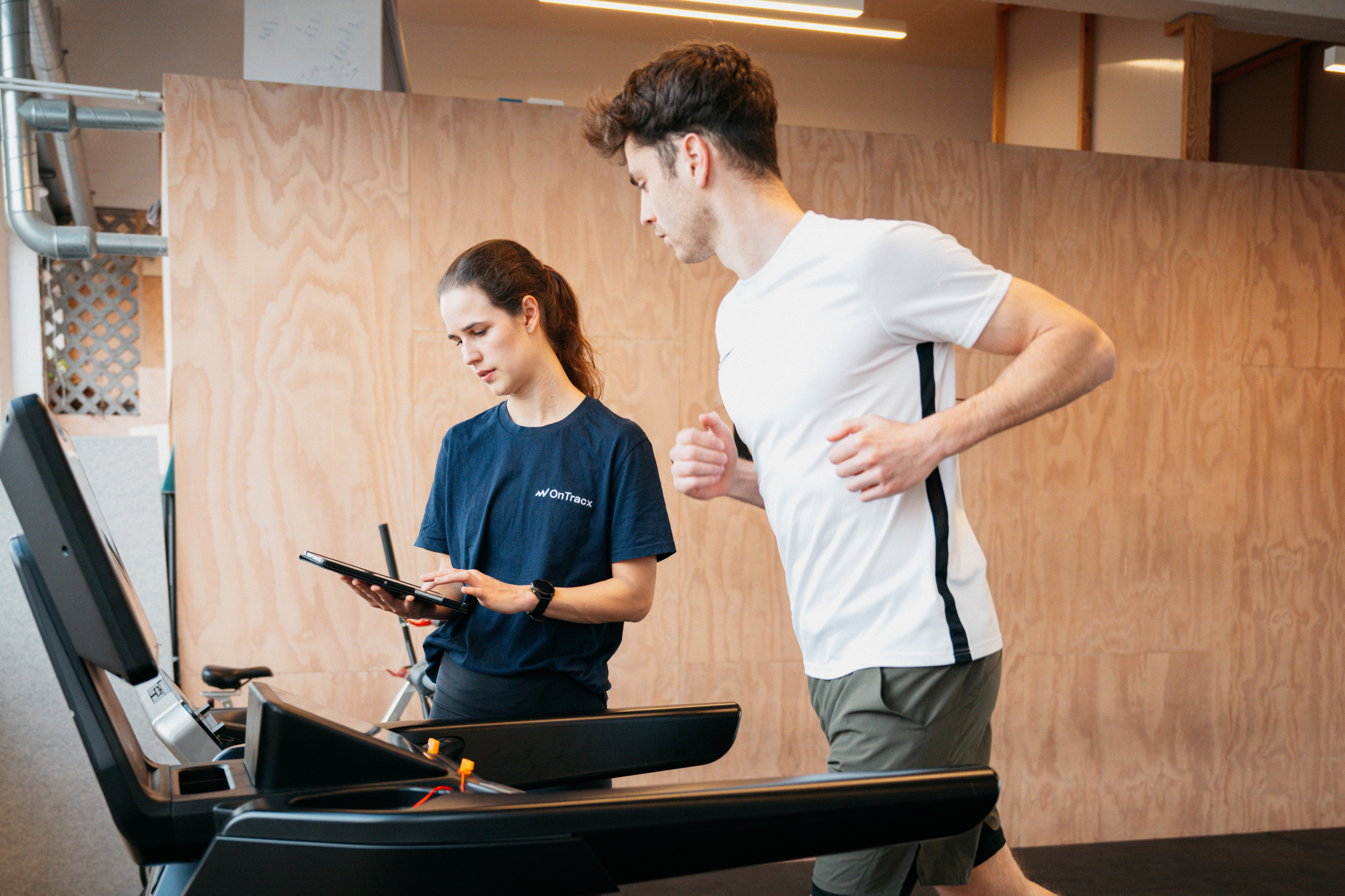
Running is often the first step back toward sport and a phase nearly all field and court athletes pass through. It sits right at the transition between controlled rehabilitation and open, sport-specific exposure.
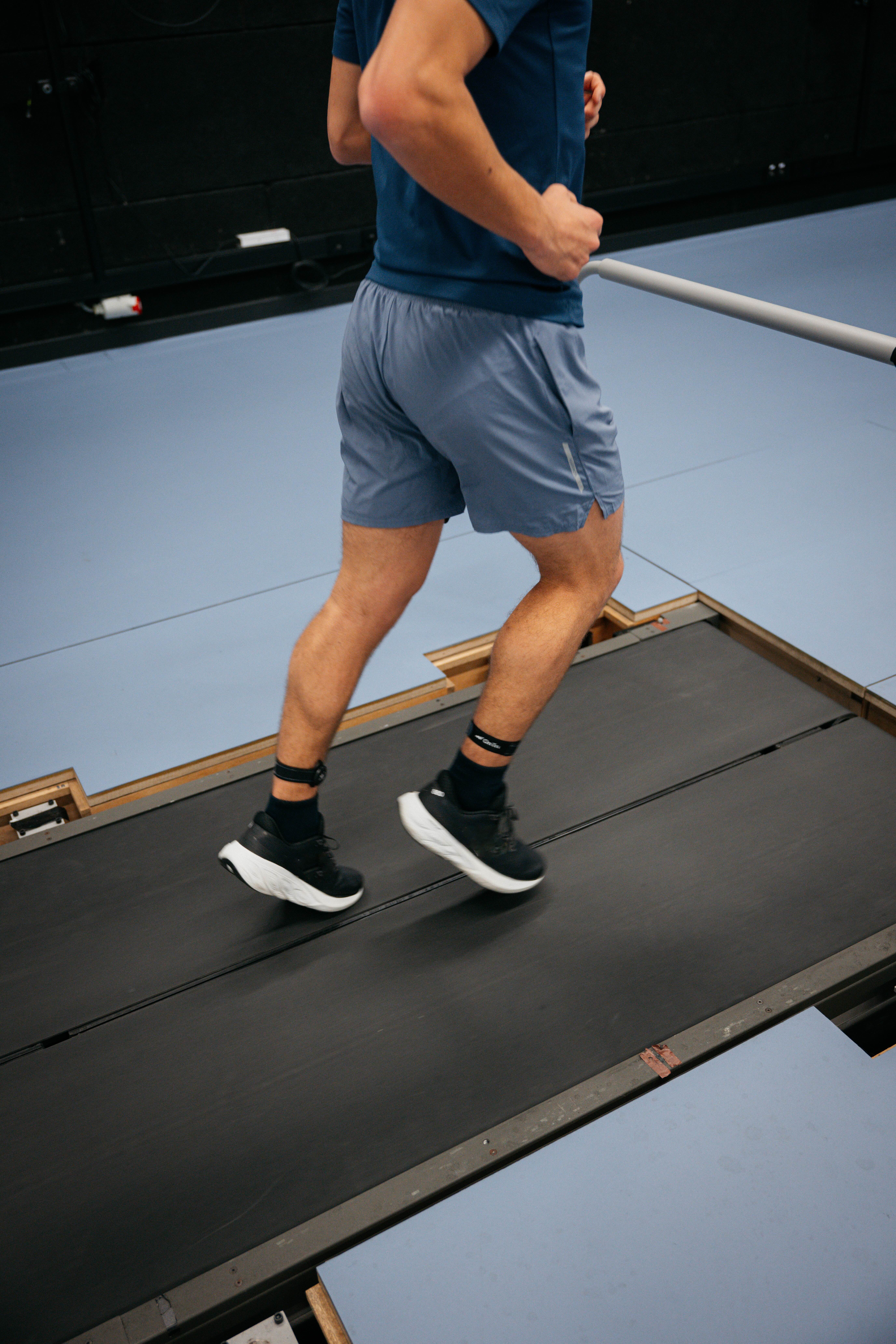
Unlike controlled exercises in the clinic, running introduces repetitive, cumulative mechanical loading, often thousands of steps per session. This is where small differences in speed, volume, or frequency start to have a large impact on total tissue load.
This makes return to running more than just a milestone. It is the first true exposure to sport-relevant load progression. If load is not carefully managed here, the athlete may appear ready based on strength or functional tests, while still lacking the capacity to handle the cumulative demands that follow in later return-to-sport phases.
Why individual load response matter
Not all athletes respond to load in the same way.
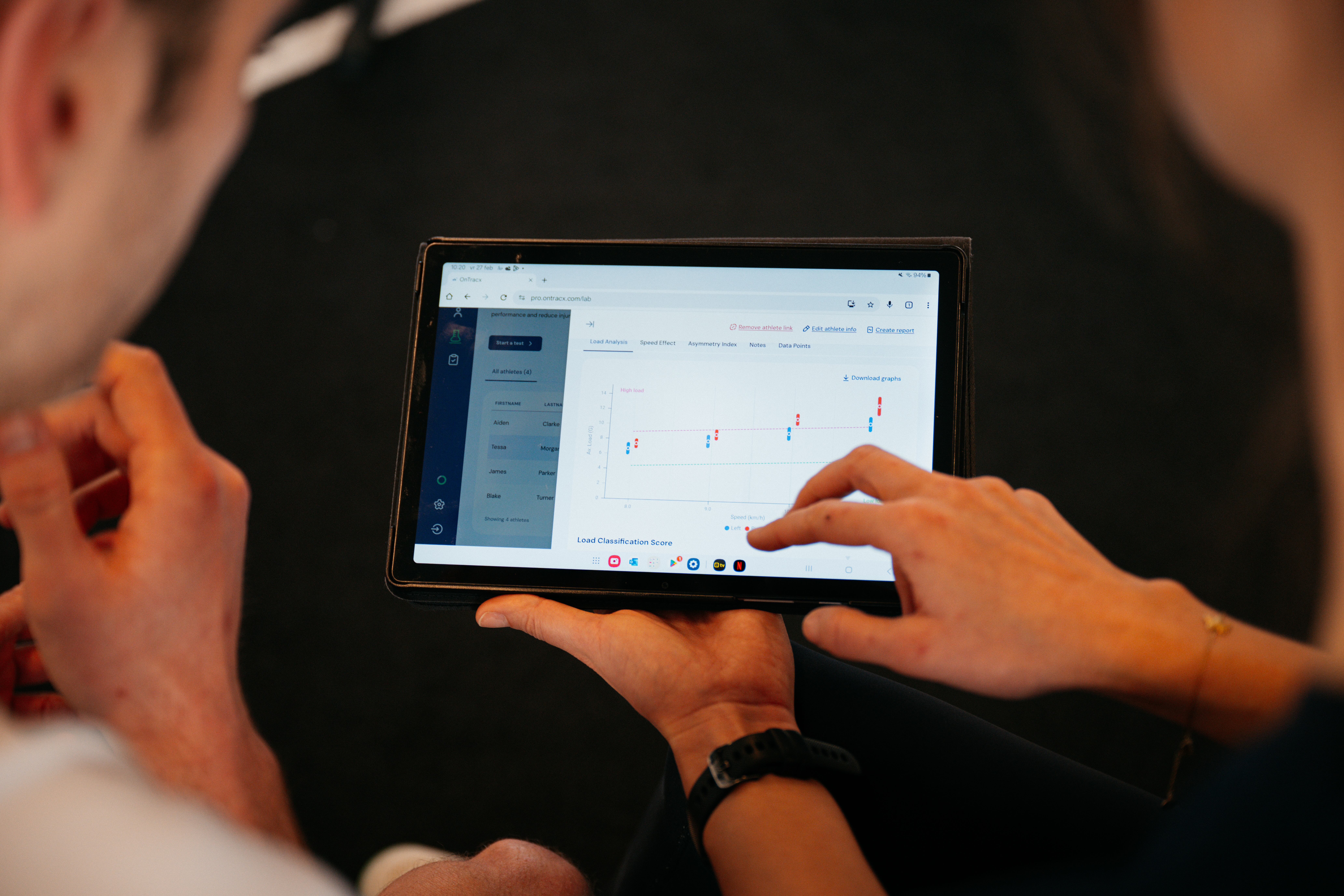
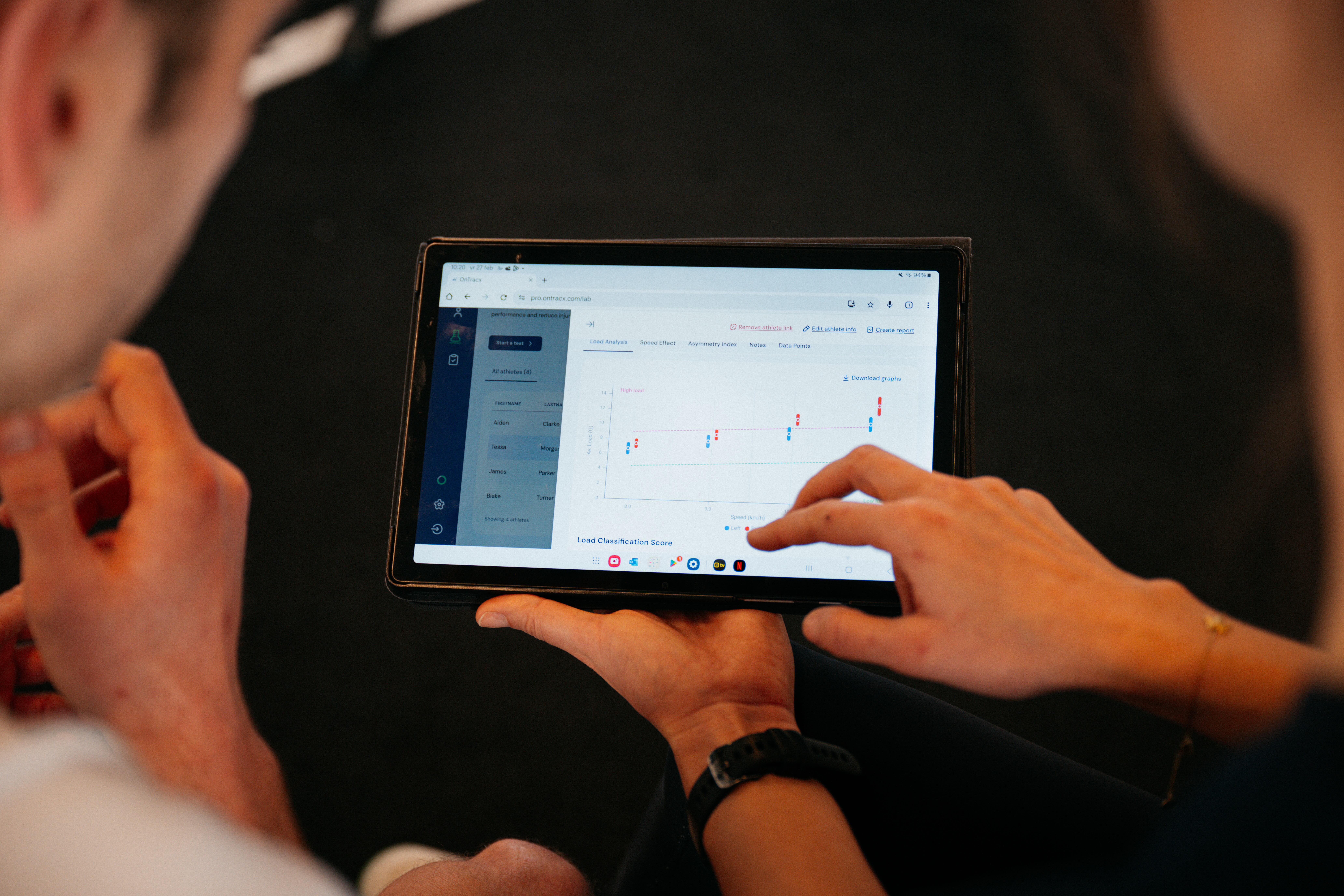
Some accumulate load gradually as speed increases. Others experience sharp increases, where a small change in speed leads to a disproportionate rise in mechanical stress. Read more in our blog about How running speed shapes your biomechanical load.
These differences define how quickly cumulative load builds within a session, across a week and over months. Two athletes may follow the same running progression and meet the same physiological or functional criteria, yet experience completely different mechanical demands. One progresses safely, while the other unknowingly accumulates load faster than their tissues can adapt.
Traditional return-to-sport decision-making does not capture this difference. But it directly influences re-injury risk.
Understanding return-to-sport in practice
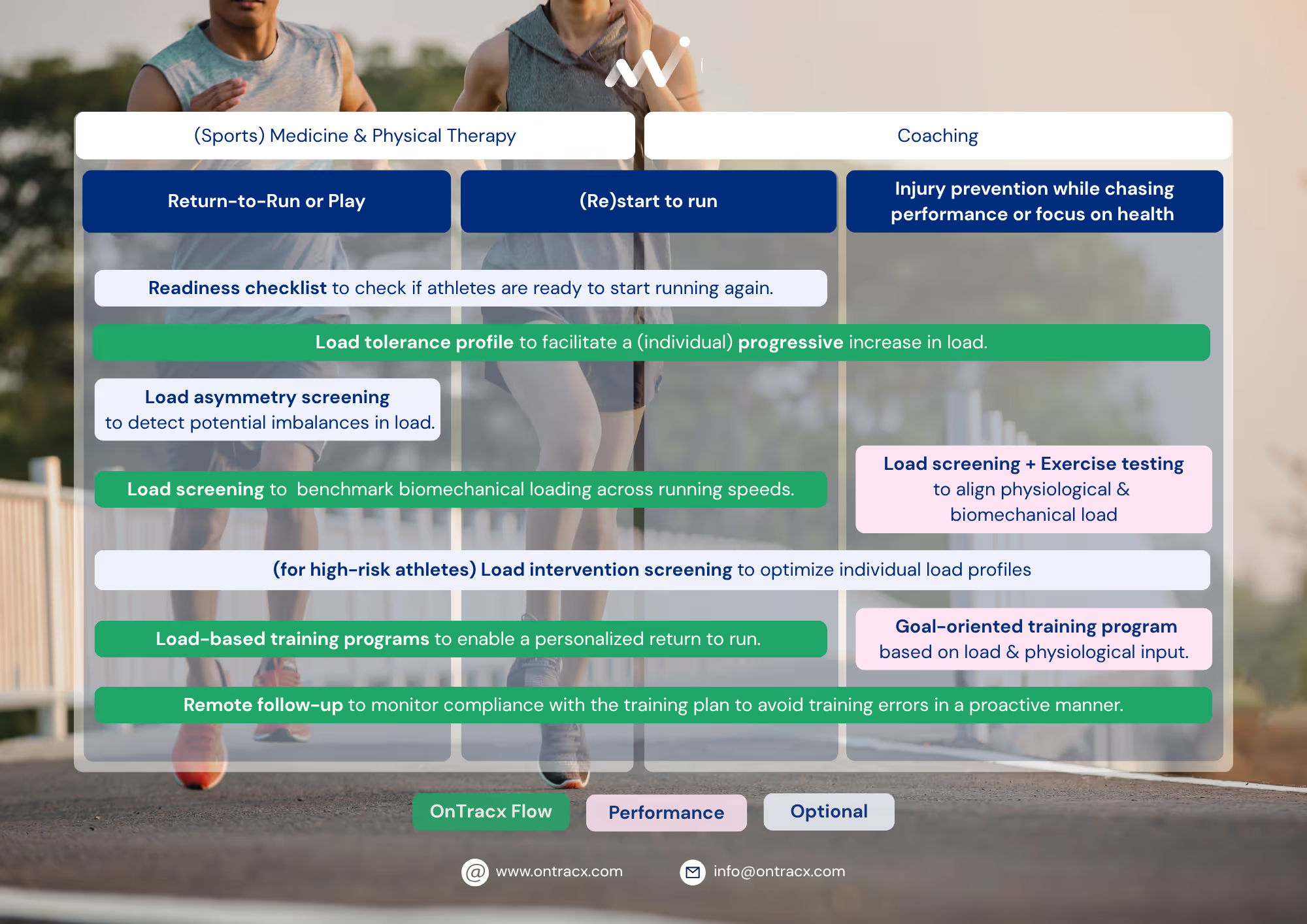
Want to translate these principles into a structured return-to-sport approach? Download our practical framework to see how we guide athletes from rehabilitation back to performance through continuous load management.
From isolated phases to continuous load management
If return to sport is a continuum, then load management should be as well.
That means:
- introducing impact progressively before running,
- structuring load progression during return to run,
- and continuing to monitor how load evolves once the athlete returns to training and competition.
It also means extending that same logic into pre-season and full training. Load should not suddenly become unstructured once the athlete is “back”.
Because the biggest risk does not lie within a single phase, but in the transitions between them.
Load management cannot stop at return-to-run
This is where OnTracx fits into the bigger picture.
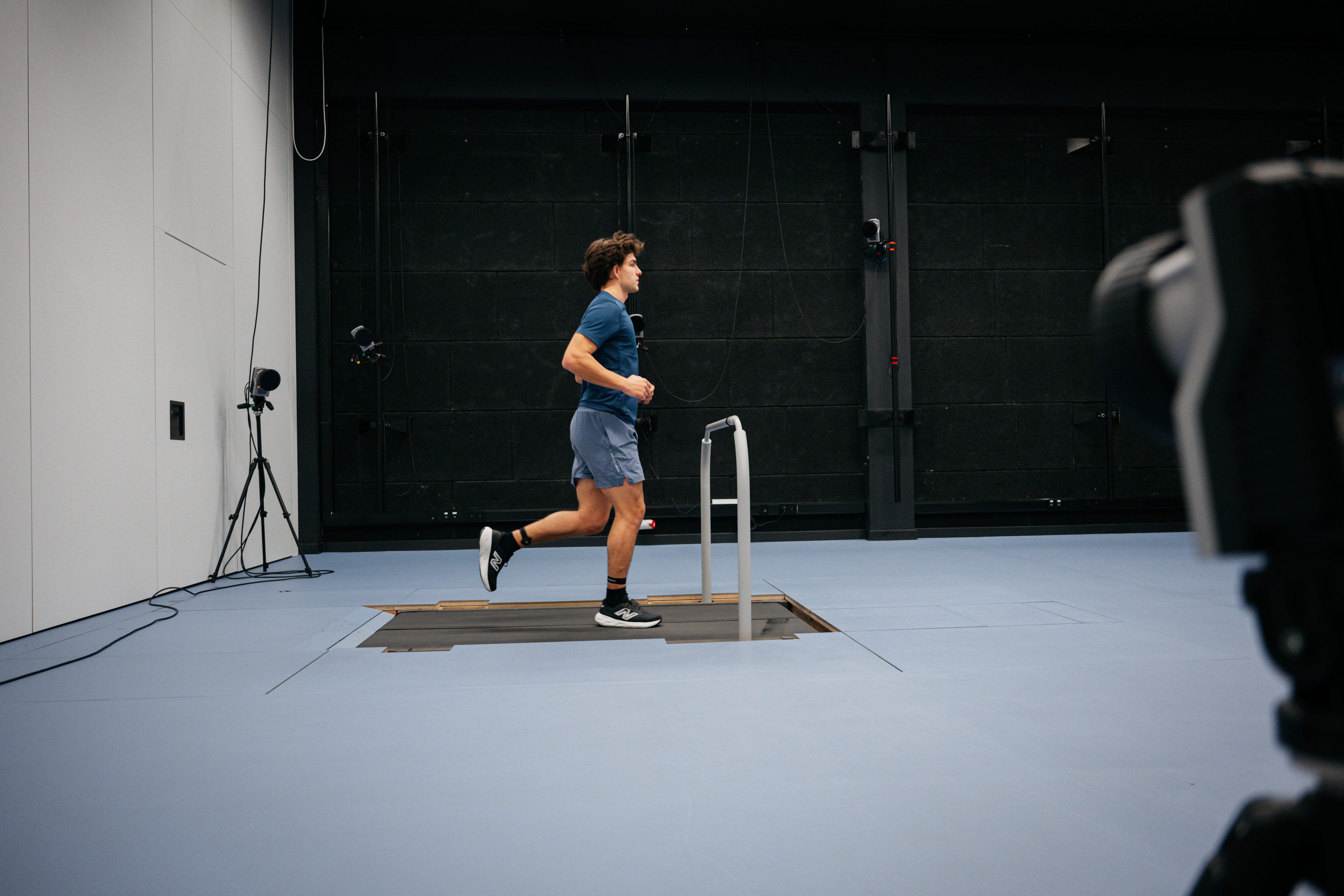
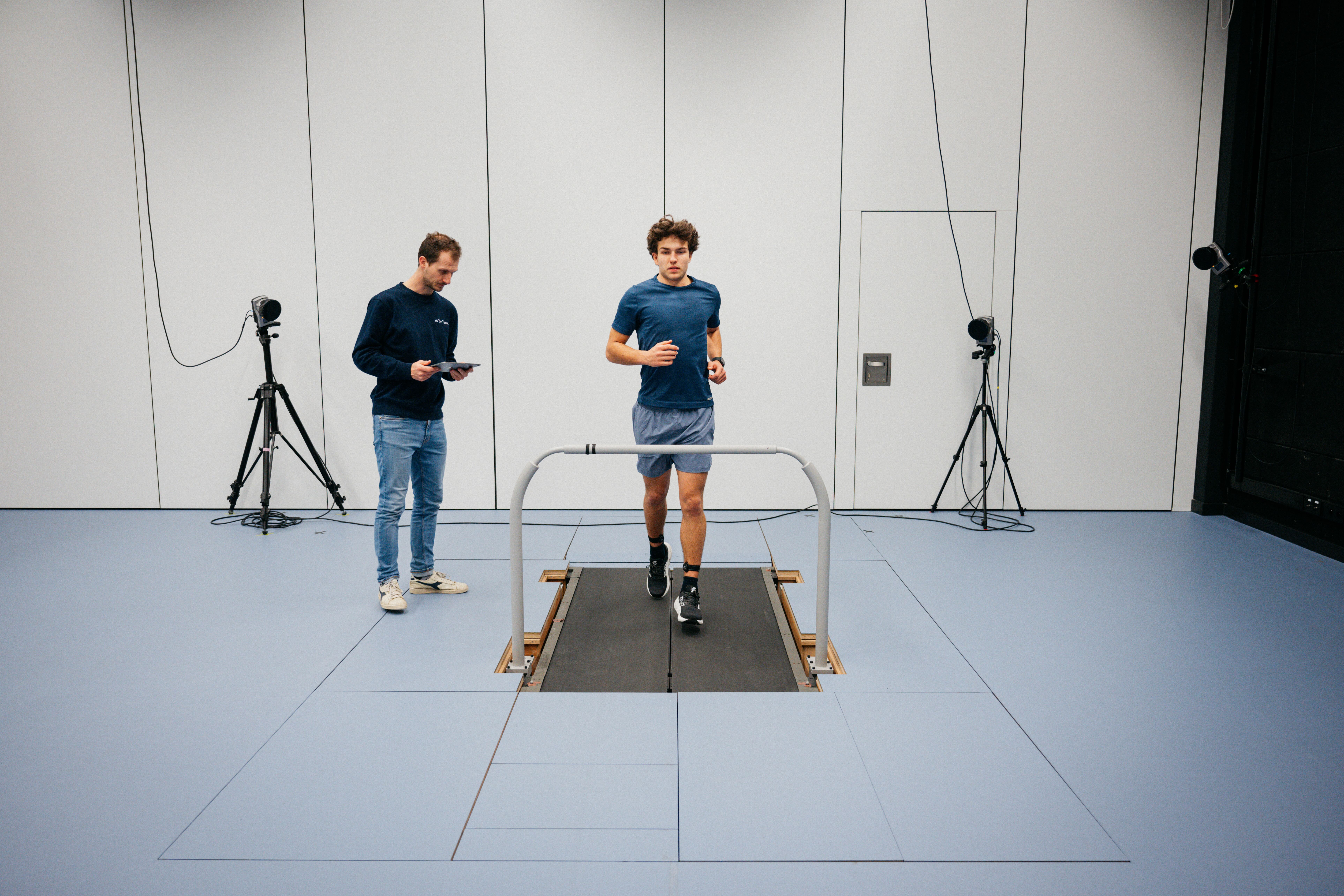
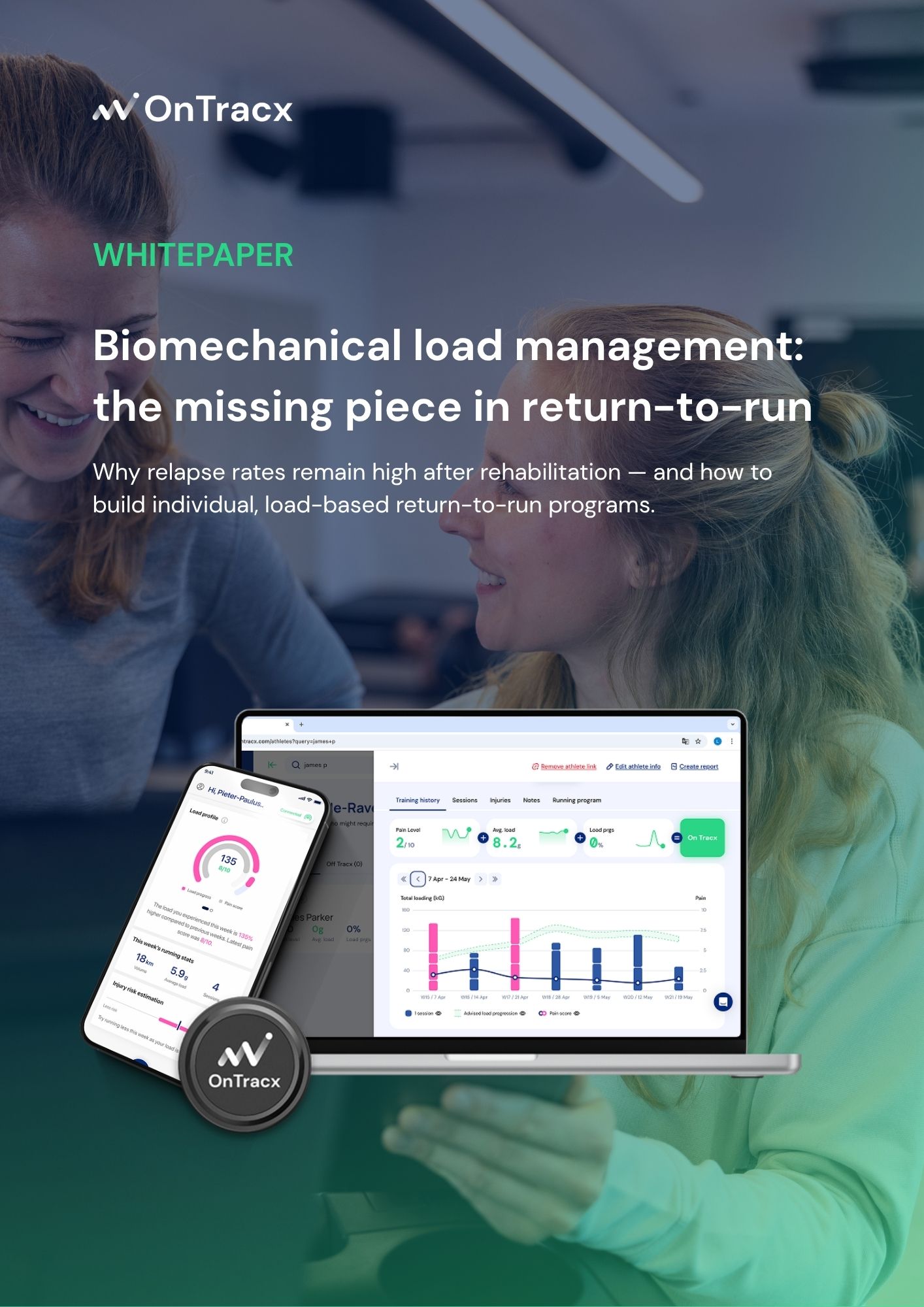
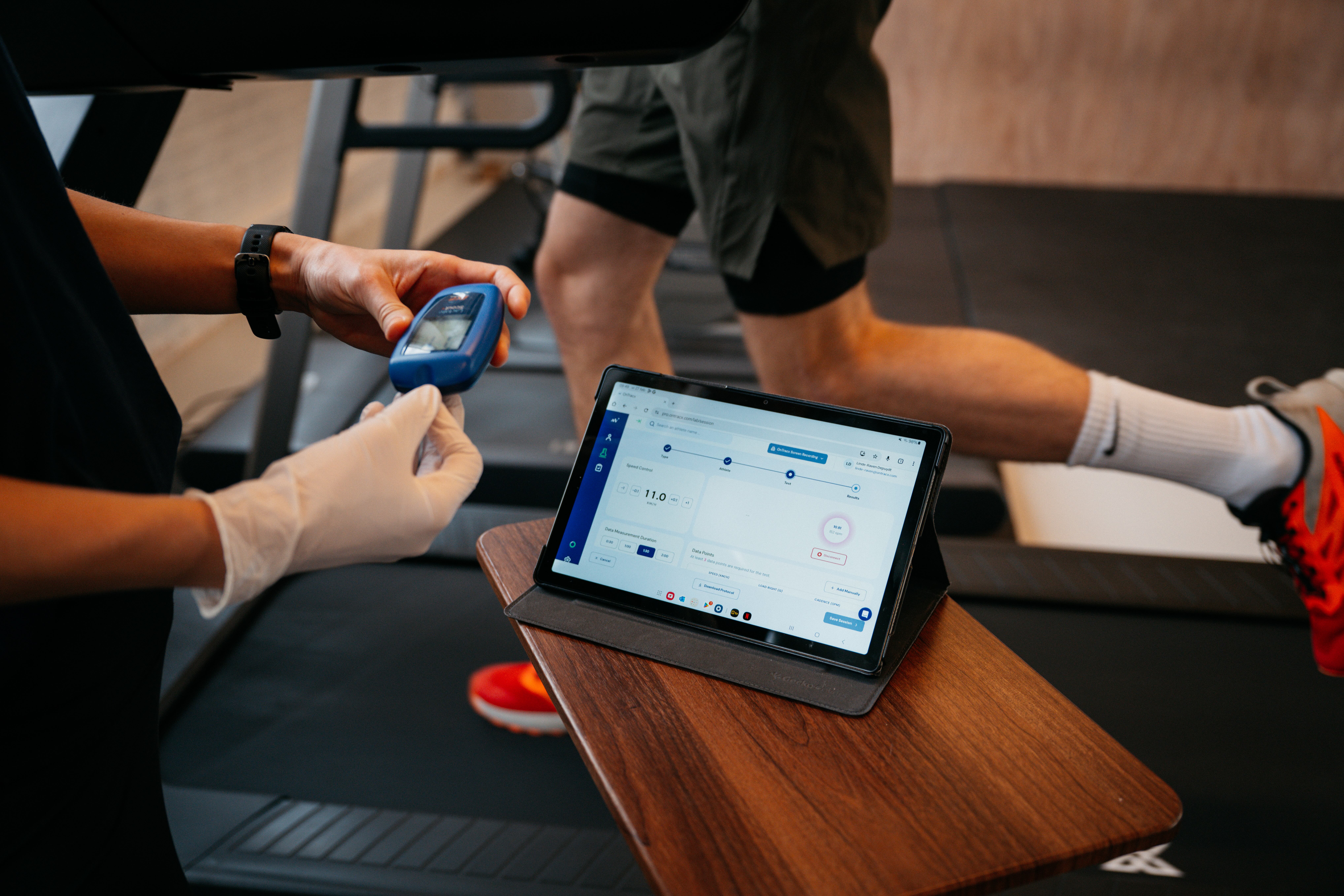
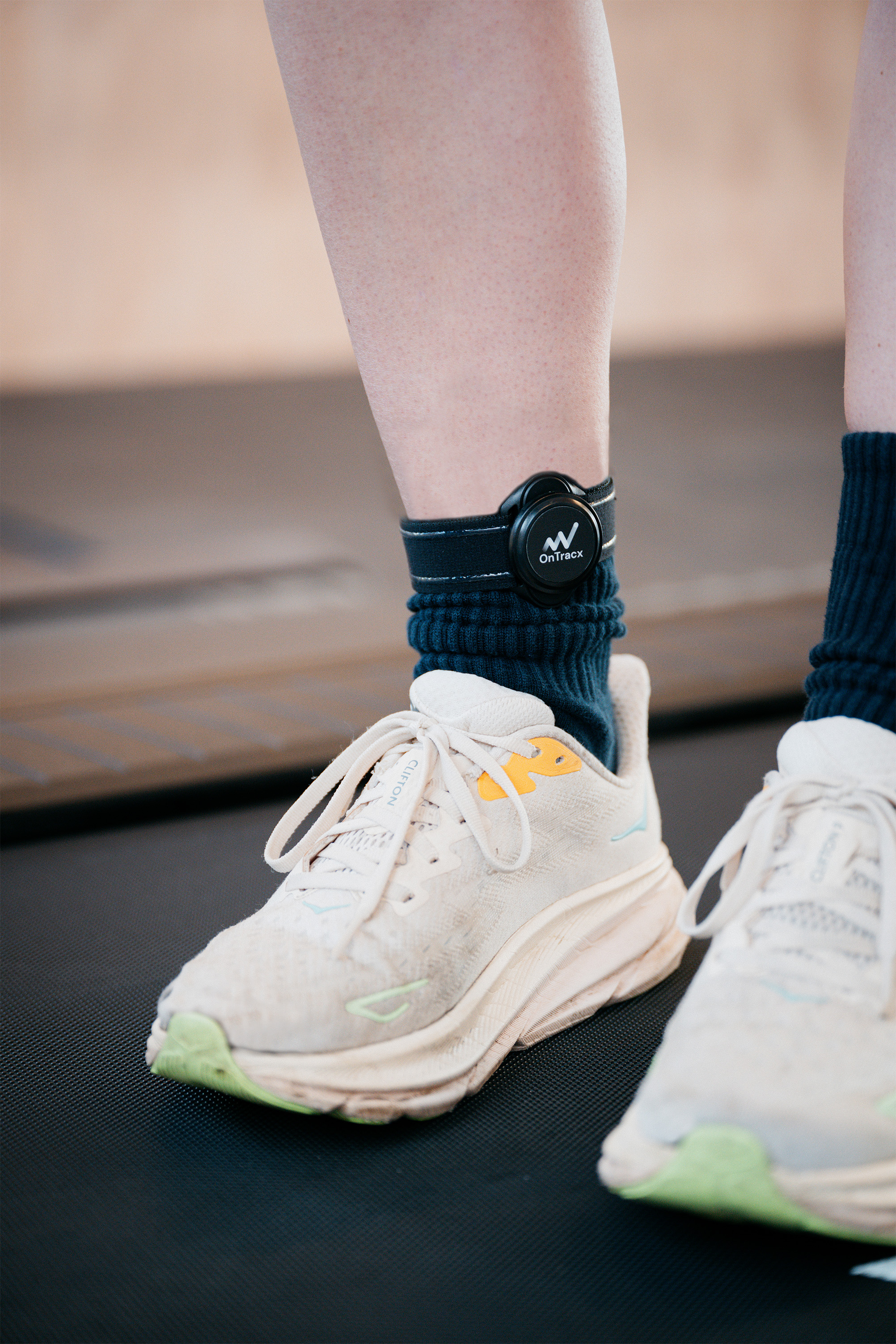
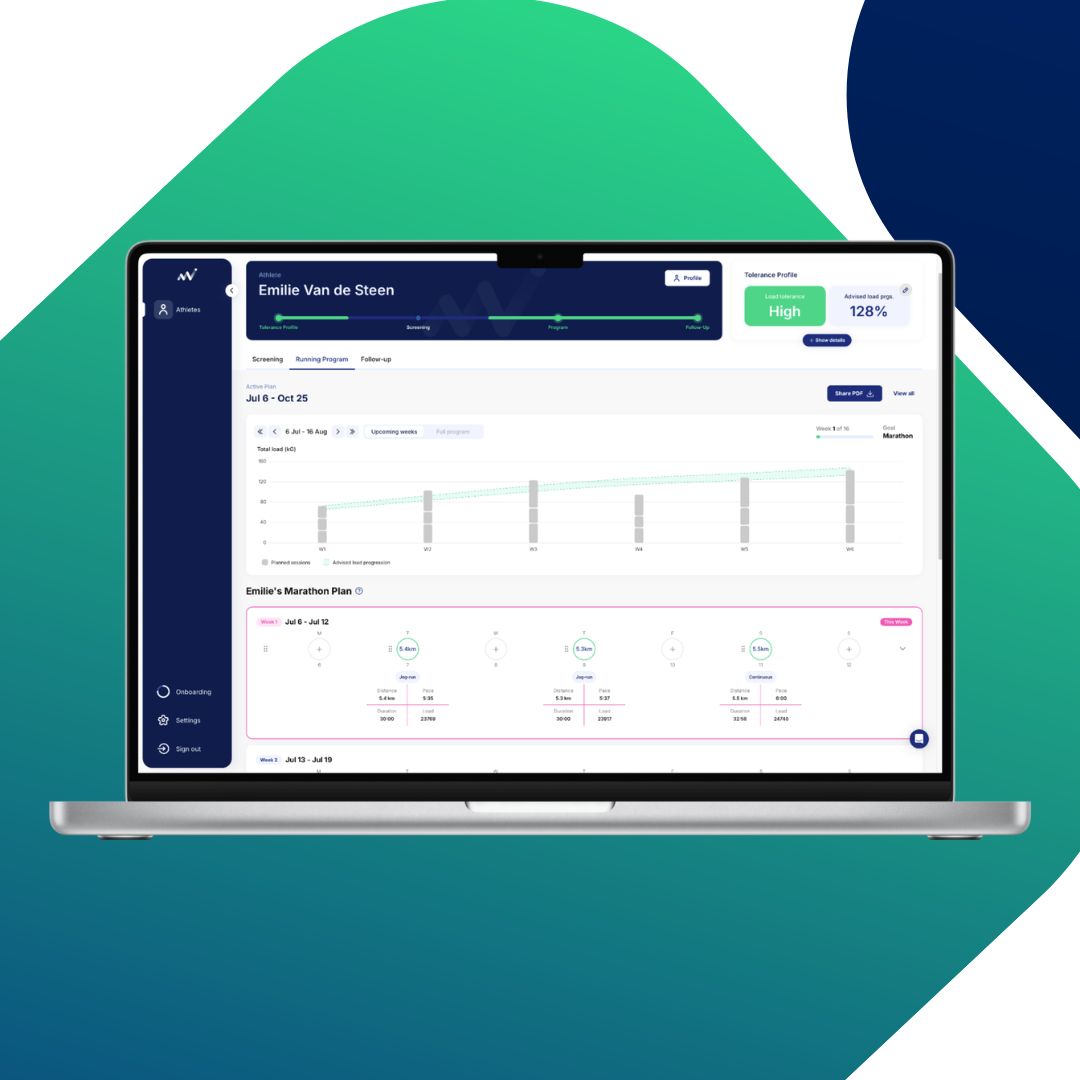
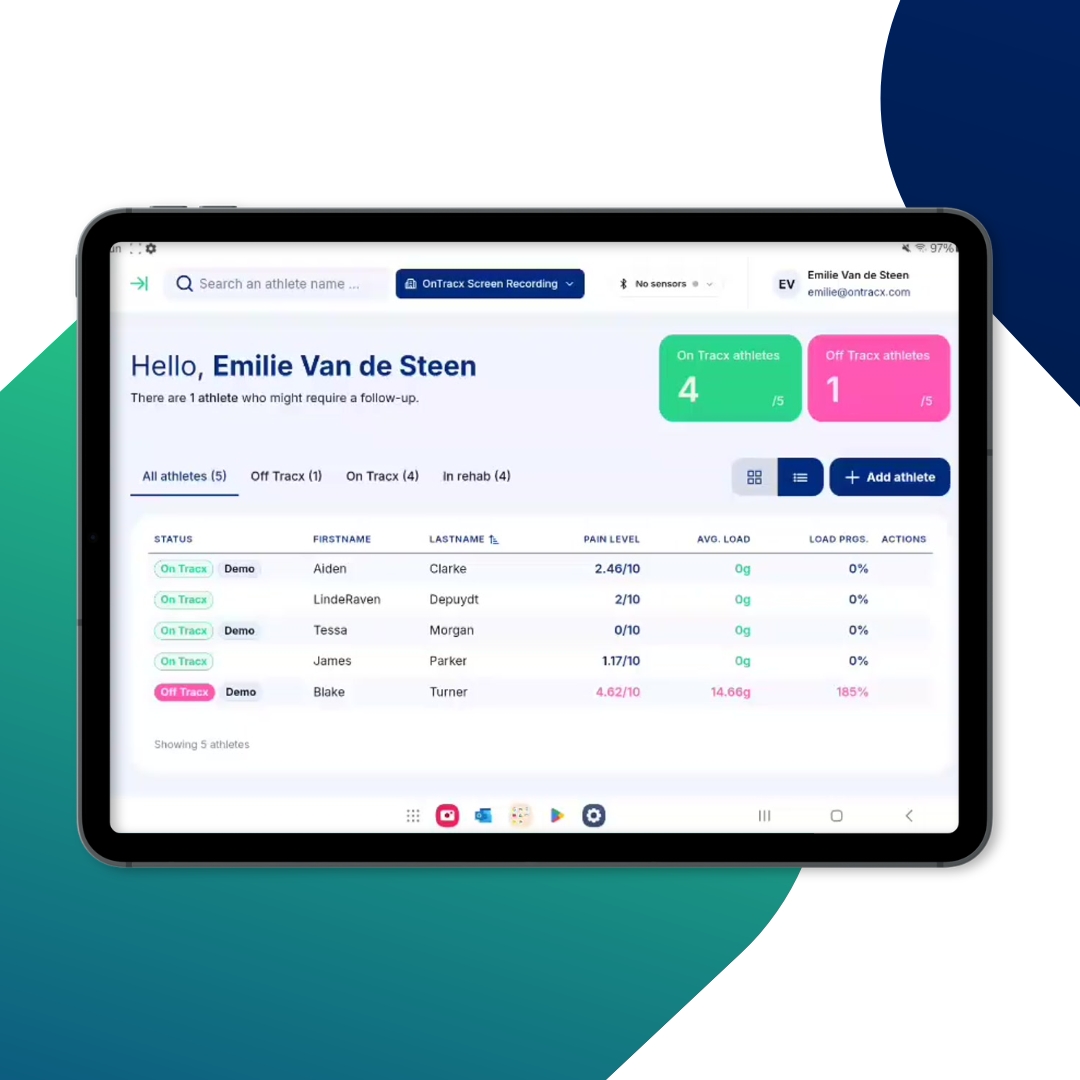
It doesn’t replace rehabilitation. It adds another layer by making mechanical impact load during running more visible and actionable. OnTracx measures mechanical load during running and thereby focuses on how load builds during return to run and how each athlete responds to increasing demands in that earlier phase.
That information can help guide progression through return to running and better connect to the later return to sport stages and even into pre-season. In that sense, OnTracx doesn’t just support return-to-run. It supports continuous load management across the entire return-to-sport pathway.
At the same time, it is important to keep perspective. Load management plays a key role in the etiology of overuse injuries, but within return to sport, injury profiles are often more diverse. Load is only one part of a much broader and more complex picture. In addition, load capacity is influenced by strength, tissue properties, recovery, previous injury history, and many other factors that are not yet fully captured. This means it can be a valuable part of the solution, but not a solution on its own.
New definition for return-to-sport success
If success is defined as returning to play, most rehabilitation programs succeed. But if success means staying injury-free while progressing toward performance, one gap remains.
The challenge is not the absence of structure in rehabilitation. It is the loss of structure when load begins to accumulate in real-world conditions.
Return-to-sport doesn’t fail because athletes are unprepared. It fails because load is no longer managed when it becomes most relevant.
Conclusion
Return-to-sport is not a decision, it’s a continuum of increasing demands. Running is the first phase where those demands translate into real, cumulative load.
Mitchell & Gimpel provide a clear, structured pathway for that progression. But for that pathway to work in practice, load must be managed with the same continuity.
Rehabilitation builds the foundation, but it is the evolution of load at the end and after rehab that determines long-term success.
By making load visible and guiding it across phases, we can finally start to align progression with capacity. Not just in theory, but in practice.

.png)








%20(5).png)


%20(3).avif)
%20(4).avif)


.jpg)