Which insights do you get from an OnTracx load screening & how do you use them?
29
/
05
/
2026
8
min read
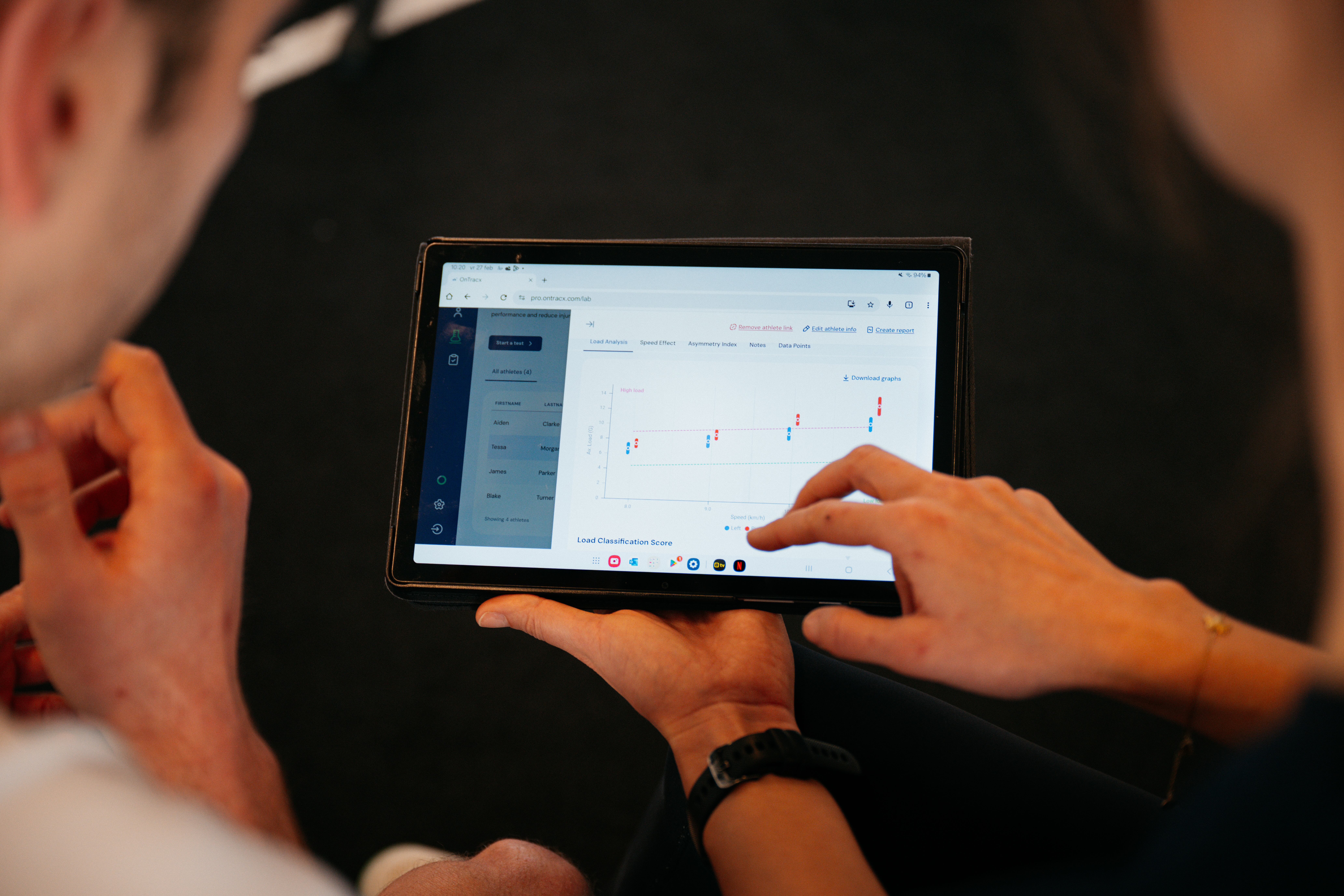
TABLE OF CONTENTS
auteur
Linde-Raven Depuydt
Share
related content

Too much to read
Most runners are already accustomed to monitoring physiological stress through heart rate, pace or lactate thresholds. Mechanical load, however, often remains invisible despite playing a key role in overuse injuries and rehab.
A load screening helps make that hidden layer measurable. It reveals how load changes with speed, whether mechanical breakpoints exist and how consistently the body distributes load during running. More importantly, it provides a framework for translating those insights into individualized progression strategies.
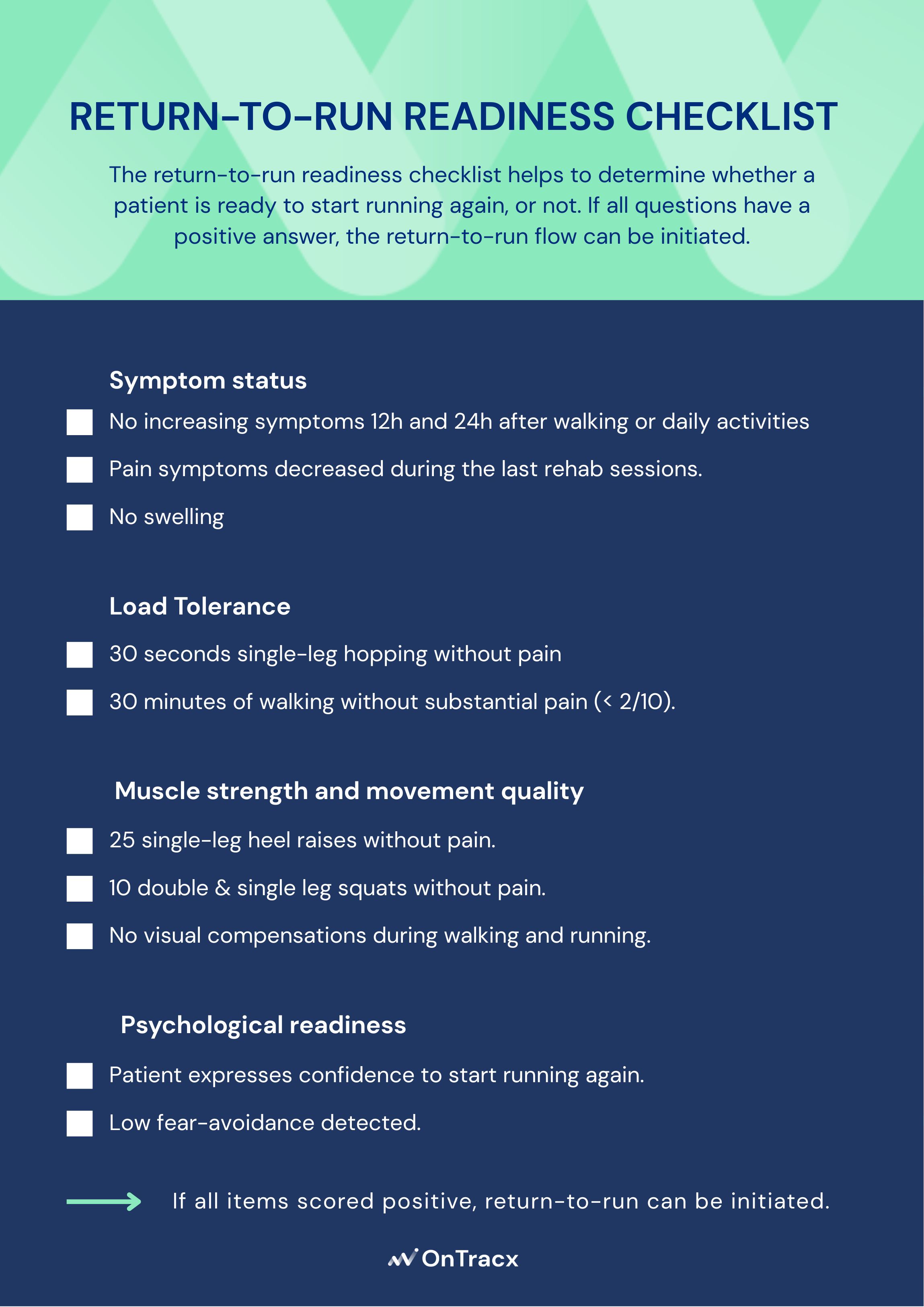
It is certainly not the solution to every running injury, but it can offer an important missing piece within a broader, comprehensive approach to the runner especially when those insights are used to guide how load is progressively built week after week during rehab and return-to-run.
Because in the end, successful progression is not only about feeling fitter. It is about making sure the body is mechanically ready for the loads that training demands.
Which insights do you get from an OnTracx load screening & how do you use them?
Most runners understand that building up too quickly increases injury risk. Yet that advice rarely answers the questions that actually matter in practice.
The challenge is that mechanical load is largely invisible. Physiological fatigue is easier to recognize: heart rate rises, breathing becomes heavier and the effort feels harder. Mechanical overload behaves differently. Tendons, bones and joints accumulate stress progressively, often without immediate warning signs. By the time discomfort appears, the actual overload may already have been building for days or weeks.
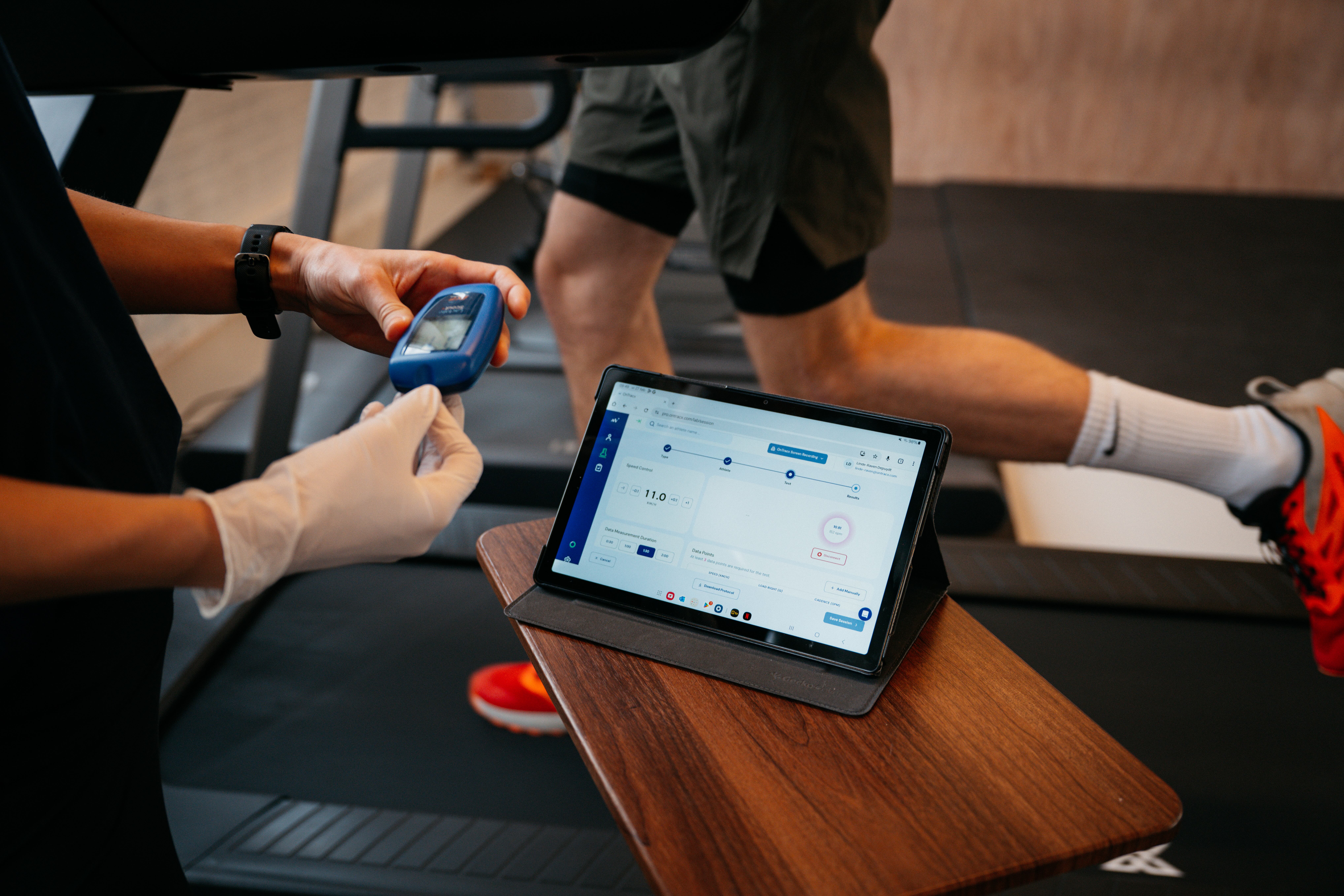
That is exactly where a load screening becomes valuable. Instead of only looking at physiological fitness or running performance, it provides insight into how the body mechanically responds to running at different speeds. Not to define a “good” or “bad” running style, but to understand how load behaves for the individual runner and how training progression can be aligned with what the tissues can currently tolerate.
It helps answer questions like:
- How much load does the runner experience while running?
- At which speed does my mechanical load start increasing rapidly?
- Do I respond linearly to speed or do I have a breakpoint?
- Am I compensating between left and right?
- Is my current training progression mechanically realistic?
- How should I adapt training based on my loading profile?
Understanding Your Loading Profile
One of the first insights from a load screening is how mechanically demanding someone’s running pattern is compared to a broader reference group. The report classifies your running load as low, average or high.
%20(1).jpg)
At first glance, many runners interpret a “high” score as something negative. But that’s not necessarily true. A higher mechanical load does not automatically mean a higher injury risk. Injury risk is never determined by load alone, but by the relationship between load and load tolerance. A runner with strong tissue capacity may tolerate relatively high forces perfectly well, while another runner may struggle despite much lower loads.
This distinction matters because it changes how results should be interpreted. The goal is not to classify runners as efficient or inefficient, but to understand the mechanical characteristics of their running style. For some athletes, higher loads may simply mean that progression should happen more carefully or that recovery between harder sessions becomes more important.
The screening therefore gives context to the way an athlete loads their body, rather than judging the movement itself.
Of course, injury risk and recovery are always multifactorial, with factors such as recovery, tissue capacity, nutrition and stress also playing an important role. The value of the screening lies in making one important part of that puzzle measurable and actionable.
How Speed Changes Mechanical Load
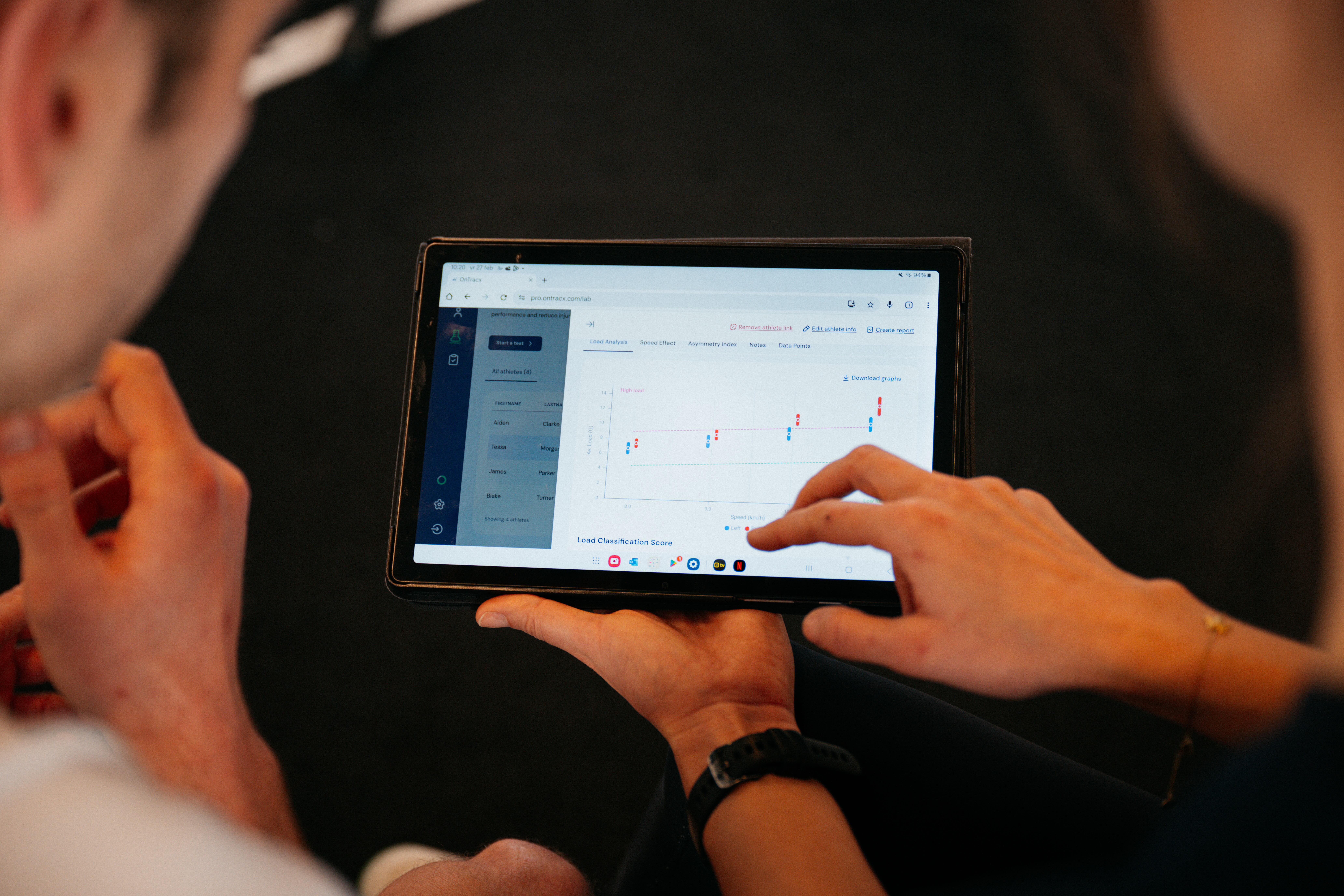
One of the most valuable parts of the screening is the Speed Effect Analysis, which shows how mechanical load changes as running speed increases.
Many runners intuitively assume that load rises gradually and proportionally with speed. In reality, the relationship is often far more individual.
Some runners display a relatively linear pattern: every increase in speed produces a predictable increase in mechanical load. This creates a stable but sensitive system where even small pace increases consistently raise tissue stress. These runners often benefit from cautious speed progression because cumulative load can build quickly over time.
Other runners show a biphasic pattern. In these athletes, load remains relatively stable up to a certain speed, after which a small increase suddenly causes mechanical load to rise much more rapidly. This transition point, often referred to as a breakpoint, is one of the most important insights from the screening.
%20(2).jpg)
The exact mechanisms behind these patterns are likely multifactorial and still not fully understood, but they probably reflect how the neuromuscular system adapts movement strategies as speed increases. Changes in stiffness, stride mechanics, muscle activation and impact absorption may all influence how mechanical load evolves at higher speeds.
It is not something that should be feared or avoided, but rather understood. Running below this threshold is often mechanically well tolerated, even with moderate pace variation, while speeds above it usually require more gradual exposure, shorter durations and adequate recovery between sessions because cumulative load starts building much faster.
What makes this especially important is that the mechanical breakpoint does not necessarily align with physiological thresholds. A runner may still feel aerobically comfortable while mechanical stress is already increasing disproportionately. From a physiological perspective the session may feel “easy,” while mechanically the tissues are entering a much higher stress zone. Read all about it in our blog about mechanical vs physiological load.
%20(3).jpg)
This mismatch helps explain why runners can feel ready for progression while their tendons, bones or joints are not fully prepared yet. It also explains why some athletes repeatedly relapse despite carefully monitoring heart rate, pace or training volume. This becomes particularly important during return-to-run trajectories, where cardiovascular fitness often returns much faster than mechanical tissue tolerance.
The load analysis transforms “build up gradually” from a vague recommendation into something measurable and individualized. Instead of relying purely on mileage or subjective feeling, progression can be aligned with how the athlete’s tissues actually respond to speed.
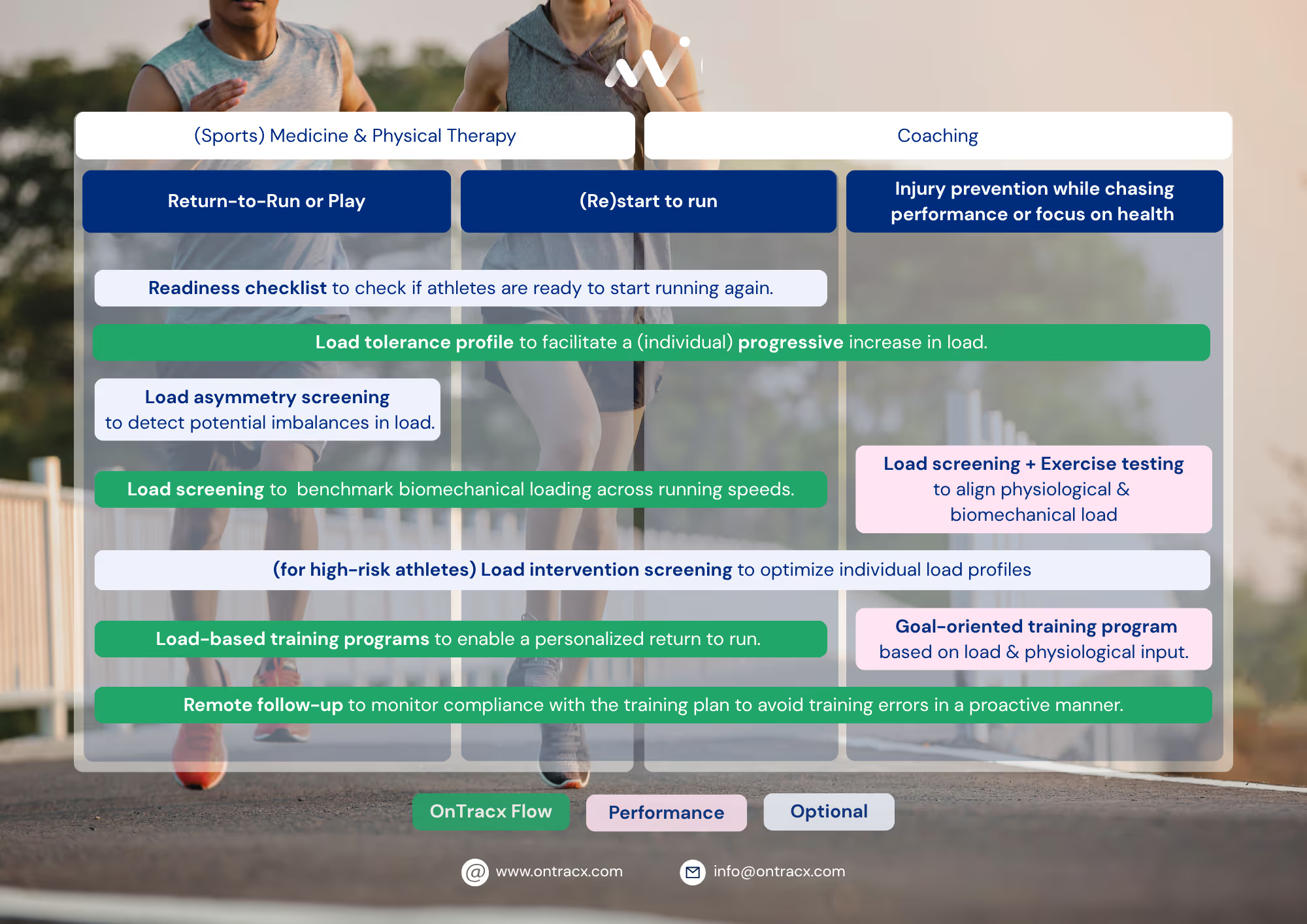
Bring Load-based running into your practice
Discover how OnTracx helps clinicians, coaches and running experts translate biomechanical insights into individualized rehab, return-to-run and load management strategies.
Looking At Left–Right Differences
When two sensors are used, the screening also evaluates asymmetry between both legs. This gives insight into how evenly impact forces are distributed during running and how that balance changes as speed increases.
After injury, runners frequently develop subtle unloading strategies. Sometimes these compensations are obvious, but often they are difficult to observe visually. A runner may gradually shift load away from a previously injured side or overload the opposite leg without realizing it.
At the same time, asymmetry itself should not automatically be interpreted as problematic. Read our blog about asymmetry. Healthy runners commonly display asymmetrical movement patterns, and current literature does not consistently show that asymmetry alone predicts injury risk. Biological systems are rarely perfectly symmetrical.
The important question is therefore not whether asymmetry exists, but whether it is meaningful in context.
- Does it become larger at higher speeds?
- Does it persist long after recovery?
- Does it correspond with symptoms or discomfort?
- Or is it simply part of the runner’s natural movement variability?
In rehab settings, these insights can be extremely useful. They help clinicians and coaches understand whether a runner continues to protect one side, whether confidence is improving over time and whether higher running speeds reveal compensatory strategies that are not visible during easier efforts.
From Insights To Training Decisions
The true value of a load screening lies in how the information is used afterward. The screening itself is not a diagnosis, nor is it a prediction tool for future injuries.
Its value lies in translating invisible mechanical behavior into practical training guidance.
Once a runner’s loading profile and speed response are understood, progression can become far more individualized. Instead of building training solely around pace or weekly mileage, coaches and clinicians can take mechanical load behavior into account as well. A runner with a sensitive load response to speed may require a different progression strategy than someone whose loading profile remains relatively stable across intensities.
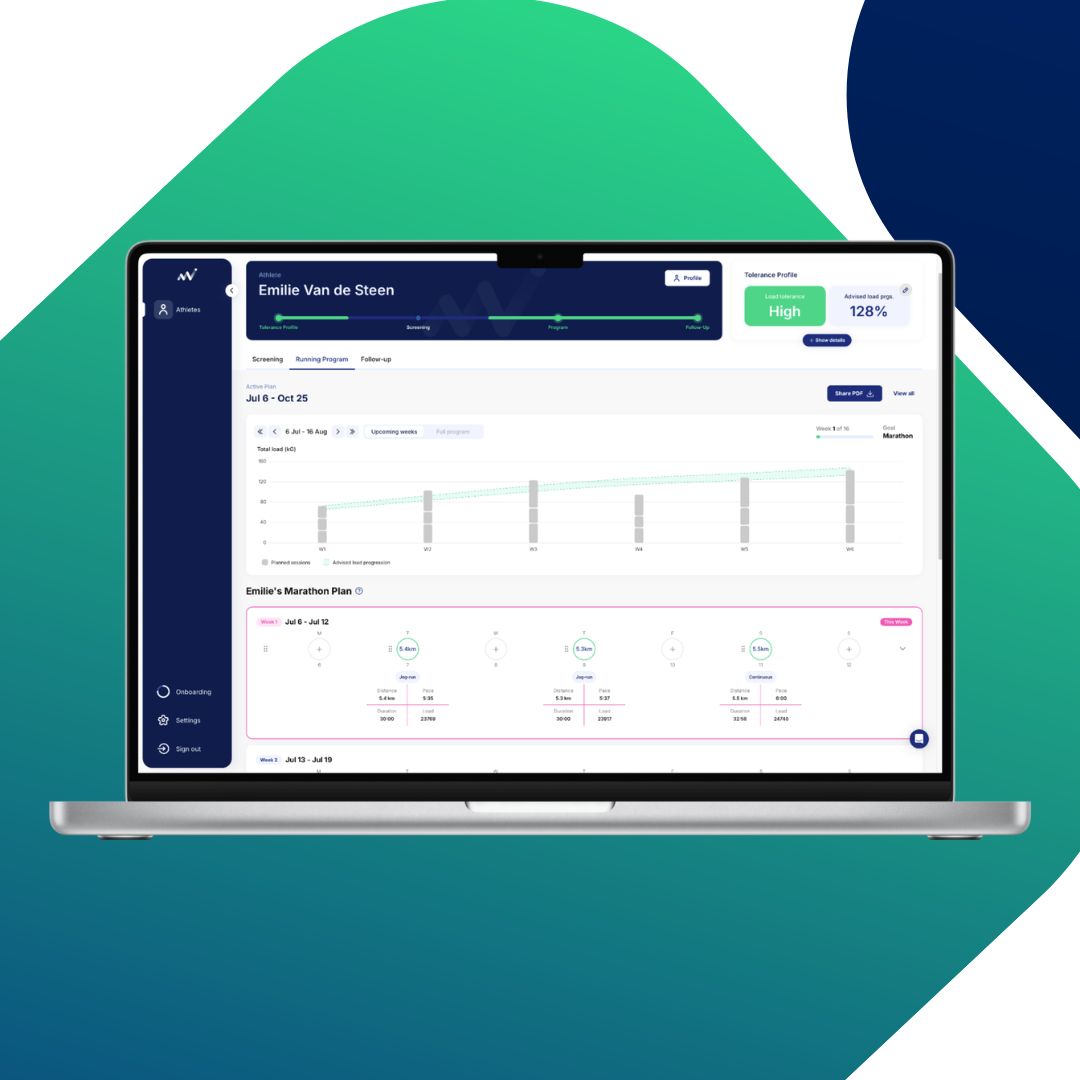
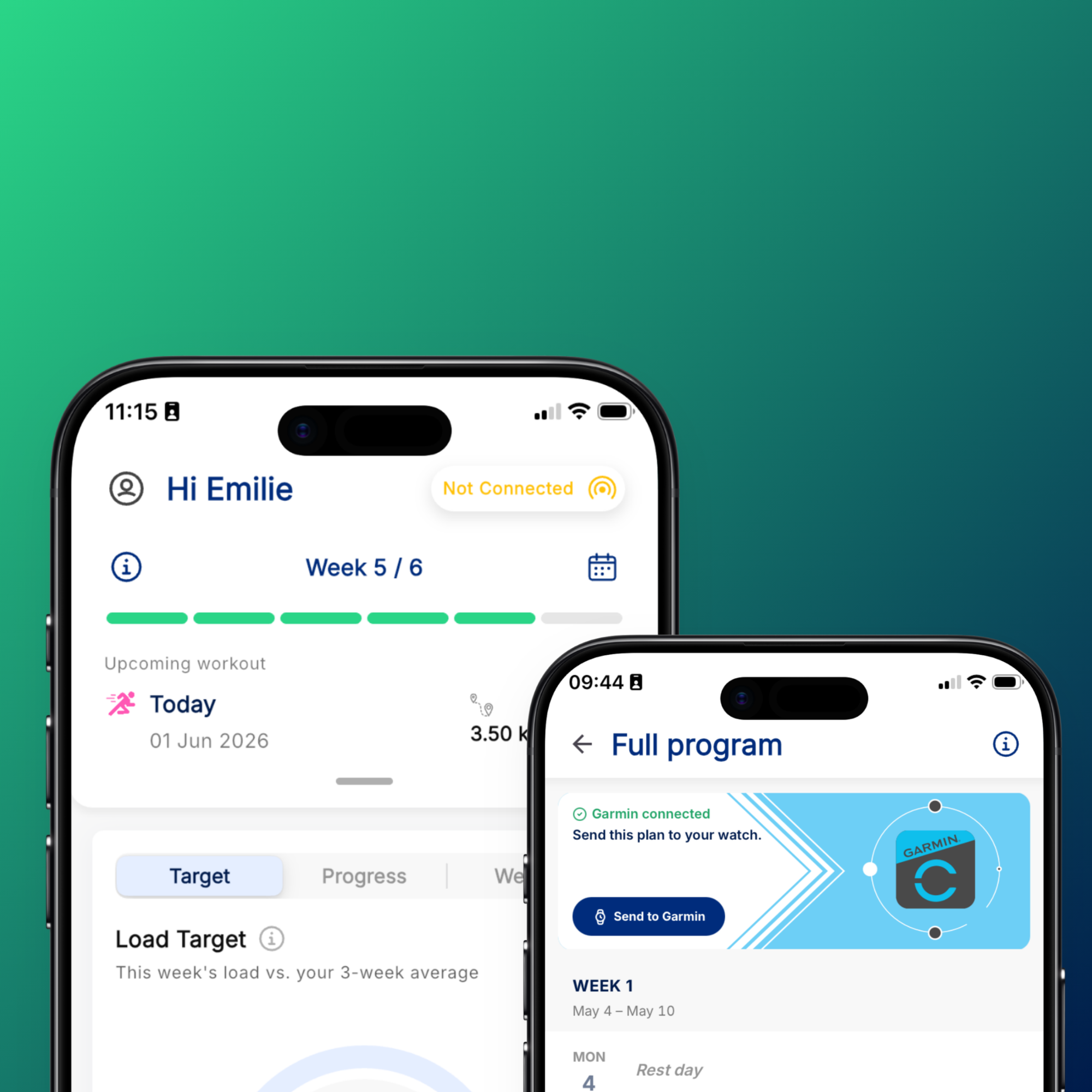
This is also where load-based training planning becomes particularly powerful. Using screening results, progression can be tailored to the athlete’s individual mechanical profile, gradually exposing tissues to increasing loads over time while respecting current load tolerance. Rather than relying on generalized rules like the “10% rule,” progression becomes based on how the individual body actually responds to impact. Read more about this in our blog on why the 10% rule often fails to capture actual mechanical load progression.
The result is not necessarily slower training. In many cases, it simply becomes smarter and more sustainable.

.jpg)
.jpg)



.png)











%20(5).png)


%20(3).avif)
%20(4).avif)


.jpg)