ACL and hamstring injuries: maybe not so "acute" after all
ACL ruptures and hamstring strains have traditionally been filed under "acute." But Van Hooren (2025) reviewed the evidence for a mechanical fatigue mechanism behind both: hamstring injuries often occur during a completely ordinary stride, with no obvious extreme movement; the ACL can fail after repeated submaximal loading, well below its ultimate strength; and ACL explant tissue shows damage typical of repetitive lab loading, not a single overload event (Van Hooren, 2025).
This fits a concept we've written about before: the non-linear, cumulative relationship between load and tissue damage. Small, repeated increases in strain can cause disproportionate microscopic damage long before anything is clinically visible, whether the tissue is a tendon, a muscle, or a ligament.
The practical implication: traditional "acute" injuries may benefit from the same load-monitoring logic we already apply to overuse injuries. If cumulative load, not a single moment, contributes to ACL and hamstring failure, managing that load during rehab and return-to-run becomes directly relevant to reducing re-injury risk.
.png)
A long road back, through a body that's been unloaded
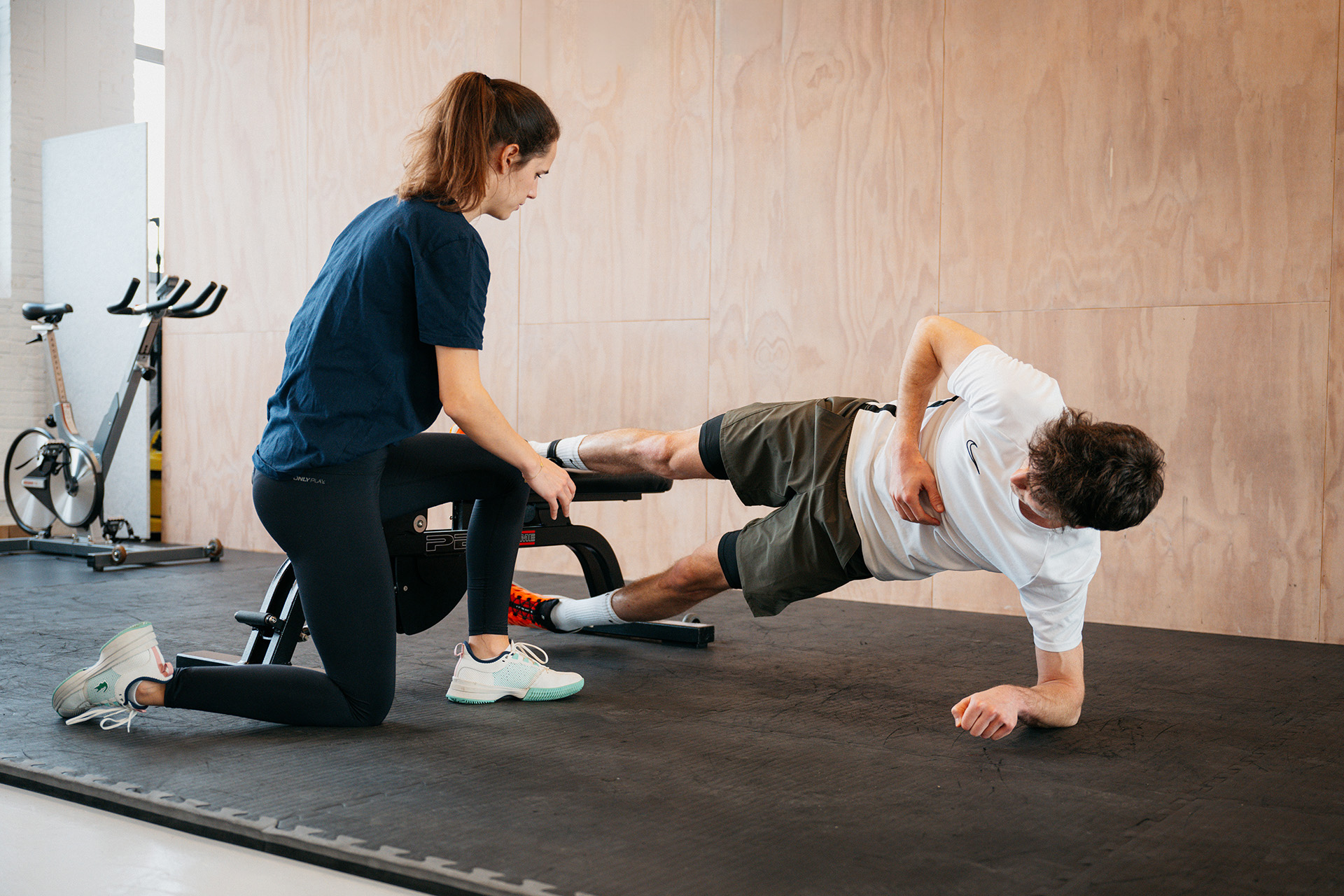
ACL rehabilitation is a long process. Surgical reconstruction comes with a real period of reduced loading, restricted range of motion, limited weight-bearing, no impact, while the graft matures. That's necessary, but it costs the body: it deconditions quickly once loading drops. A review of lower-limb immobilization studies found disuse-related loss of muscle mass and strength can start within days, not weeks, and tends to outpace how fast that capacity is rebuilt once training resumes (Hardy et al., 2022).
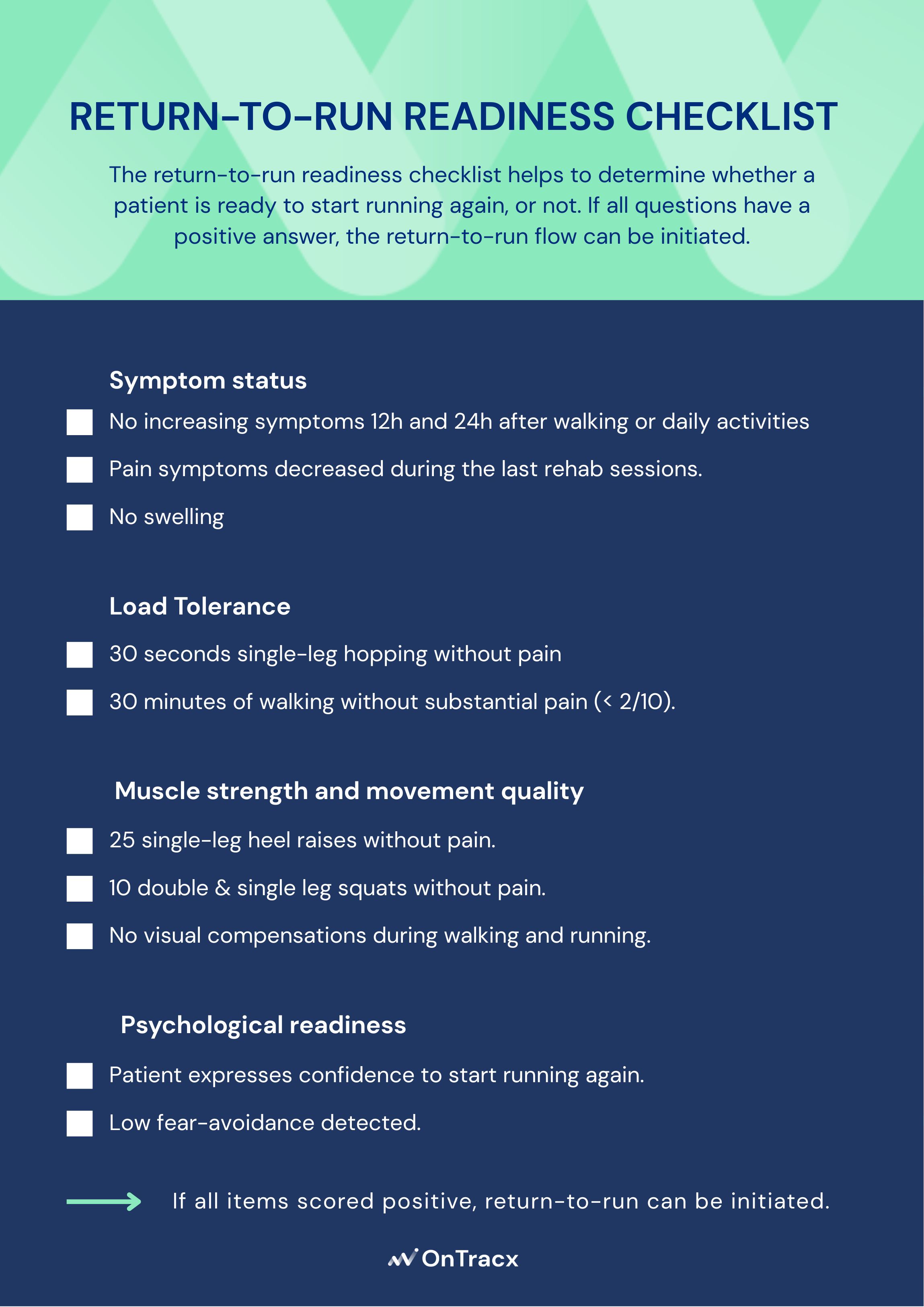
That matters directly for return-to-run. By the time running restarts, the athlete isn't just working around a healing ligament, they're rebuilding capacity lost during the very period meant to protect the joint, the same principle behind building capacity versus managing load. Progressing volume without accounting for load in relation to that lost capacity is where ACL return-to-run trajectories quietly go wrong.
.png)
The asymmetry that lingers
We've written before about why gait asymmetry isn't the red flag it's often assumed to be, at least in the general running population. ACL is different: the long unloading phase means many patients keep unconsciously offloading the reconstructed leg well past RTS clearance, and in this population, persisting knee loading asymmetries have been linked to a higher risk of post-traumatic knee osteoarthritis, since the cartilage is no longer loaded the way it's used to (Gardinier et al., 2014).
That's a meaningful nuance: asymmetry isn't inherently dangerous, but in a joint unloaded for months, it's worth tracking rather than assuming it resolves on its own once someone is cleared to run. These asymmetries also aren't always visible at a comfortable pace, they're exacerbated, and easier to catch, at faster speeds (Garcia et al., 2022).
Two different questions, not two competing tools
Other analysis tools used in ACL rehab tend to focus on movement quality: how stable a knee looks during a task, how coordination organizes itself under load. That's a criteria-based question: does this pattern look and behave the way we'd want at this stage of rehab?
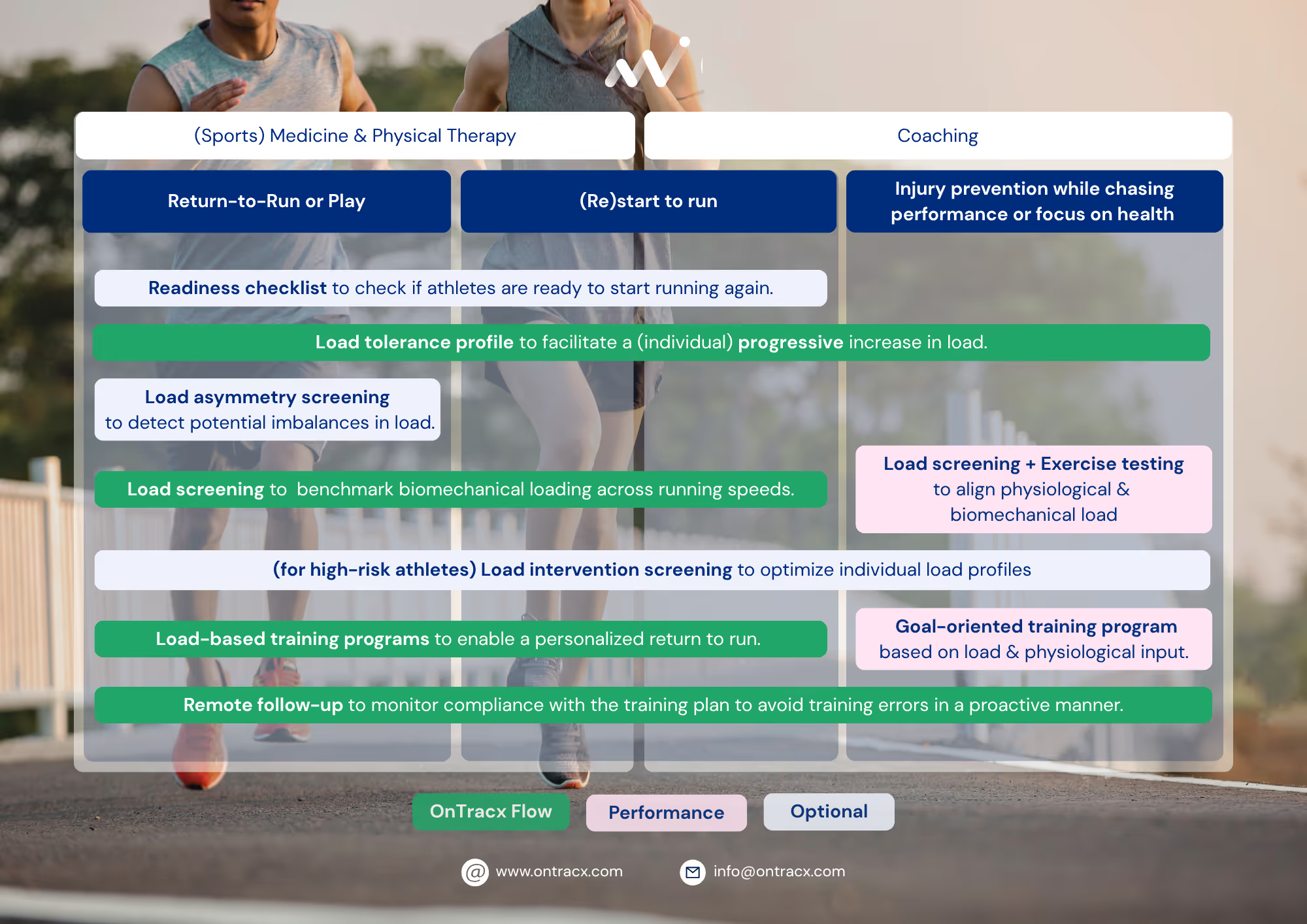
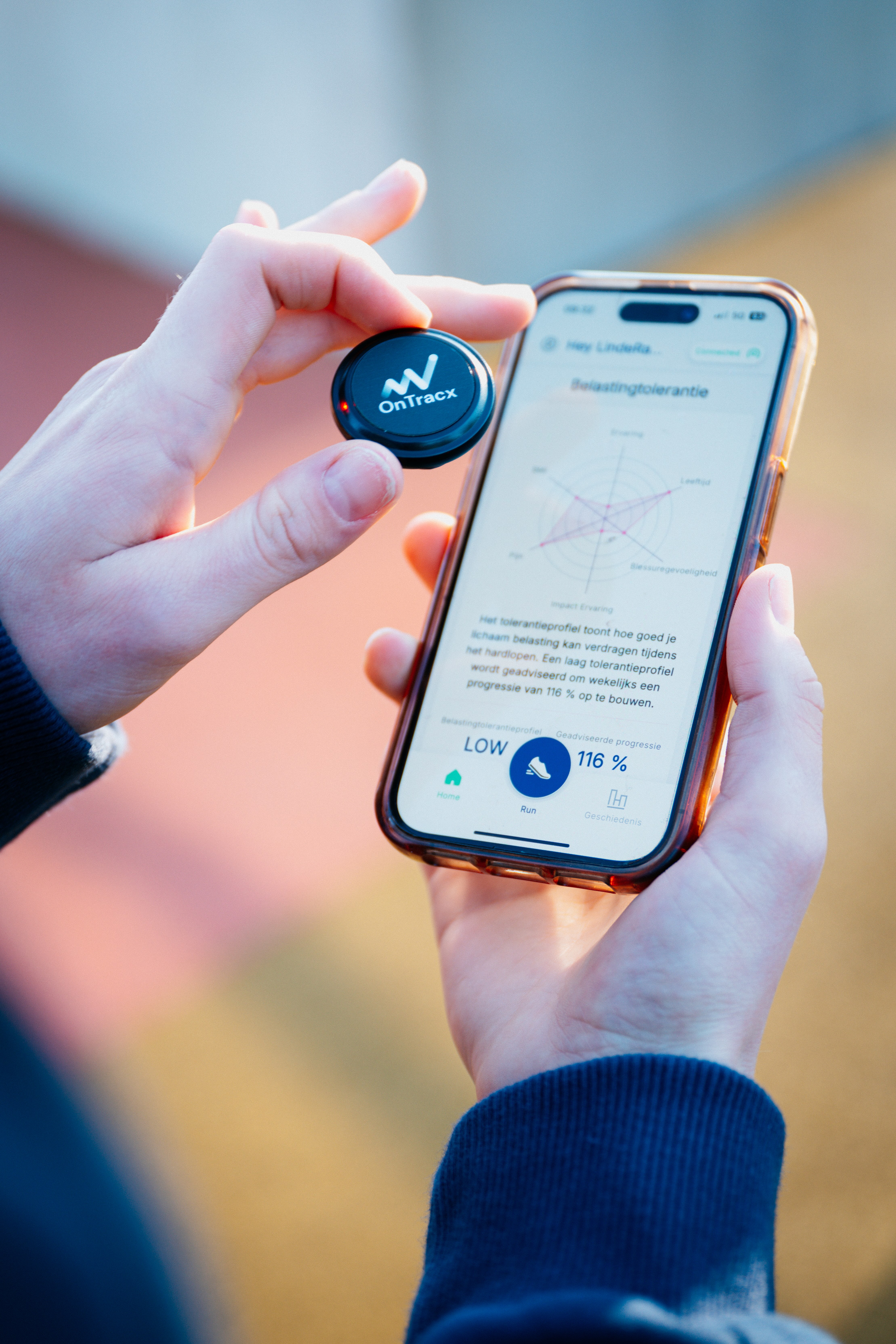
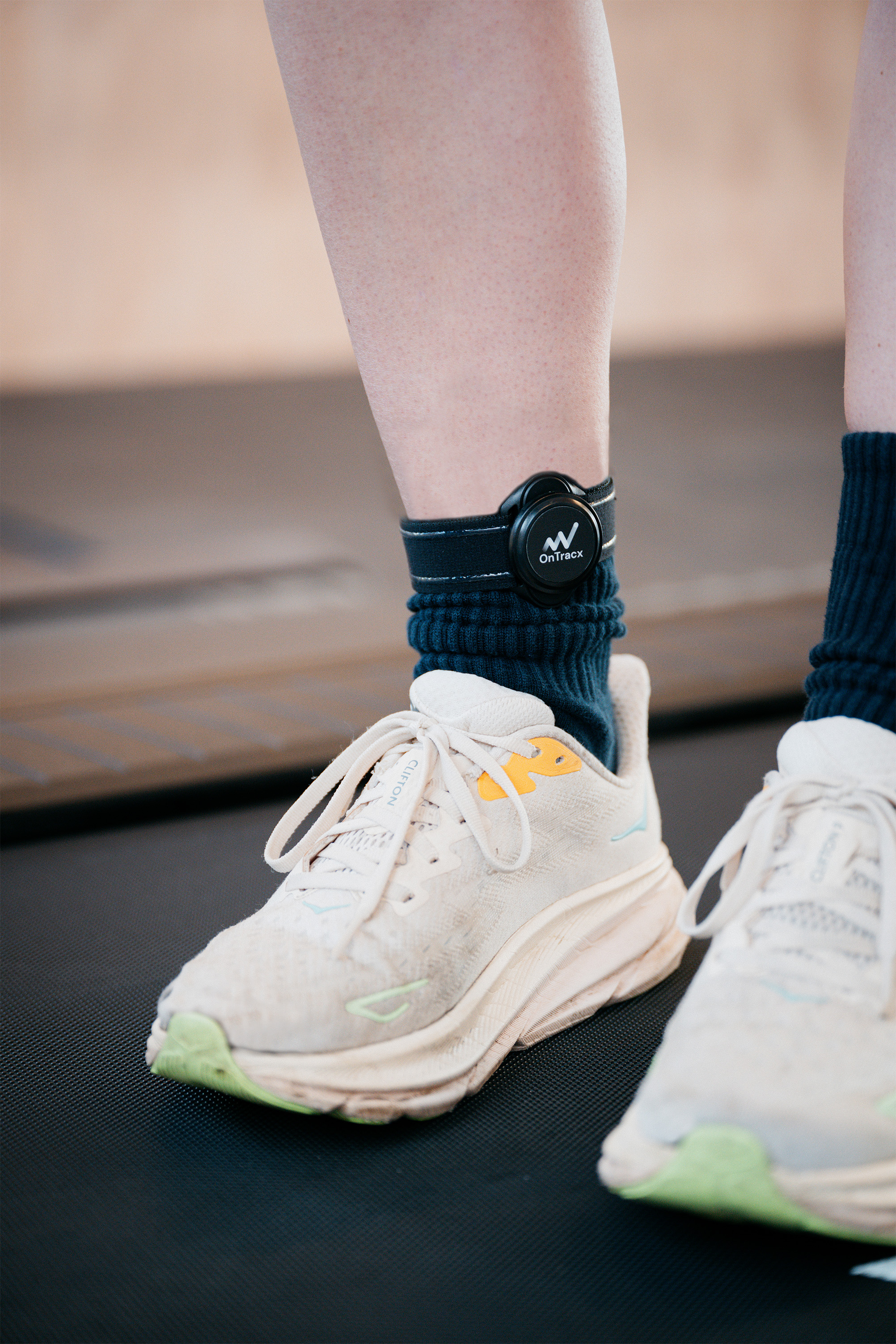
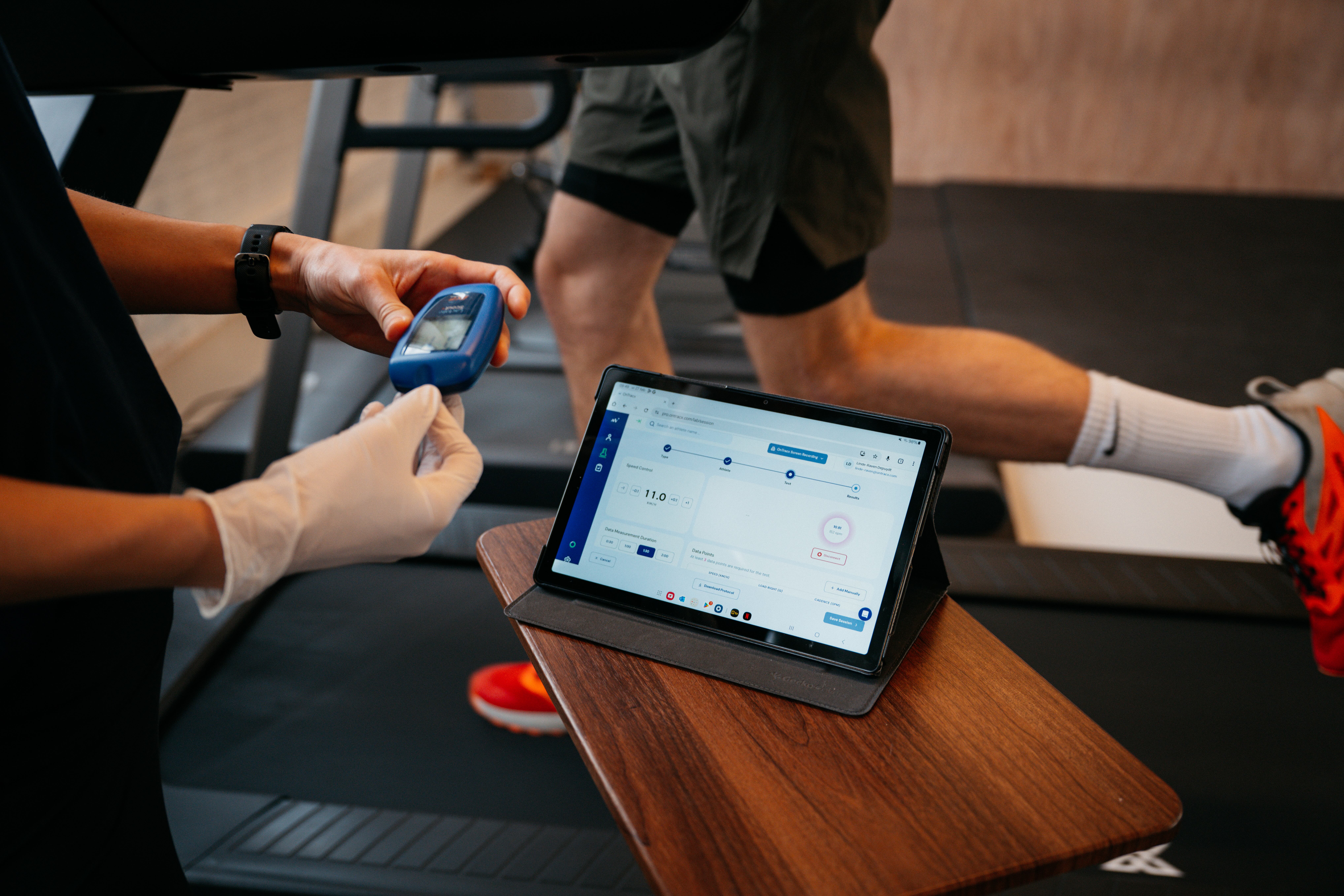
OnTracx answers a different question: how much mechanical load is this runner accumulating, and is that build-up happening at a safe pace? It doesn't score movement quality, it quantifies the load itself, in the field, over time, and turns that into a structured progression.
These are two parts of the same problem: is the movement good enough to load, and is the load itself being built up safely? A patient can pass every quality checkpoint and still get reinjured if running load spikes too fast, the same disconnect our blog on continuity in return-to-sport describes for team athletes moving from rehab into training.
Where OnTracx adds something specific for ACL patients
Our strongest argument for ACL isn't new, it's the same one we make for every return-to-run trajectory, applied to a population where it's especially relevant right now:
- An objective, mechanical load measure, rather than distance or duration alone, to guide how running is reintroduced. This is exactly what current thinking on ACL and hamstring injury asks for: not just "is the knee stable," but "how much cumulative strain is this tissue absorbing, and how fast."
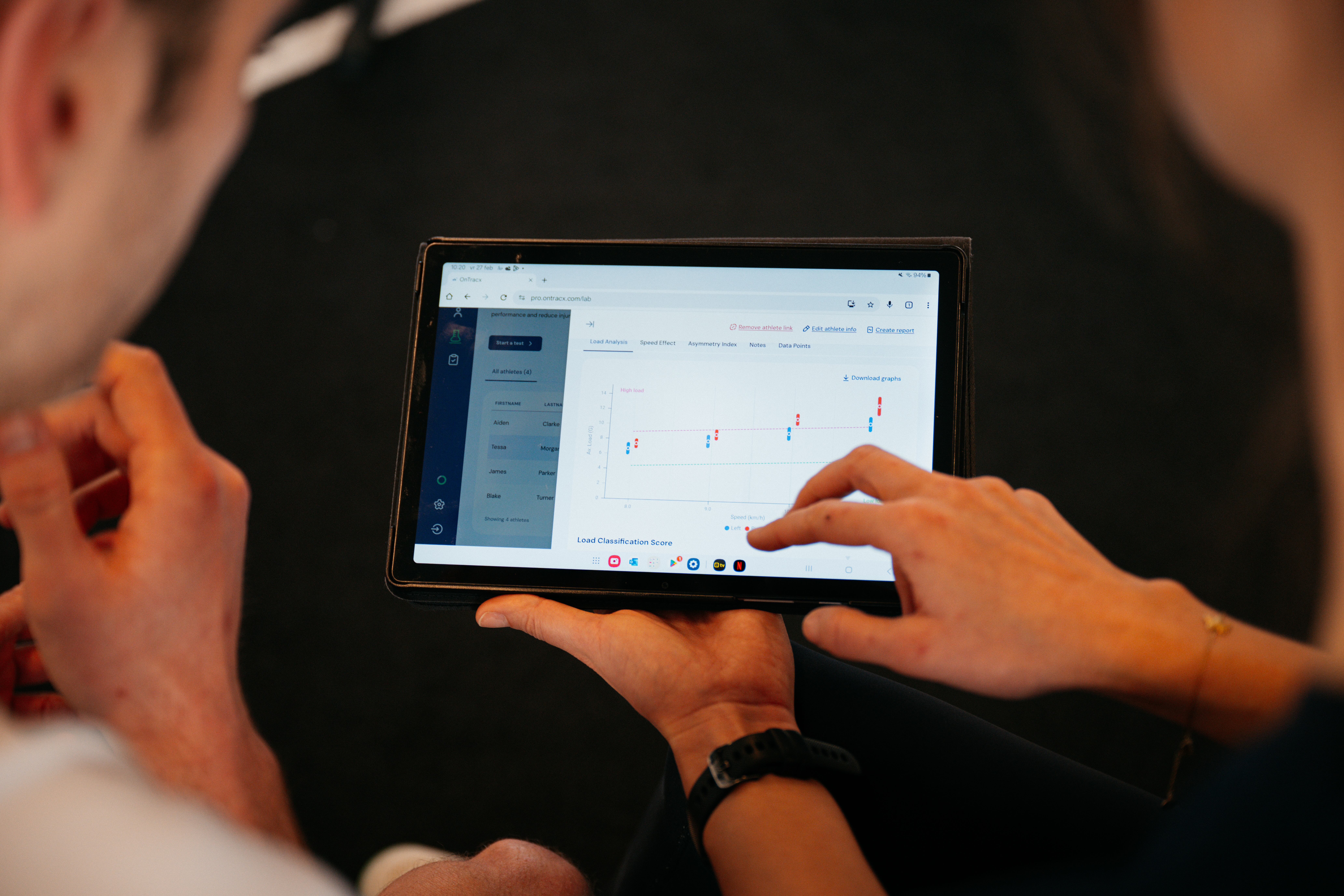
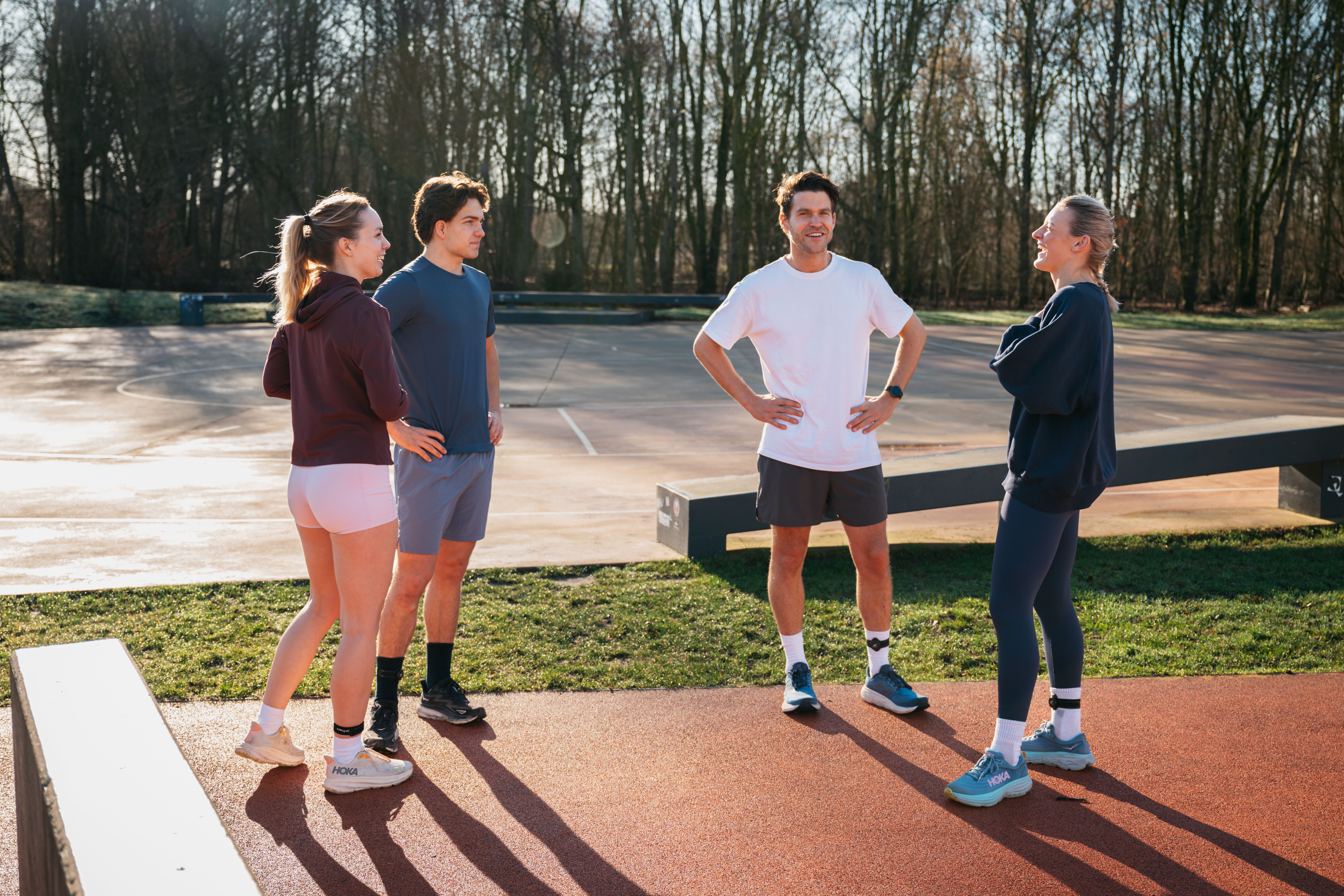
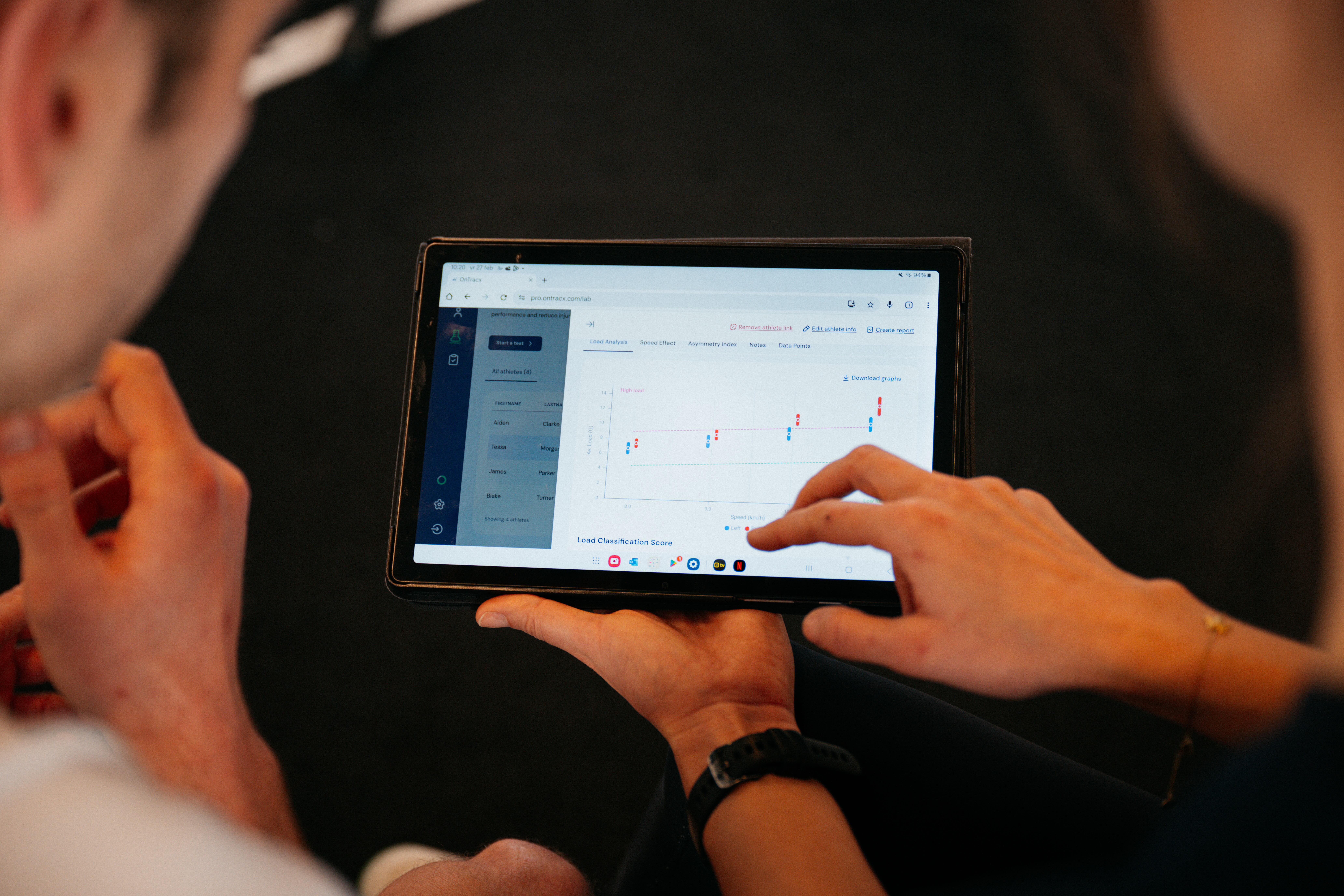
- Per-leg load, tracked over time, not just once. Every load screening reports how much load each leg is carrying, and how that differs at different speeds. Repeating the screening as rehab progresses lets professionals test higher speeds as tolerance grows, showing not only whether asymmetry is closing over time, but whether it's still present at speeds that weren't tested before, and are more demanding. More screenings over time also means a more accurate load profile for that runner.
- Gradual, in-the-field build-up of running load, following the same non-linear logic from how running speed shapes biomechanical load: small changes in speed or volume can disproportionately raise load, which matters even more while tolerance is still building.
- Remote monitoring of pain and other symptoms alongside load, so professionals aren't relying solely on what happens during a clinic visit every one or two weeks.
None of this replaces the clinical call on whether someone's ready to run, or how fast to progress. It fills the phase where volume is building and guesswork tends to creep back in once the patient leaves the clinic.
It depends on the athlete
How relevant this is in practice depends heavily on who's in front of you.
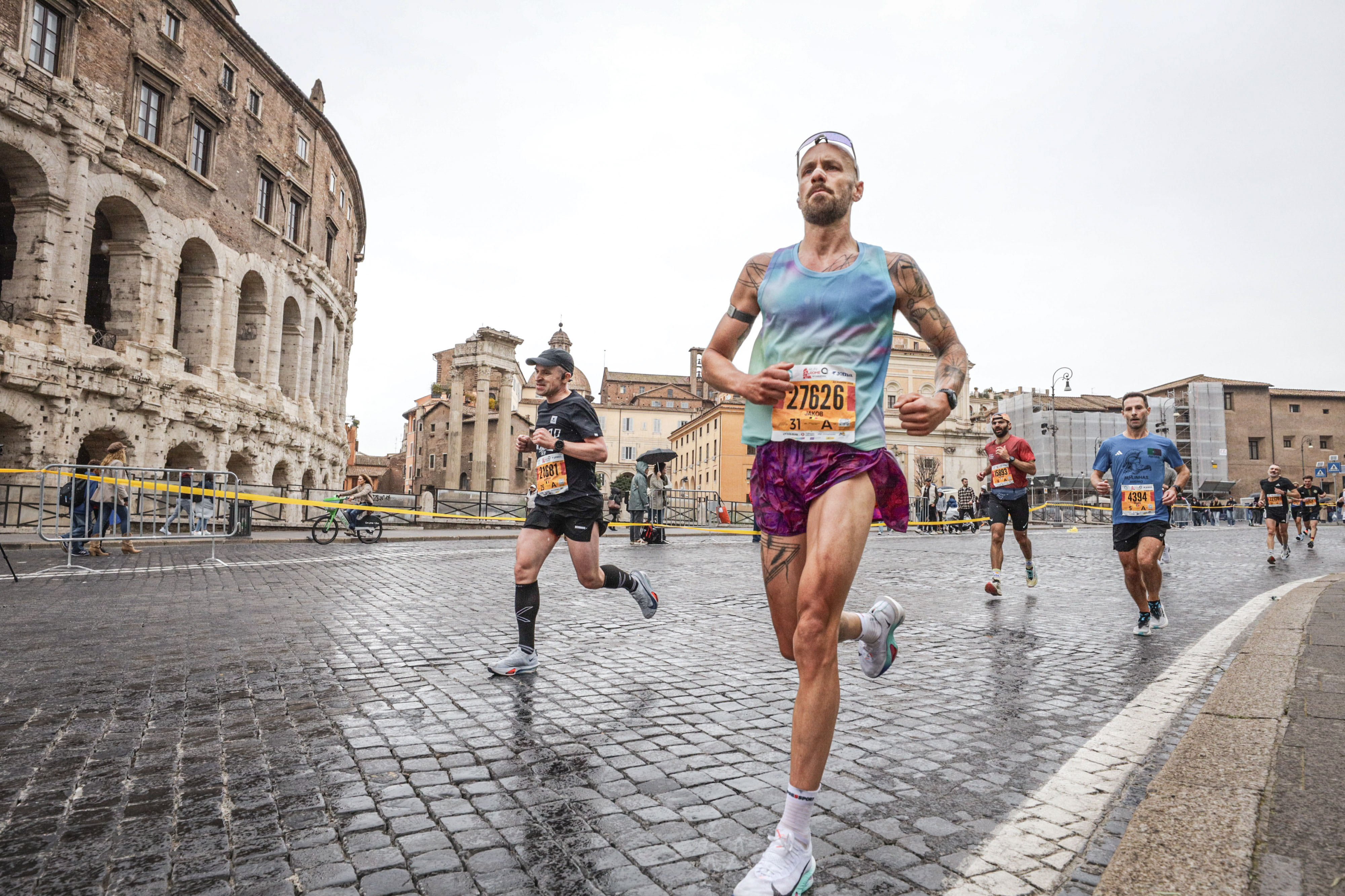
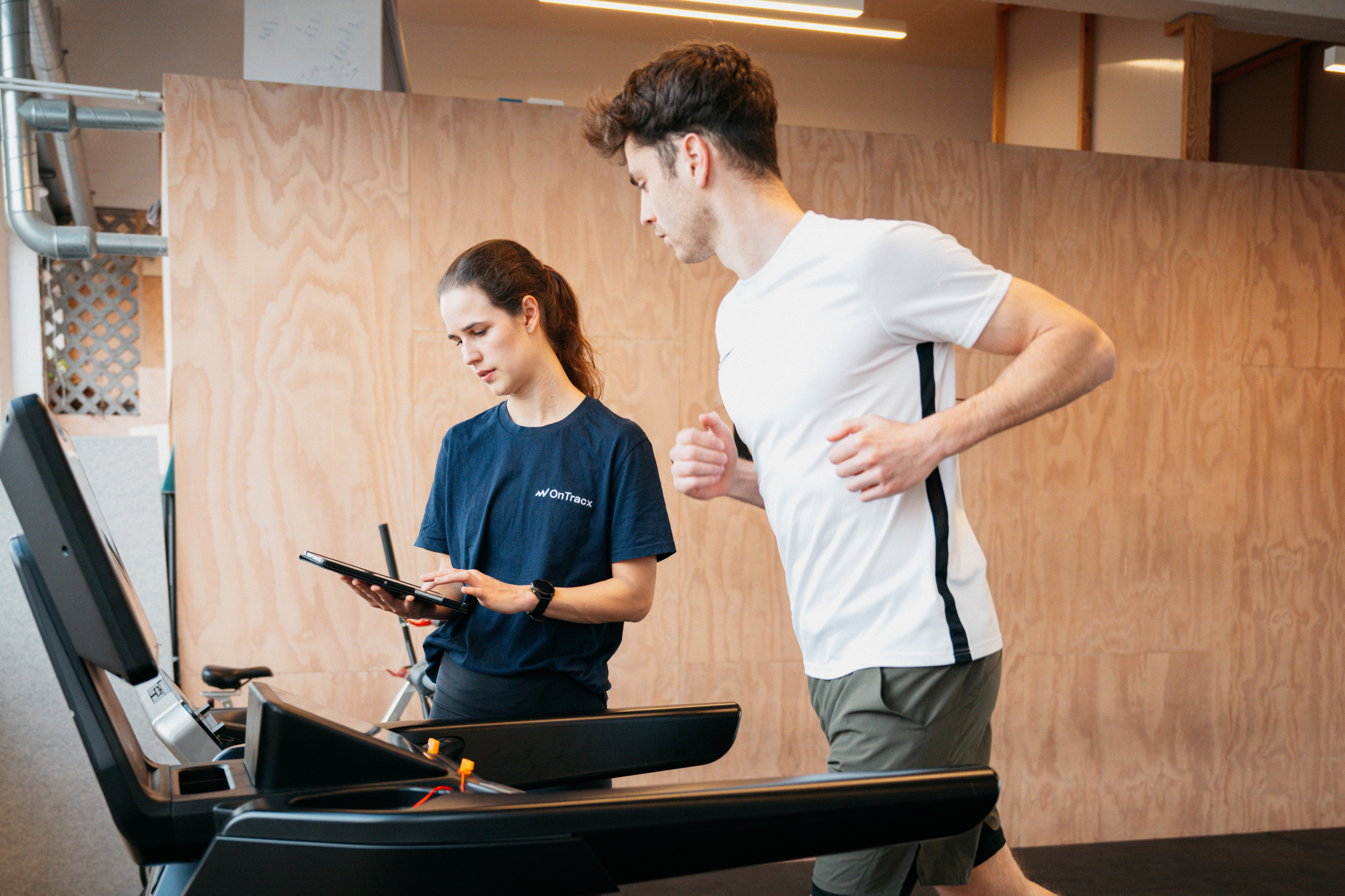
Jos (34) tore his ACL in a five-a-side match and had it reconstructed with a hamstring graft. Rehab went by the book: strength returned, hop tests symmetrical, cleared to run at week 14. But "cleared to run" turned out to be the easy part. His physio used OnTracx to turn that clearance into an actual plan, starting with a load screening at three speeds around his preferred pace, then building volume before speed. That first screening already showed a clear leg asymmetry, unsurprising after months of unloading the knee, so it became something to track rather than a reason to hold him back. A slightly longer session once produced a load spike well above his recent average, caught before Jos felt anything, and the next session was adjusted rather than pushed through. Repeat screenings every few weeks added higher speeds as his tolerance grew, and showed the asymmetry gradually closing. Ten weeks later, Jos was running 5 km without a setback, his asymmetry had stabilized at lower speeds but was still present at higher ones, and he had a clear, visual record to bring to his final check-up.
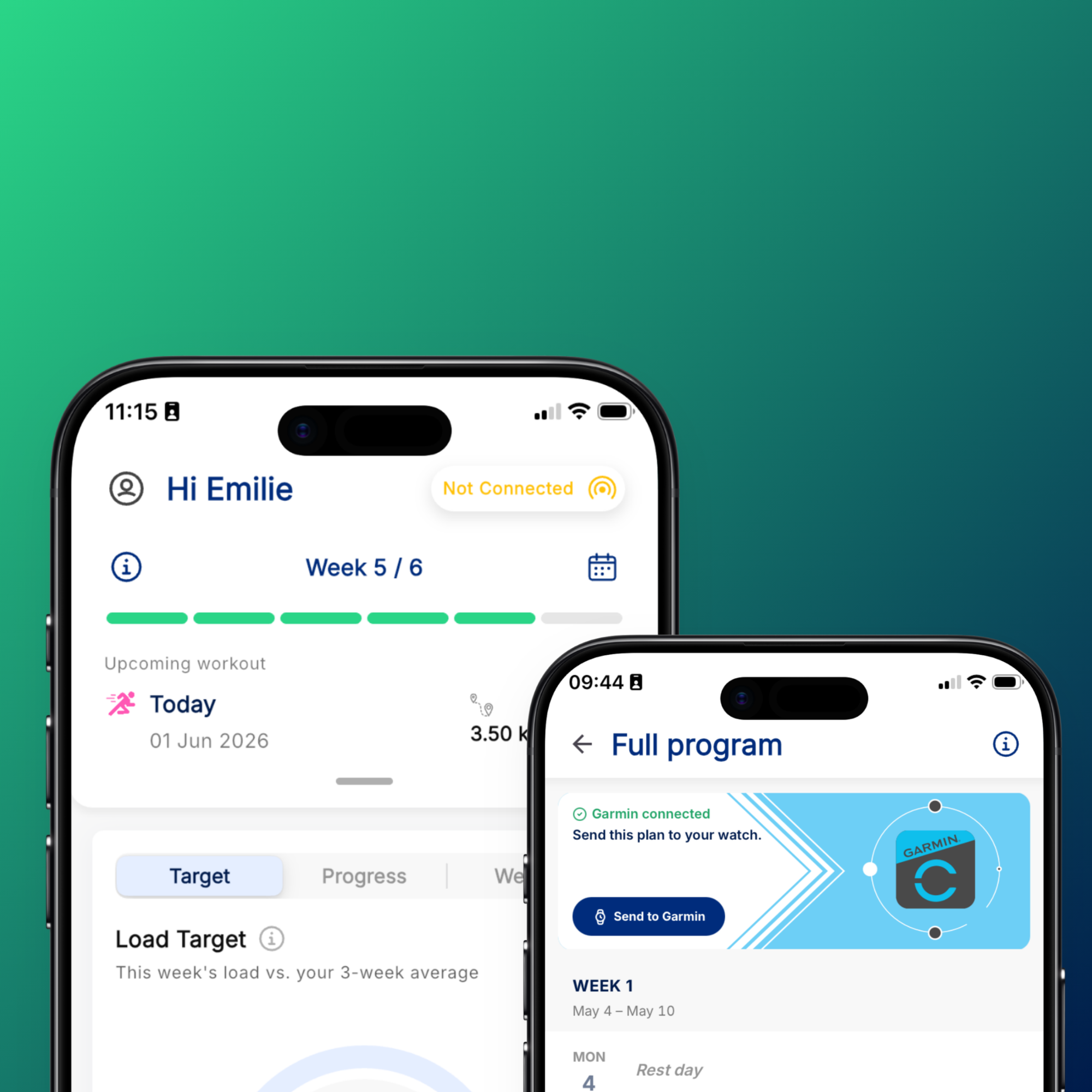
For a recreational runner like Jos, running load is the return-to-sport pathway, there's little else standing between rehab and "back to normal." For a team-sport athlete, running is one phase in a longer road toward cutting, jumping, and contact, one that demands both regaining control over specific movement patterns and re-tolerating the cumulative load of team training, thousands of steps, repeated accelerations and decelerations. Movement-quality criteria mainly test the first, and the second is easy to overlook: athletes can look ready on a hop test while still lacking the load tolerance the pitch will demand, exactly the gap our piece on why continuity matters more than criteria describes. OnTracx's in-the-field monitoring, real-time feedback, Garmin integration, follows the athlete outside the clinic and onto the pitch, which is arguably what matters most here.
A layer, not a replacement
We're not positioning OnTracx as a stand-alone ACL solution. Movement-quality tools answer whether a pattern is safe to load; OnTracx answers whether the load itself is being built up safely. Right now, that's a load-steering layer.
For practices already running ACL programs with other analysis tools, that's the pitch: not a replacement, but a missing layer underneath it, one that makes the running build-up as evidence-based as the criteria used to greenlight it.
.png)





%20(5).png)

%20(3).avif)
%20(4).avif)

.jpg)