Too much to read
- Treadmill and overground running are biomechanically comparable in most respects, based on a meta-analysis of 33 studies and 494 runners, with only a handful of impact-related measures differing.
- Those differences are systematic rather than random, which means they can be corrected with a conversion factor instead of treated as noise.
- A 12-week training program in 27 novice runners produced no meaningful change in running kinematics or kinetics — short-term retesting adds little for healthy runners.
- Retesting matters mainly after an injury or once a runner's speed range shifts meaningfully.
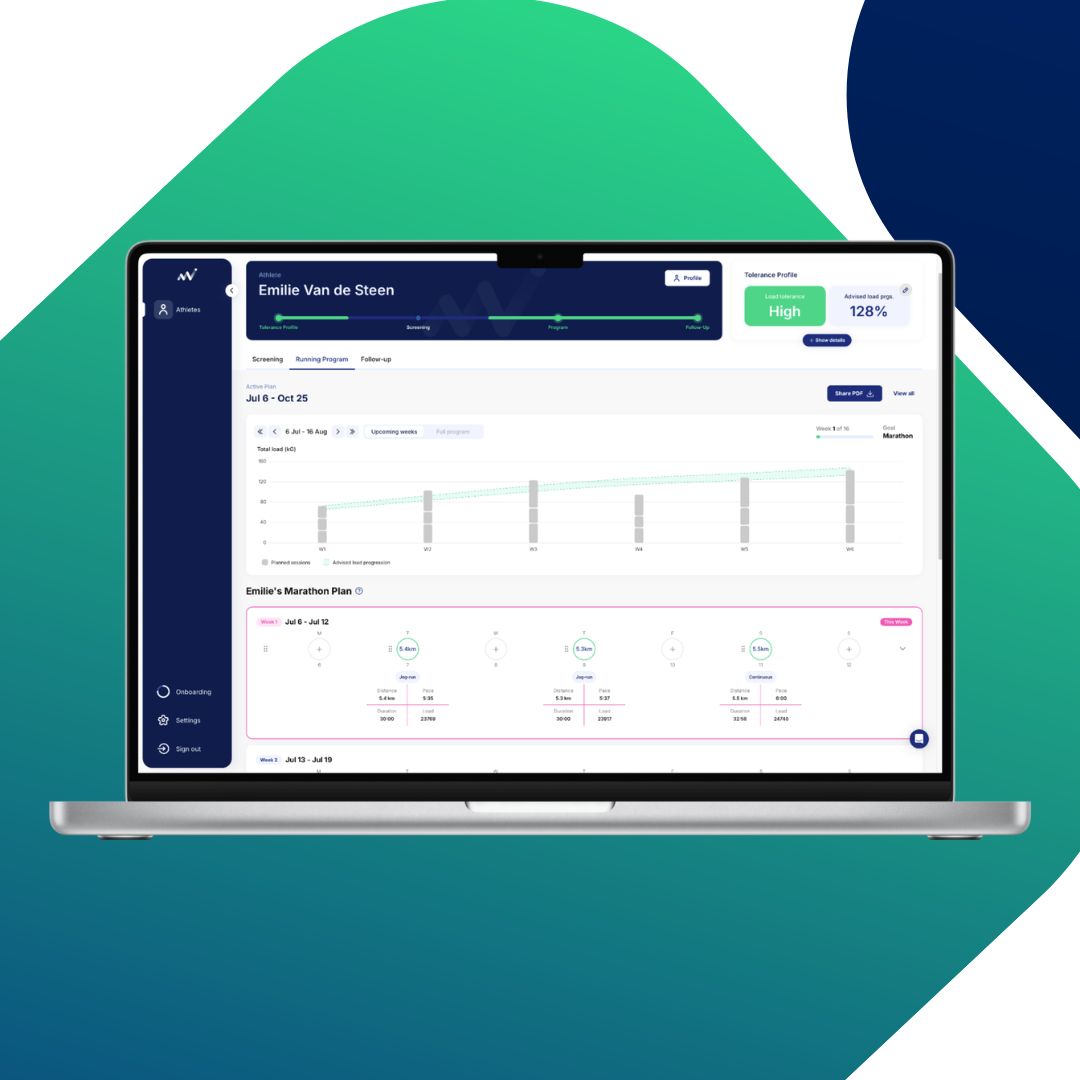
OnTracx uses these same principles to translate treadmill load into overground load, and to decide when a runner's screening data can still be trusted, without asking for unnecessary retests.
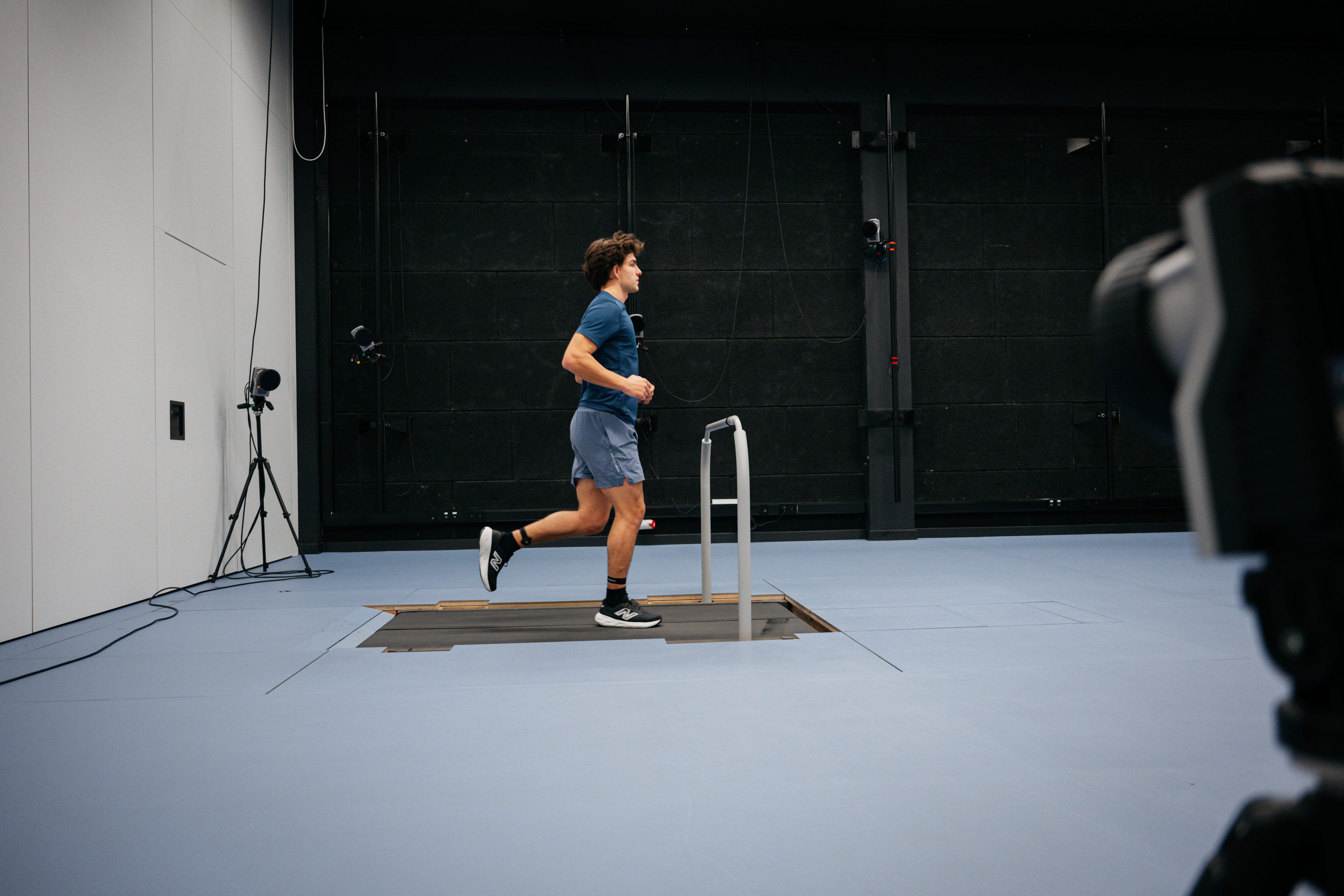
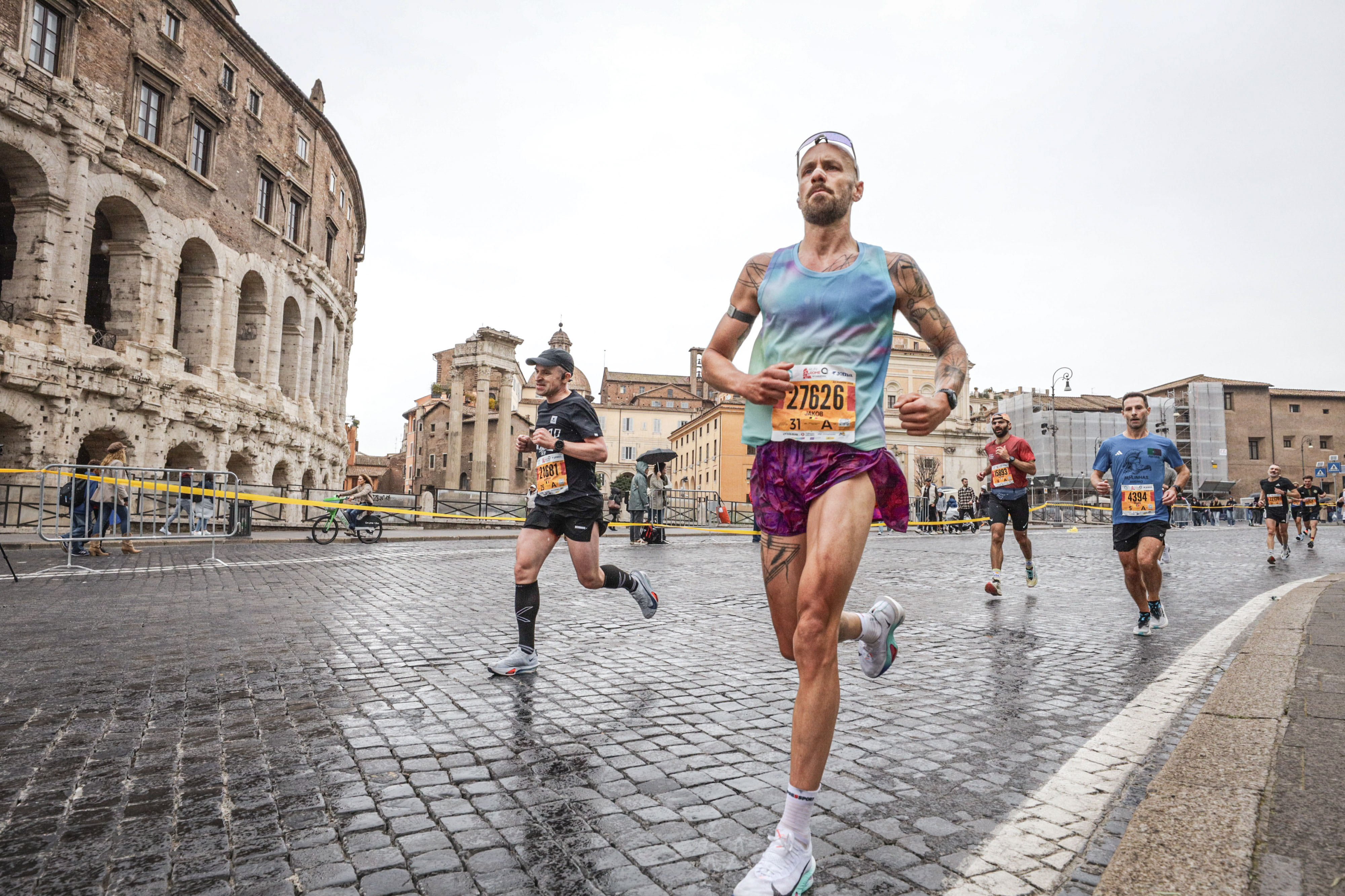
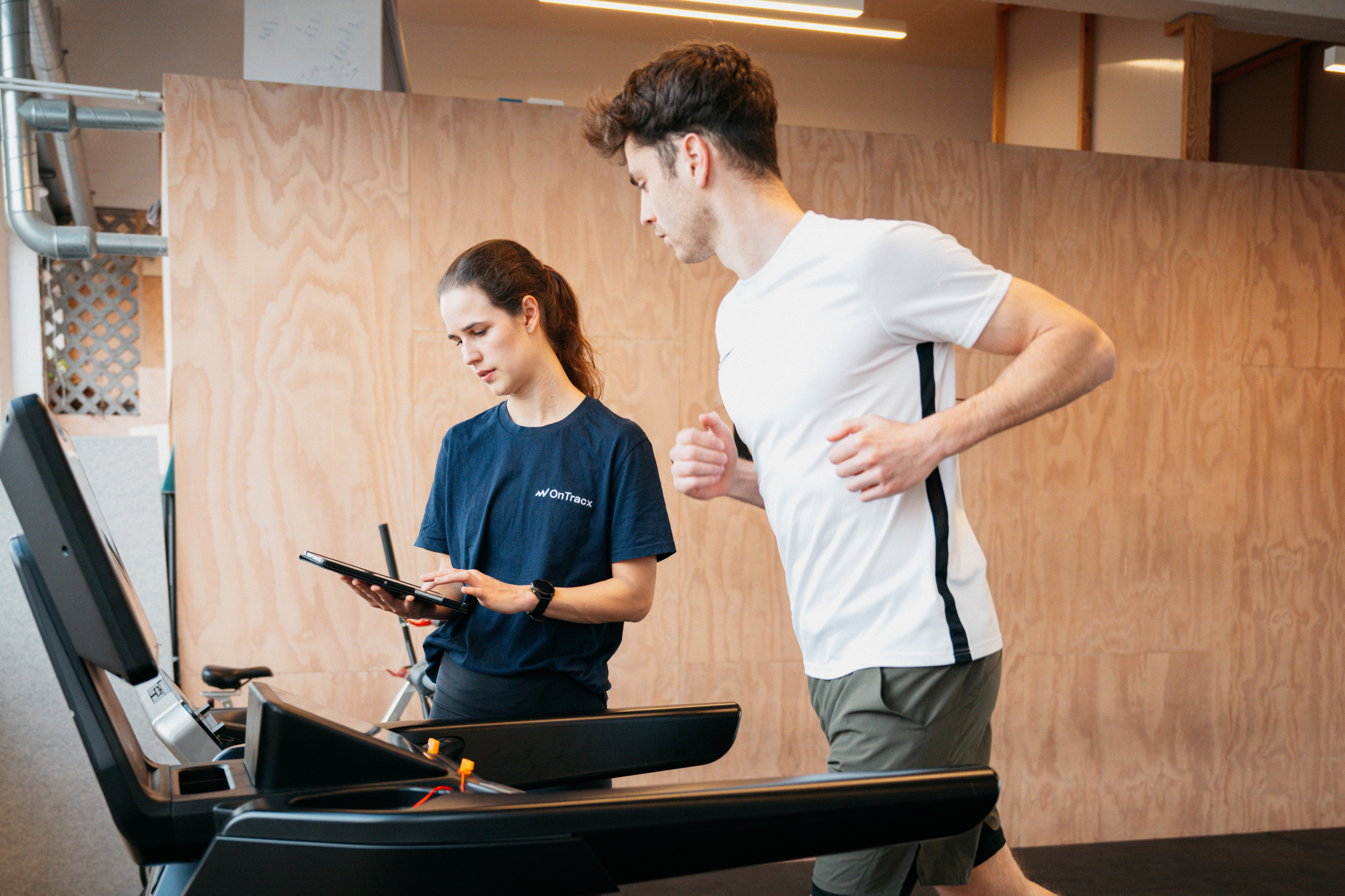
Some runs happen outside. Others happen on a treadmill, during a screening, a rainy week, or a session squeezed in before work. OnTracx's load-based approach is built around real-world running: the cumulative load a runner's tissues absorb, step by step, anywhere you run. So a fair question follows naturally: does a treadmill load the body differently and is that accounted for in the OnTracx approach?
Same movement, mostly the same load
A 2020 systematic review and meta-analysis pooled 33 cross-over studies and 494 participants to compare treadmill and overground running directly, with each runner tested under both conditions (Van Hooren et al., 2020). Most spatiotemporal, kinematic, kinetic, and muscle-tendon outcomes did not differ between the two surfaces. Stride patterns, joint angles through most of the stance phase, and general loading strategy were largely the same. A companion meta-analysis from the same research group found comparable physiological and perceptual responses between the two surfaces too (Miller et al., 2019), reinforcing that a treadmill session is a valid stand-in for outdoor running in most respects.
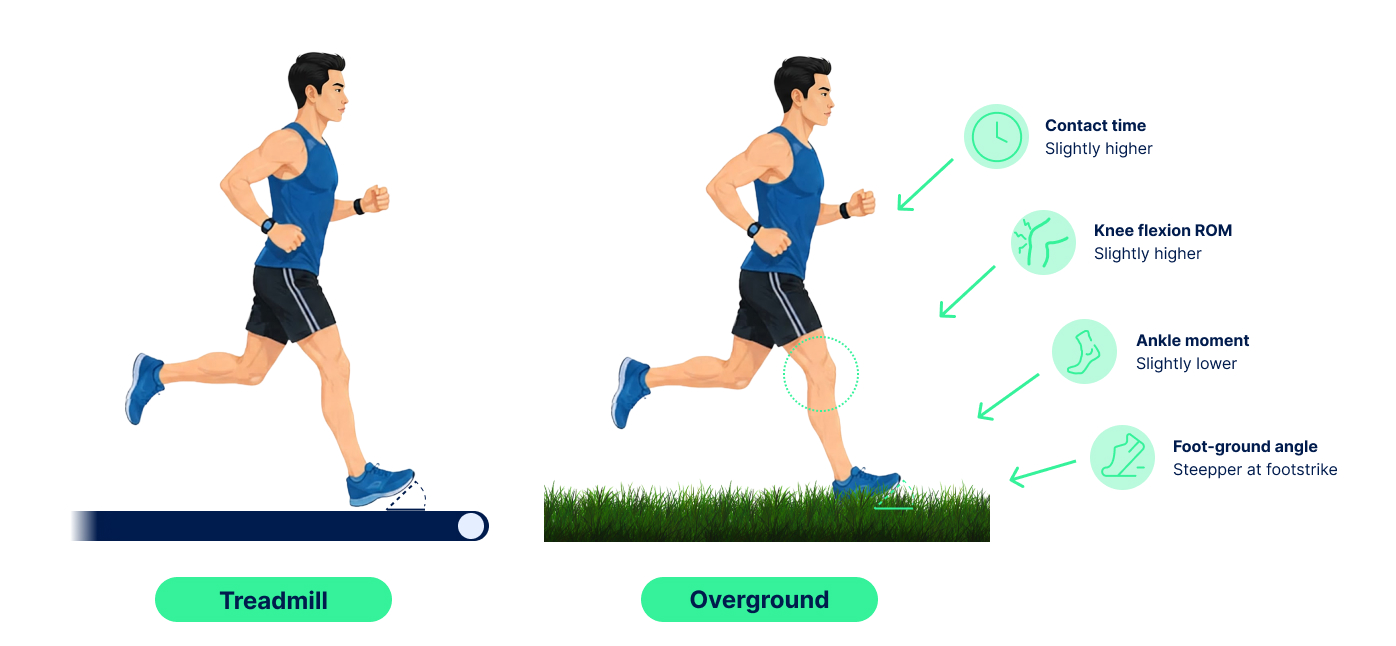
A few measures did differ, concentrated around footstrike and impact. On the treadmill, runners showed a flatter foot-ground angle at footstrike, less knee flexion range of motion during early stance, and a lower peak propulsive force, while contact time and ankle joint moment were slightly higher. A more recent wearable-sensor study over full 5 km runs found the same pattern in real-world conditions: spatiotemporal metrics stayed consistent, while kinetic and pronation-related measures still differed meaningfully (DeJong Lempke et al., 2025).
Treadmill running isn't a completely different movement. It's the same running pattern, with a small, predictable shift in how impact is absorbed at footstrike.
Why the differences still need a correction
For a load-based system, "mostly comparable" isn't the same as "identical." A runner using a treadmill during a screening, in winter training, or in a rehab setting is still exposed to real mechanical load, but the amount and timing of that impact load per step is shifted compared to the road.
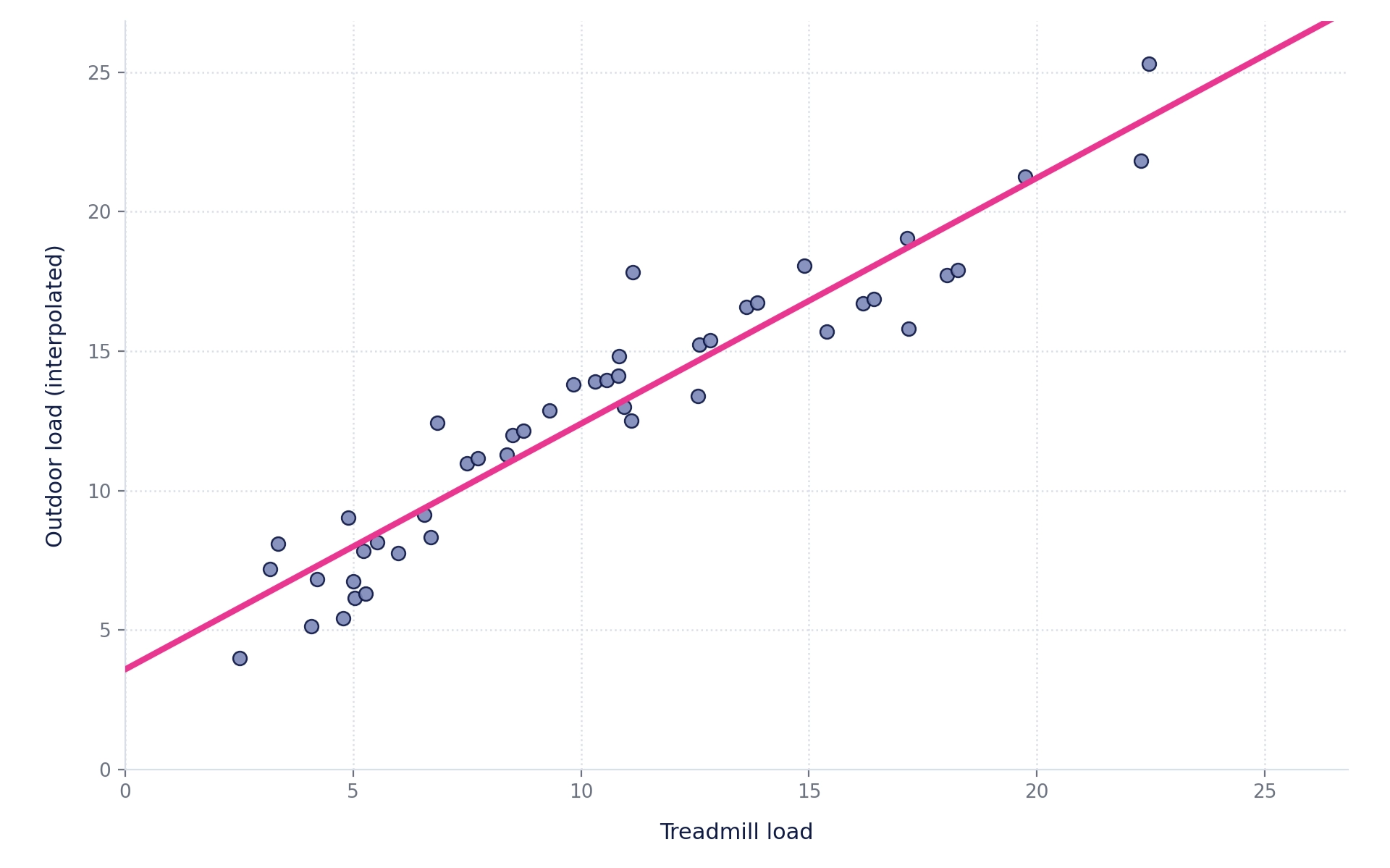
The relevant detail is that this shift is systematic. The differences found across studies point in consistent directions rather than varying randomly from runner to runner or session to session. Our internal validation confirms this: the relationship between treadmill and overground load holds as a consistent linear relationship across different runners, precise enough to be captured mathematically. That's what makes a conversion factor meaningful: apply it consistently, and treadmill data can be translated into an overground equivalent, rather than being discarded or treated as an approximation.
Translating treadmill load into overground load
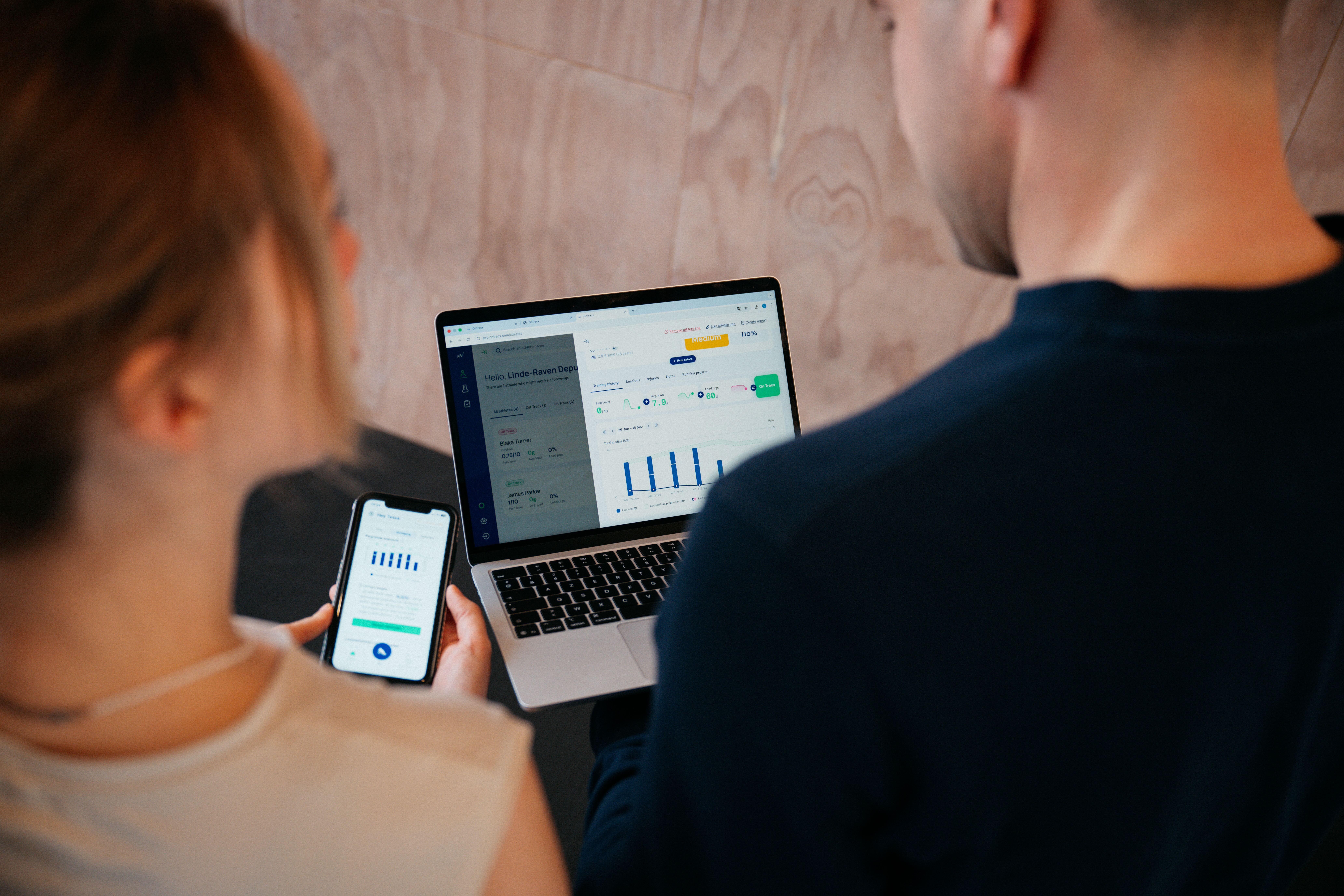
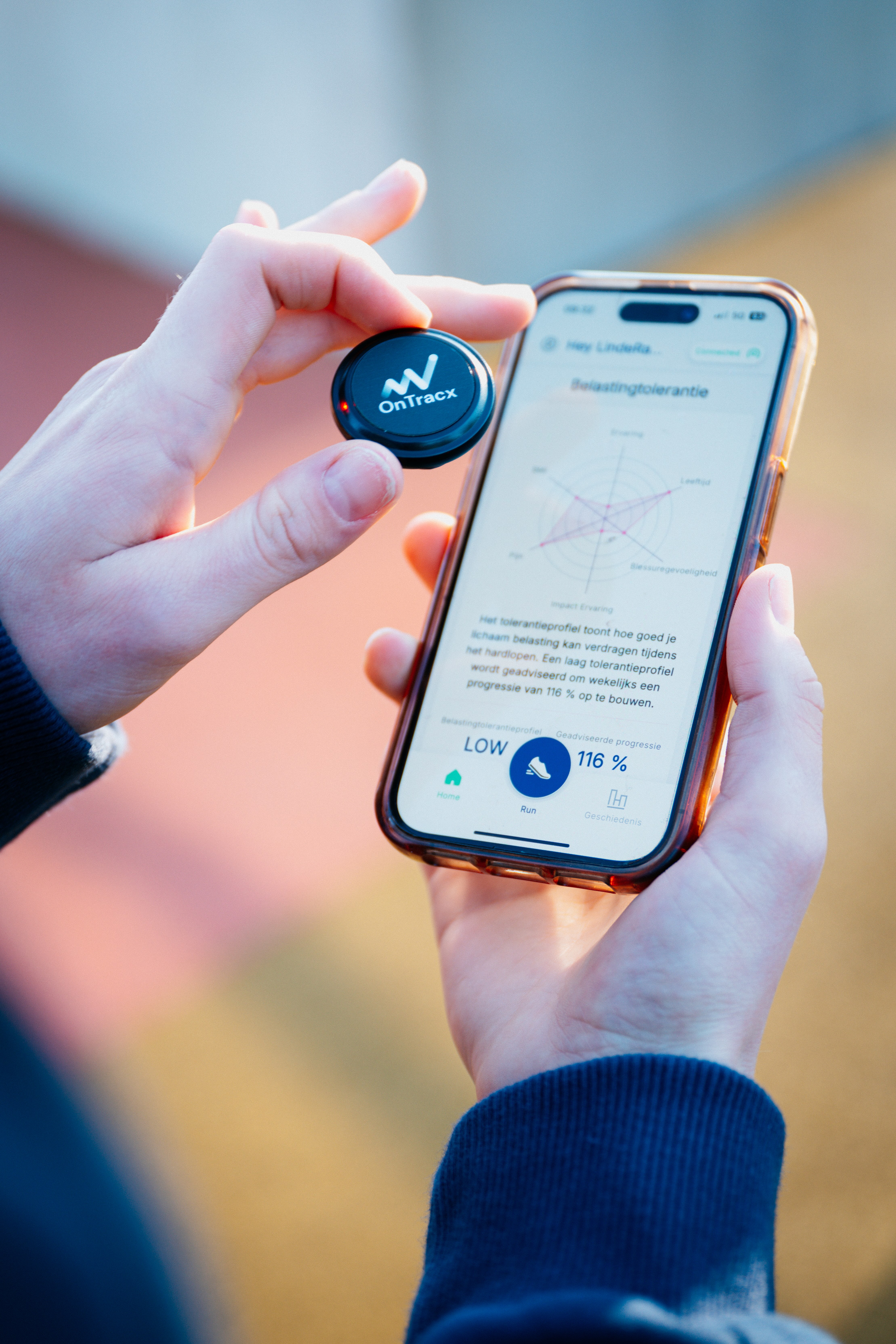
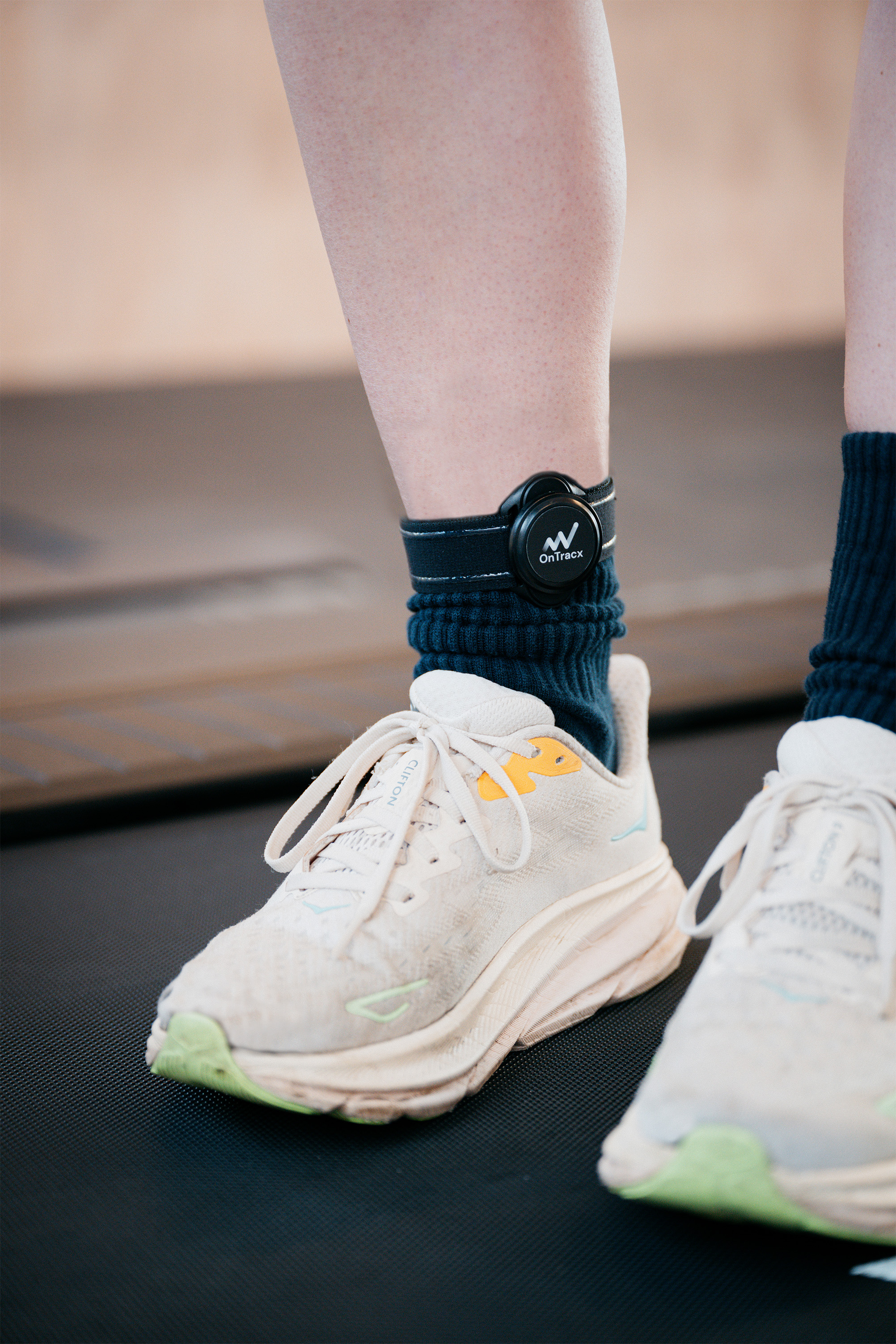
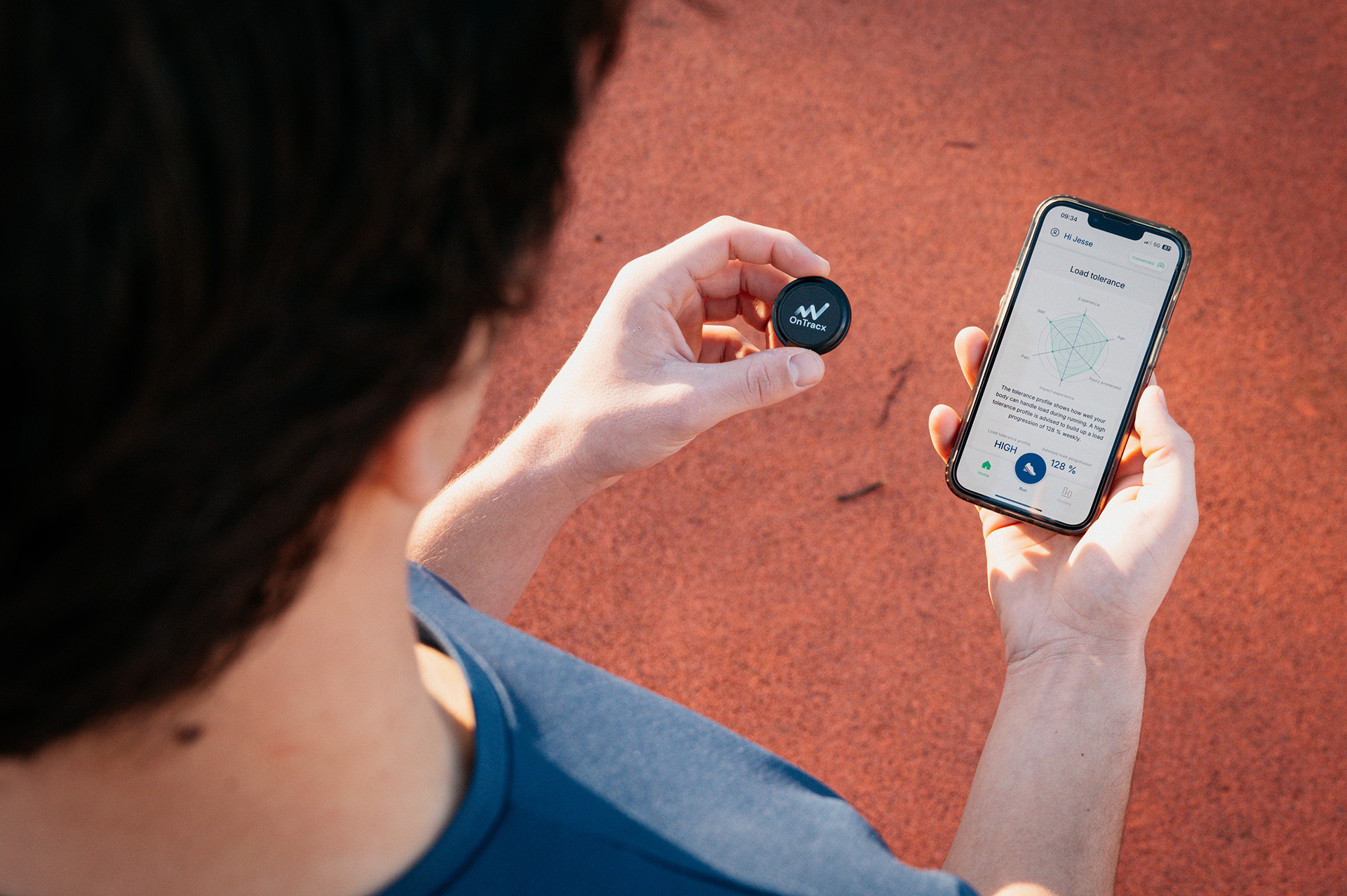
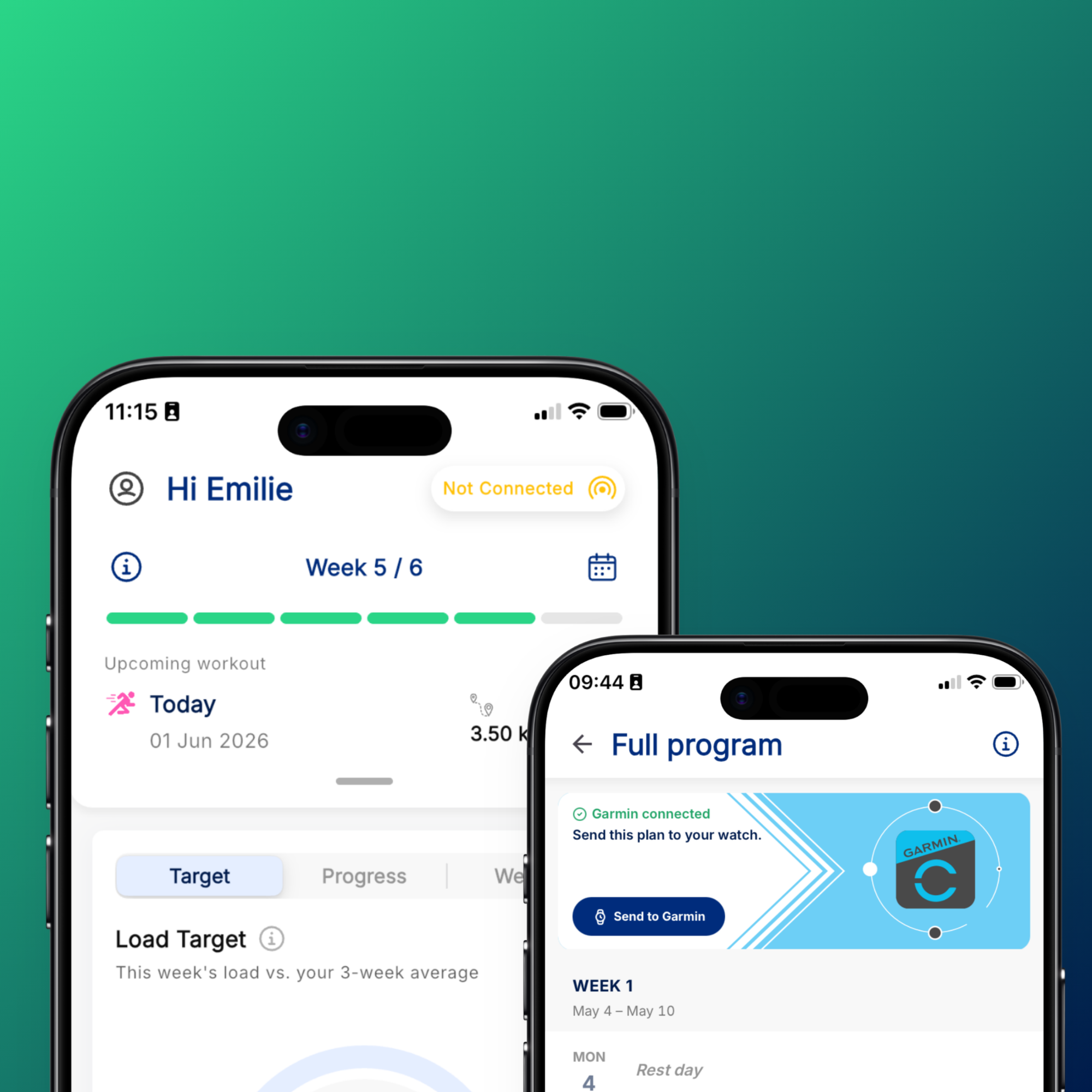
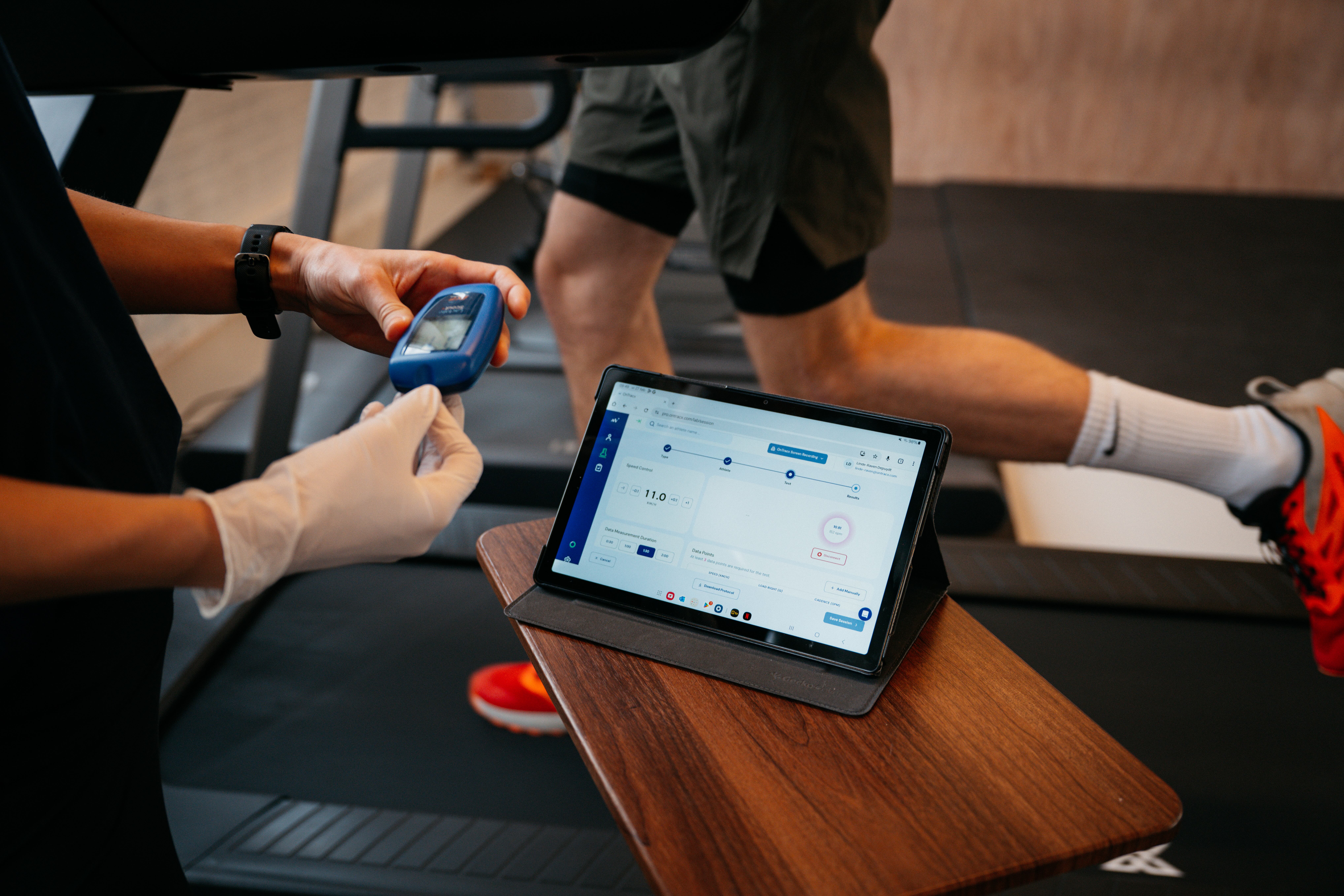
This is exactly where OnTracx applies the research, and it starts with how a run gets logged. A treadmill session isn't something to approximate afterwards: it can be recorded directly in OnTracx, with or without a sensor, by simply selecting "treadmill" as the running mode at the end of the session. When a sensor is worn, load is measured directly from the sensor data. Without a sensor, load is estimated for that specific mode, individualized to the runner based on the data available.
Behind that estimate, every session, treadmill or outdoor, is still expressed on the same scale, so cumulative load, targets, and training plans stay comparable across both.
By default, OnTracx applies a generic conversion factor to convert between outdoor and treadmill load, derived from the general treadmill-versus-overground relationship in our validation subsample, whenever no outdoor running data is available for that runner. As soon as enough outdoor sessions are recorded, that conversion is refined and optimized for the individual, since the exact magnitude of the shift can vary somewhat between runners and running styles.
This individualized, mode-specific approach is also what makes sensor-free follow-up possible after a clinic-based start. A rehab patient can complete a load screening on a treadmill under a physio's guidance, then keep logging outdoor runs afterward without a sensor. Because load for each run is estimated for that mode and tailored to the individual as more data becomes available, not applied as one blanket formula.
Does a treadmill screening still hold up?
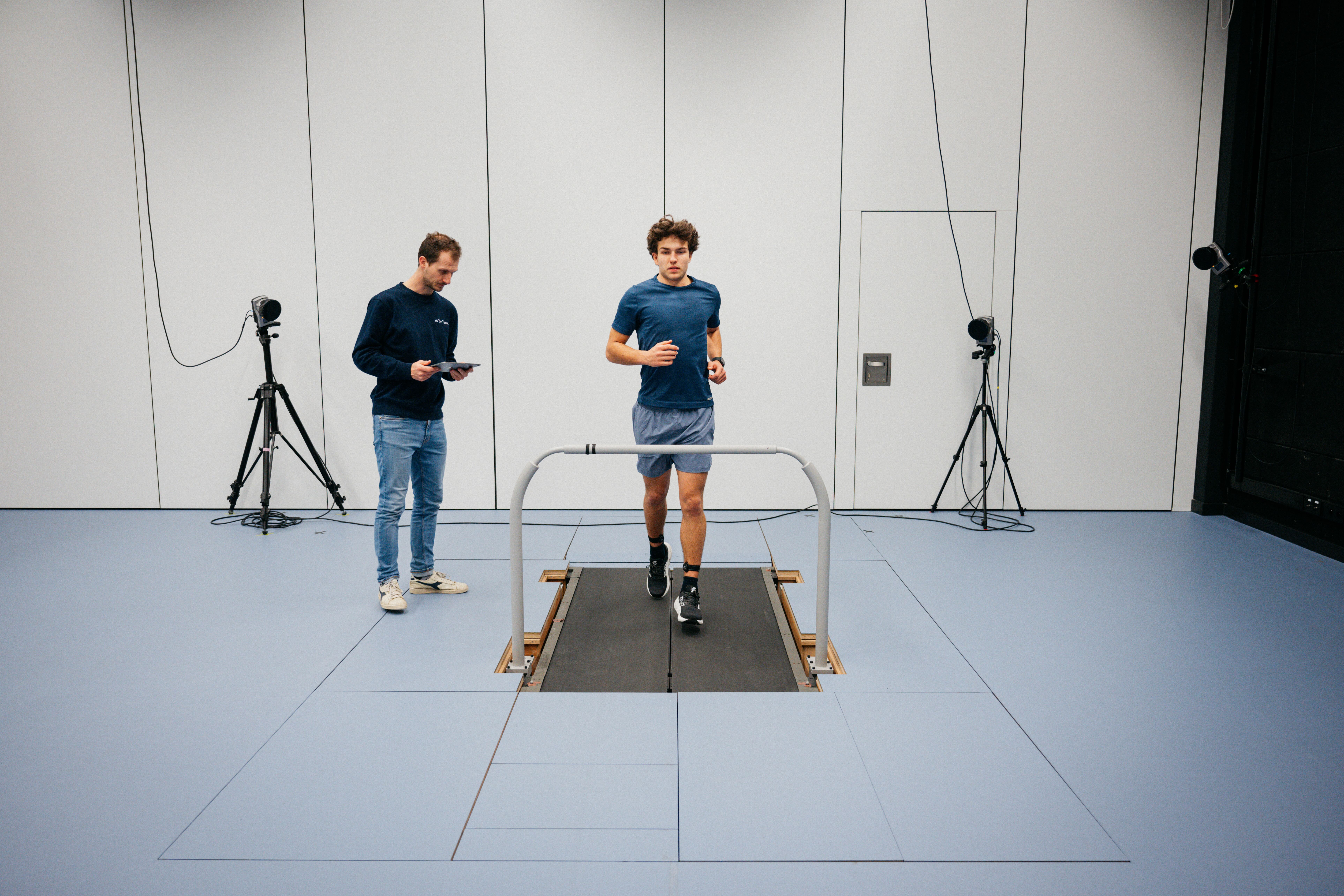
A related question is whether a screening or an assessment done on a treadmill still tells the truth about a runner's biomechanics. The same body of research that compares surfaces also shows that conclusions drawn from an intervention or screening remain consistent whether the testing happens on a treadmill or overground (Van Hooren et al., 2020; Miller et al., 2019).
In other words, if a treadmill test identifies a breakpoint, an asymmetry, or a response to a training intervention, that same conclusion generally holds outdoors too.
The surface changes the raw numbers slightly; it doesn't change the pattern that a screening is trying to detect.
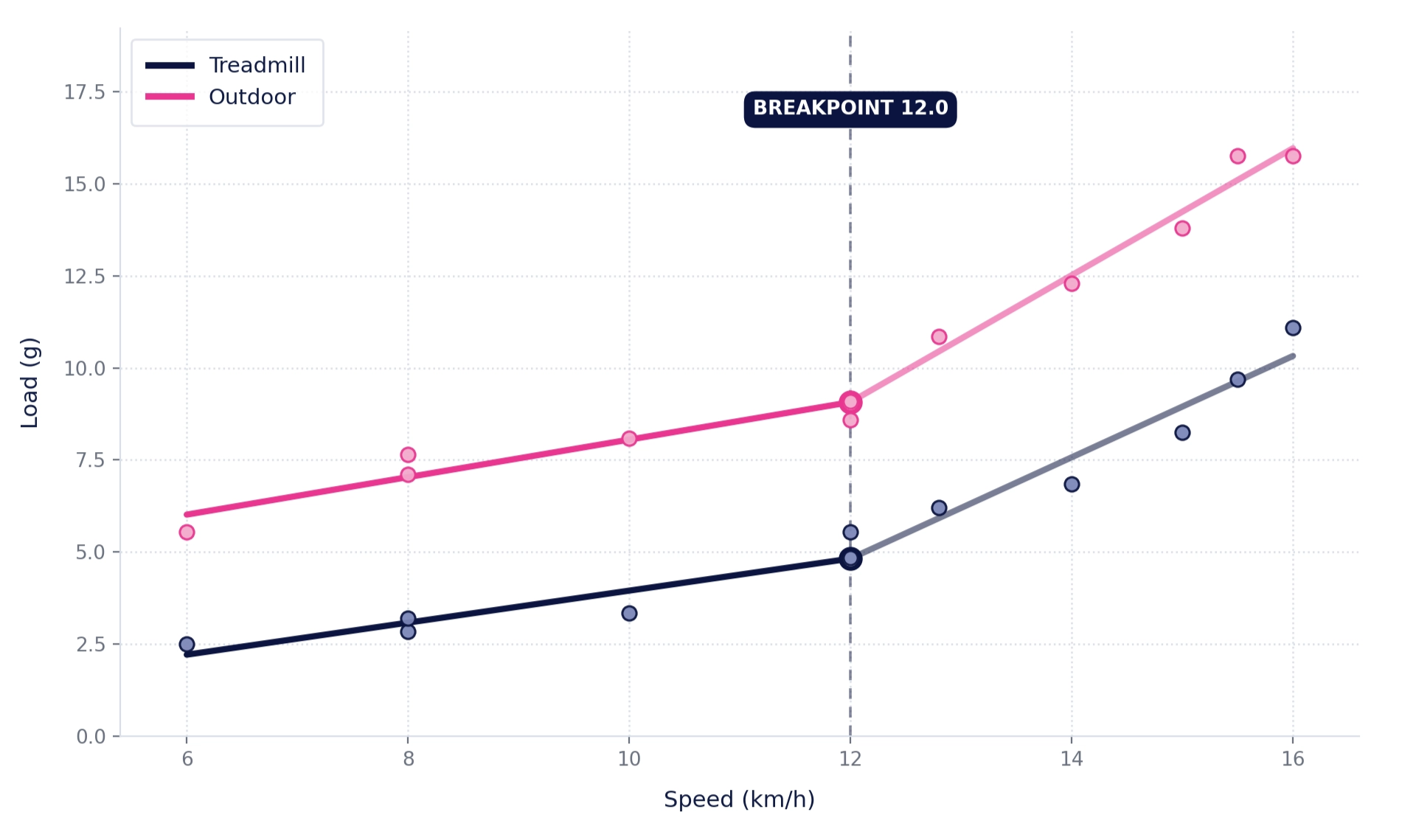
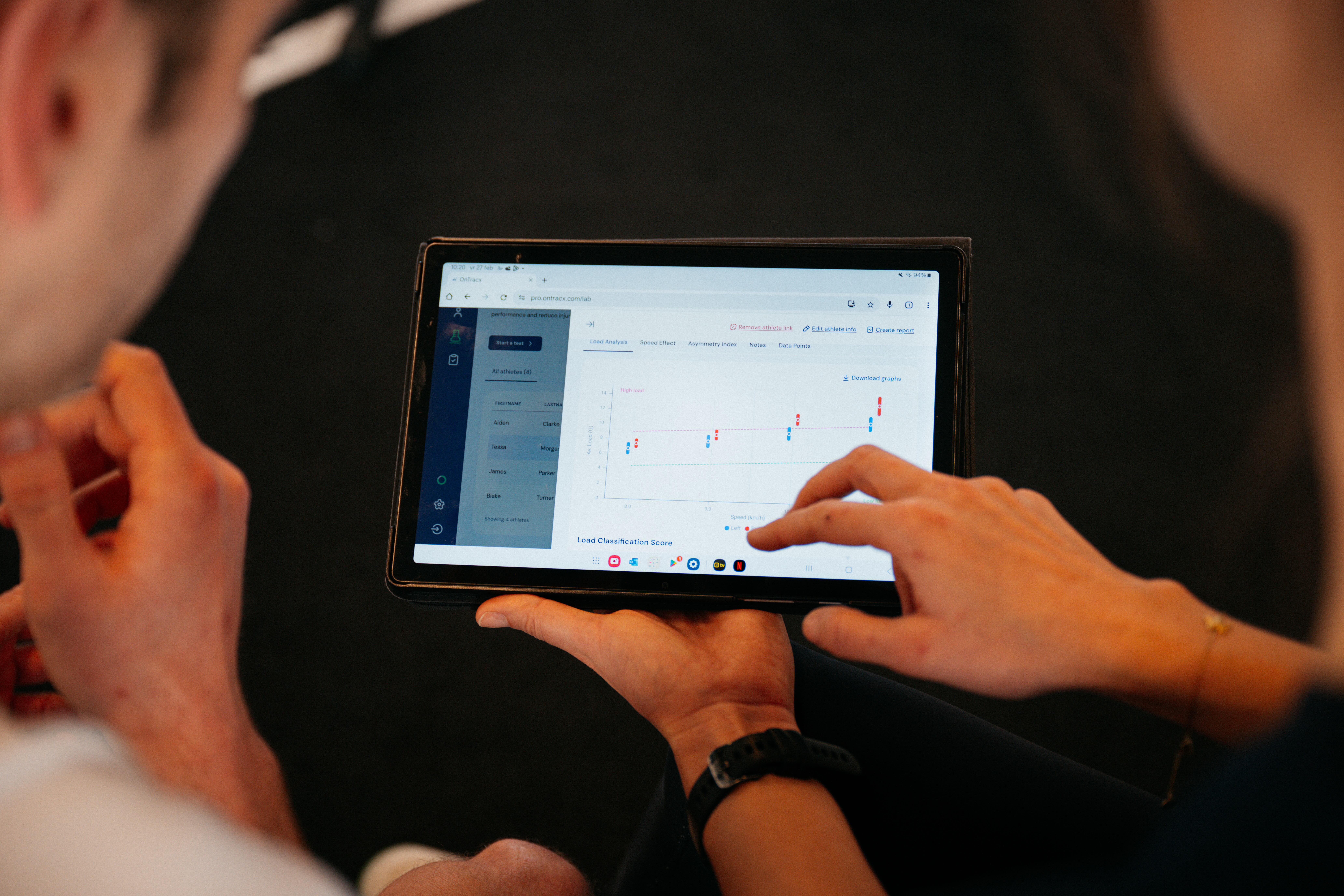
Figure 2: Load-speed curve for the same runner, measured on the treadmill and outdoors. Absolute load sits systematically higher outdoors, but the pattern it reveals is consistent across both environments.
Retesting: is it necessary, and when?
A different but related question comes up often in practice: once a runner has been screened, how long does that data stay valid? Do runners need to retest every few weeks to keep training and rehab decisions accurate, and estimations valid and reliable?
A study following 27 novice runners through a 12-week running program aimed at building endurance found no meaningful change in the running kinematics or kinetics linked to running economy and injury risk (Maas & Vanwanseele, 2019). Even after three months of consistent training, the underlying movement pattern stayed stable. The same holds for targeted exercise, not just training volume: strength and endurance programs improve running economy without meaningfully changing running biomechanics (Patoz et al., 2023; Trowell et al., 2020), so handing a runner a set of rehab exercises isn't by itself, a reason to retest.
That supports a simple default: routine retesting is generally not required in runners who aren't injured and aren't training at meaningfully higher speeds than before.
Two situations do warrant a new screening:
- The runner's speed range increases. A screening captures how load behaves across the speeds tested. Once a runner trains or races meaningfully faster than that tested range, load estimations for those runs fall outside what the screening captured and carry a wider margin of error — which is the signal to retest. Best practice is to test the full pain-free speed range every time: at least three speeds are needed to identify a biomechanical pattern, and any higher speed the runner can reach without pain or discomfort should be included too, since it sharpens both the pattern and the resulting estimations.
- The runner is recovering from injury. Biomechanics can shift as pain reduces, rehab progresses, or confidence returns. A movement pattern shaped by protecting an injured area doesn't necessarily reflect how that runner will move once fully recovered. This is especially true after injuries that required surgery or a long period of disuse or unloading: running biomechanics have been shown to remain altered up to a year after ACL reconstruction, even once athletes are cleared to return to sport (Knurr et al., 2021).
In both cases, retesting after roughly 4 to 8 weeks allows enough time for higher speeds to be trained into, or for clinical recovery to progress, so the new screening reflects where the runner's tissues and biomechanics actually stand.

The treadmill as a deliberate load-reduction tool
There's a practical upside to treadmill training that's easy to overlook, and it works on two levels at once.
Mechanically, for some runners the conversion factor is substantial: load at a given speed is meaningfully lower on the treadmill than on the road. Physiologically, at easy-to-moderate paces, a treadmill session is a close match for outdoor running: oxygen uptake at submaximal speeds is comparable between the two (Miller et al., 2019). Heart rate and perceived effort follow a U-shaped pattern relative to speed instead: lower than outdoors at easy paces, roughly equal through a moderate pace band, and higher than outdoors only once speeds get genuinely fast.
Put those two findings together and the treadmill becomes a genuine training tool, not just a weather backup. Physiological fitness comes back faster than tissue tolerance does, the same gap described here, and the treadmill can be a very efficient tool that lets a runner train that fitness without asking the tissue to keep pace.
In phases where controlled, gradual loading matters most, such as early rehab or injury-sensitive training blocks, easy-to-moderate treadmill sessions let a runner build physiological tolerance, volume, and even higher speeds, with less cumulative mechanical load per kilometer than the same distance would cost outdoors.
Take-home message
Load-based training only works if the load being measured reflects reality. Treadmill and overground running turn out to be close enough in most respects that a treadmill session doesn't need to be a blind spot, provided the systematic differences in impact are corrected for rather than ignored. OnTracx builds that correction directly into how load is estimated and lets runners log a treadmill session as easily as any other, with or without a sensor, using a generic conversion factor by default and refining it as outdoor data becomes available. The same evidence base also supports a lighter touch on retesting: screening data holds up over time in runners who are healthy and training within their established speed range, and only needs revisiting when speed or clinical status genuinely changes.
.png)





%20(5).png)

%20(3).avif)
%20(4).avif)
.jpg)