TABLE OF CONTENTS
Share
related content
PATIENT PROFILE
Age/sex: 31-year-old male
Goal: return to pain-free endurance running, building back toward 4–5 running sessions per week with a total volume of 60–70 km/week, while gradually progressing toward triathlon.
Activity level: former football player who transitioned into long-distance running. Before injury, he was running 5–6 times/week with an average weekly volume of 70–80 km.
History: the patient has a background in football, which he played until the age of 28. In recent years, he transitioned toward long-distance running and had completed several marathons, including times just under 3 hours.
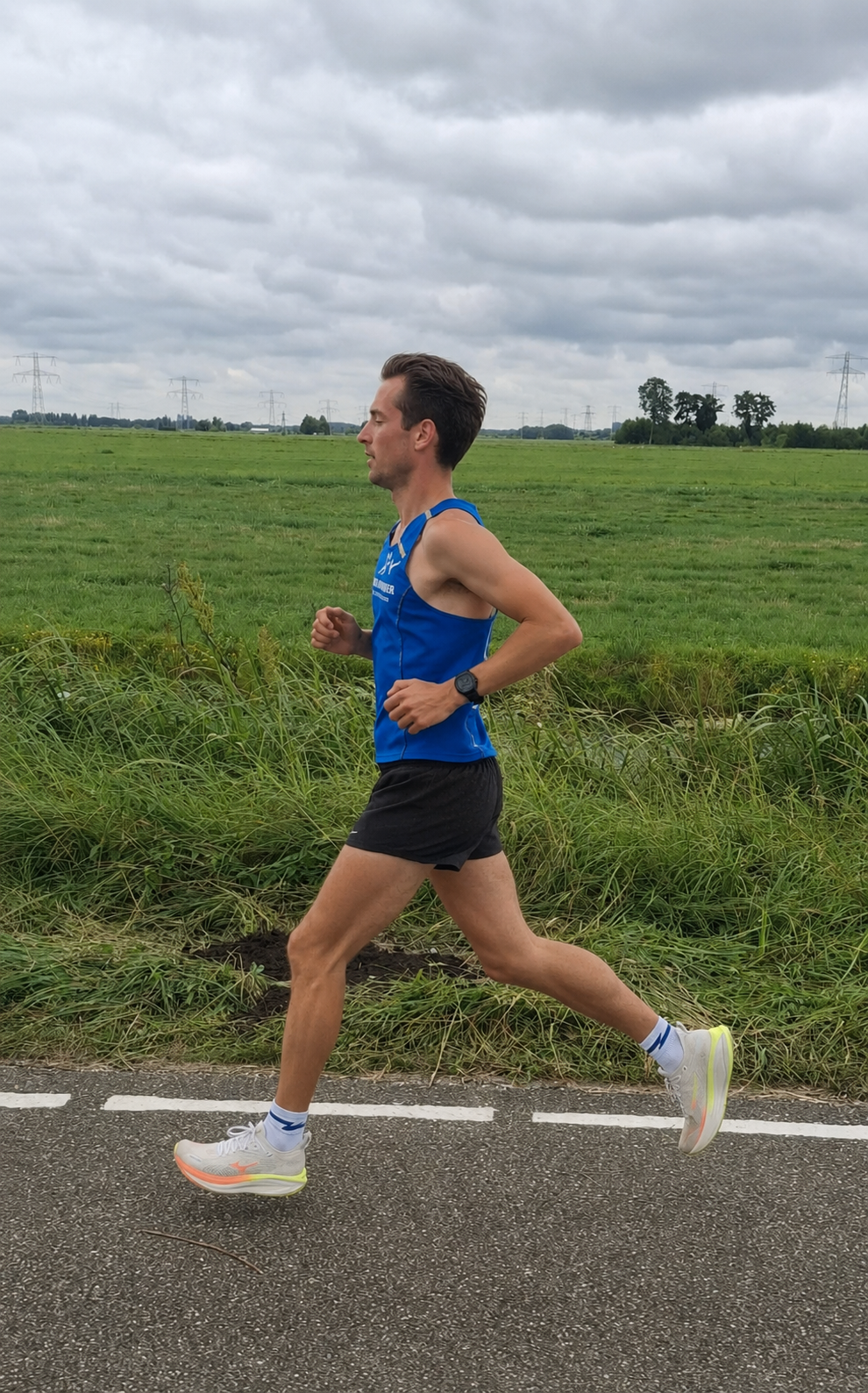
Symptoms developed after completing a marathon in early April. Shortly before this race, he had purchased new carbon-plated running shoes but had completed only limited training sessions in them before using them during the marathon.
CLINICAL PRESENTATION
Diagnosis and contributing factors
The patient presented with persistent pain at the medial side of the ankle. More than one month after the marathon, he was still unable to run more than 3–4 km without pain and also experienced significant pain during daily activities.
After consultation with a physician and ultrasound examination, a diagnosis of tibialis posterior tendon tenosynovitis was established.
Before the injury, the patient had a high running volume without formal coaching or a structured training plan. He mainly adjusted his training based on his own perception. Despite this, he had previously completed multiple marathons without requiring medical support.
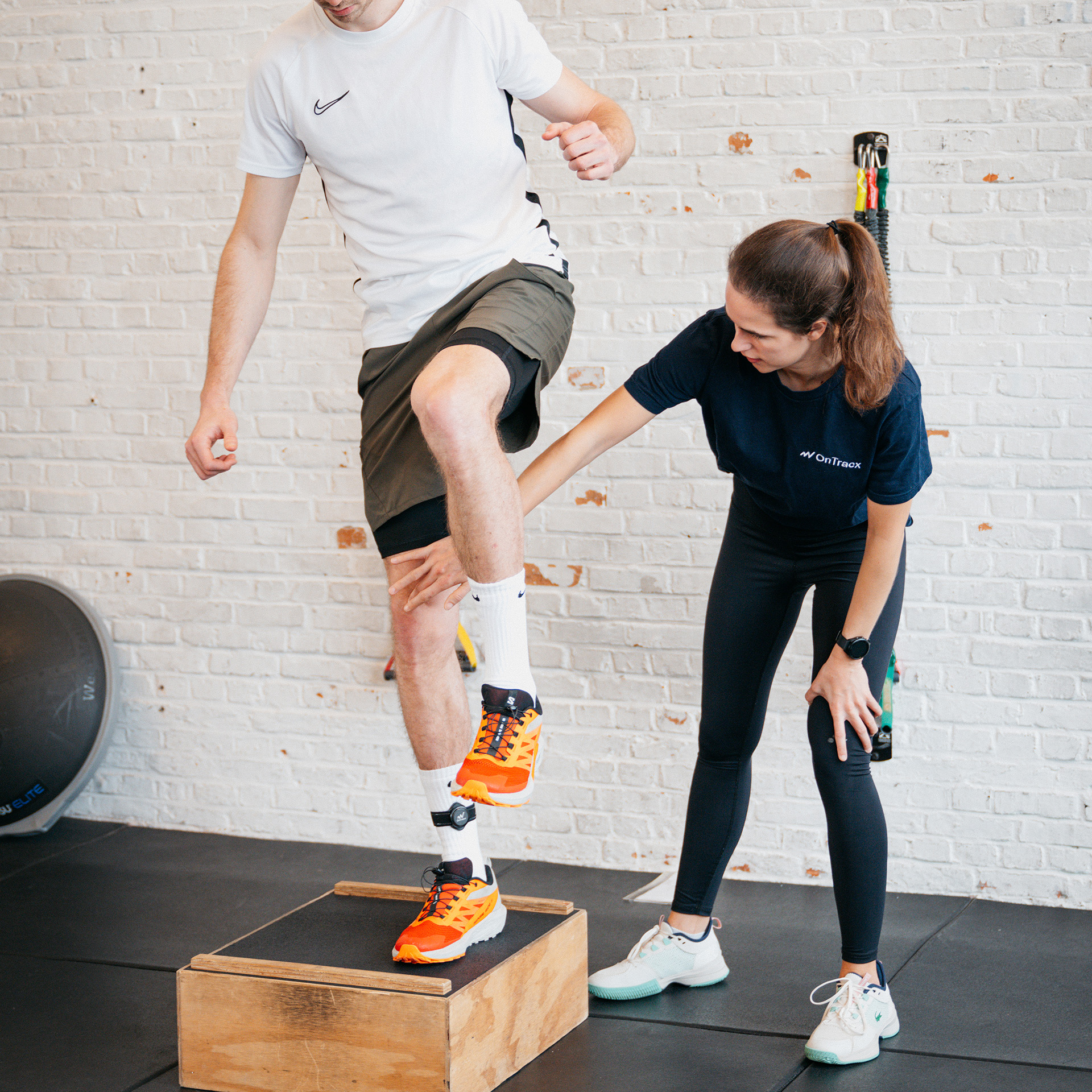
Physiotherapy assessment identified a significant collapse of the medial foot arch on the affected side. The patient also demonstrated reduced hip musculature strength with a clear hip drop during walking and running.
Contextual load:
The patient works as a warehouse employee, involving a high amount of walking throughout the day. Following the injury, this also contributed to symptoms.
TREATMENT APPROACH
In-clinic interventions
Initial treatment focused on reducing load on the irritated tendon. Running was temporarily reduced, while swimming and cycling were maintained to continue cardiovascular training.
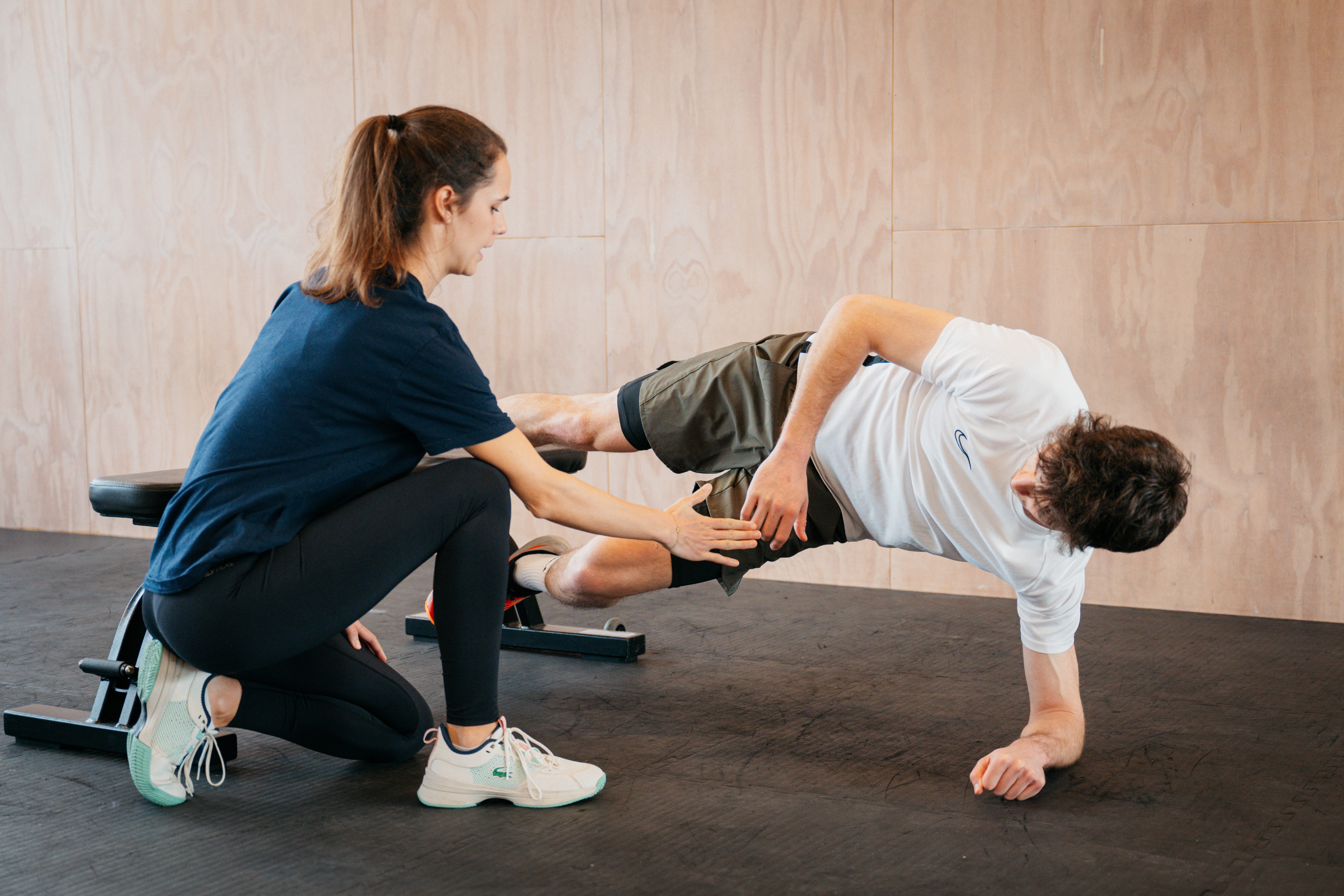
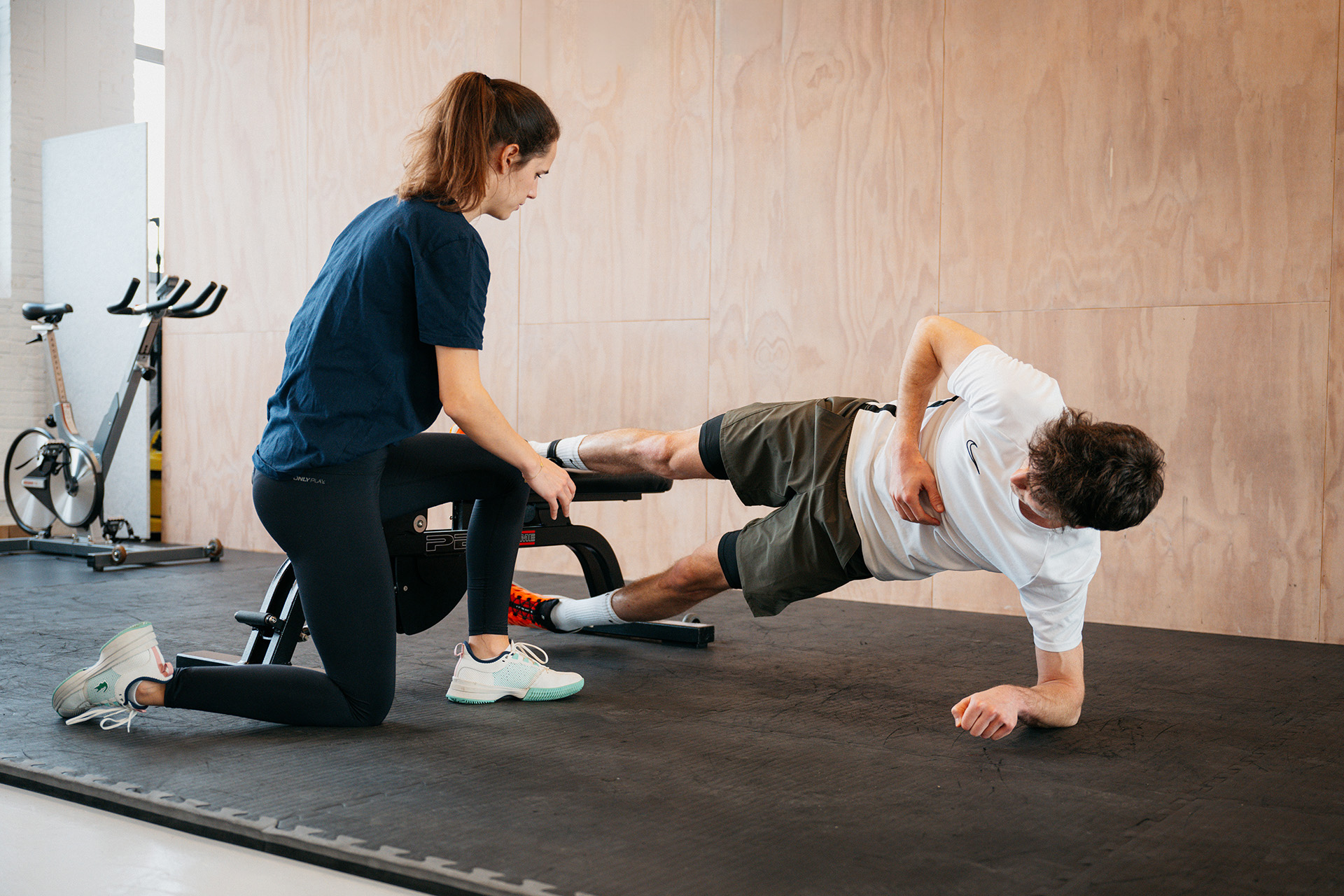
Taping was used to support the foot, and rehabilitation focused on strength and stability training, including strengthening of the hip musculature.
After three weeks of physiotherapy, the patient received an infiltration from the physician, after which symptoms improved significantly. This allowed progression toward more dynamic exercises and running.
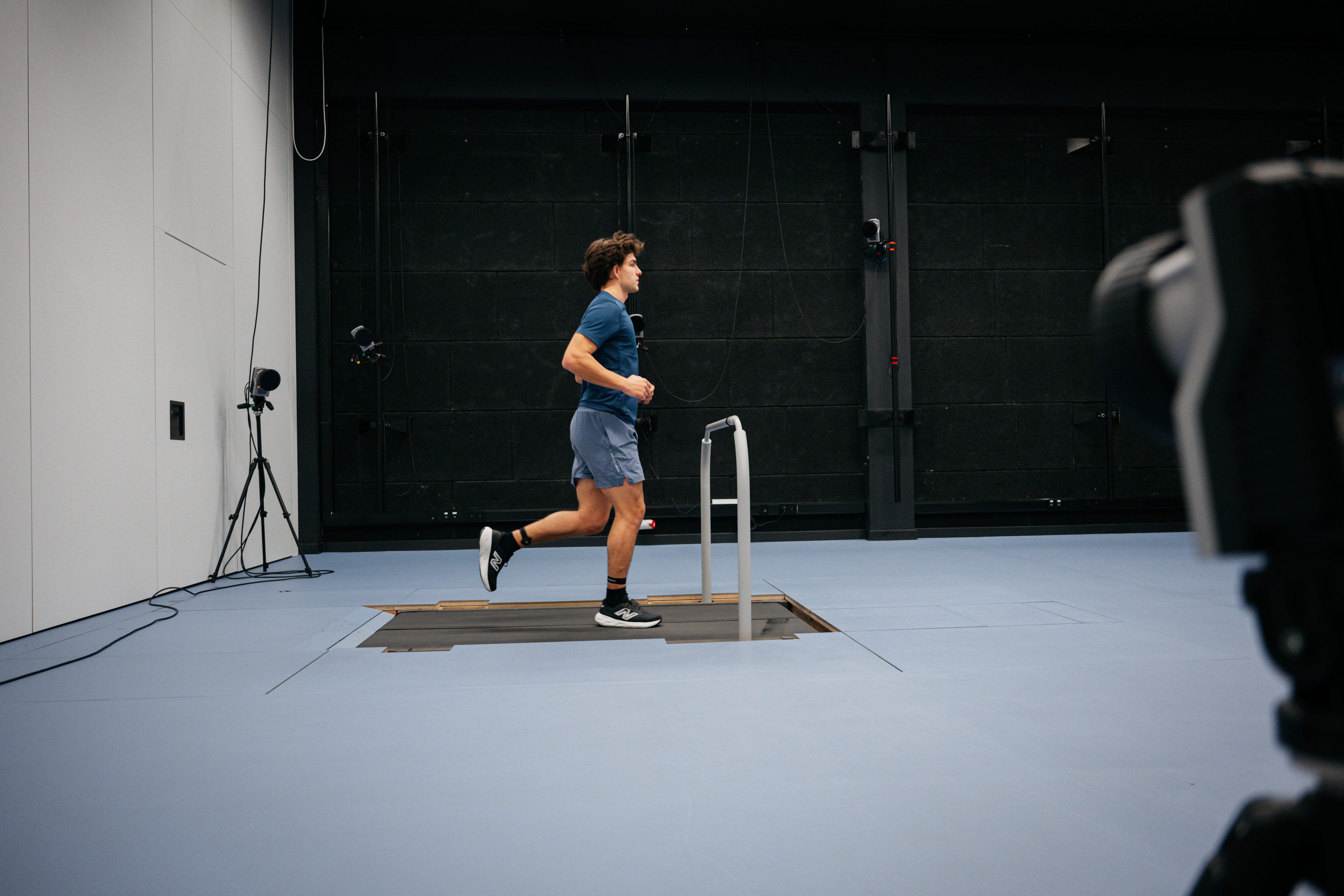
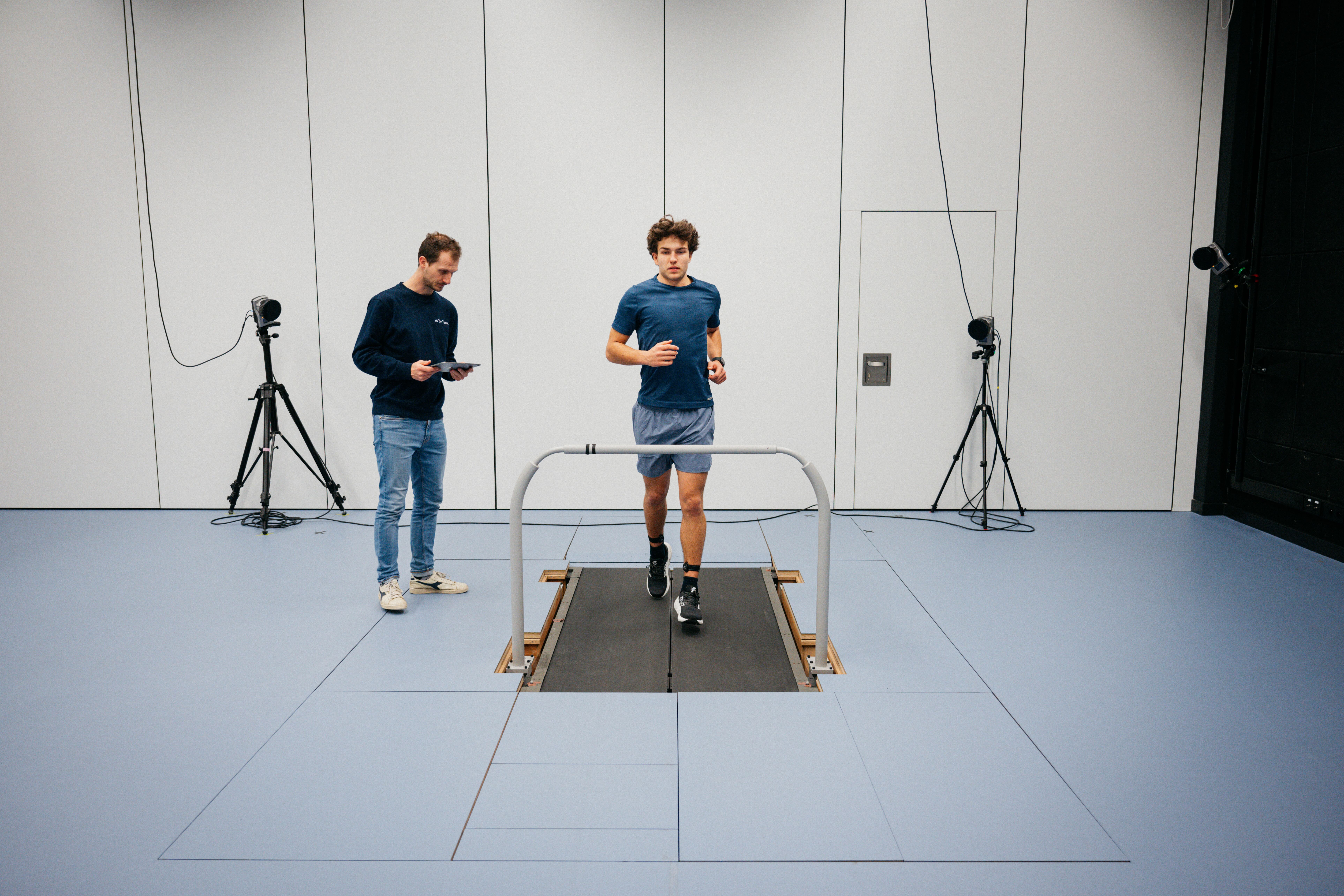
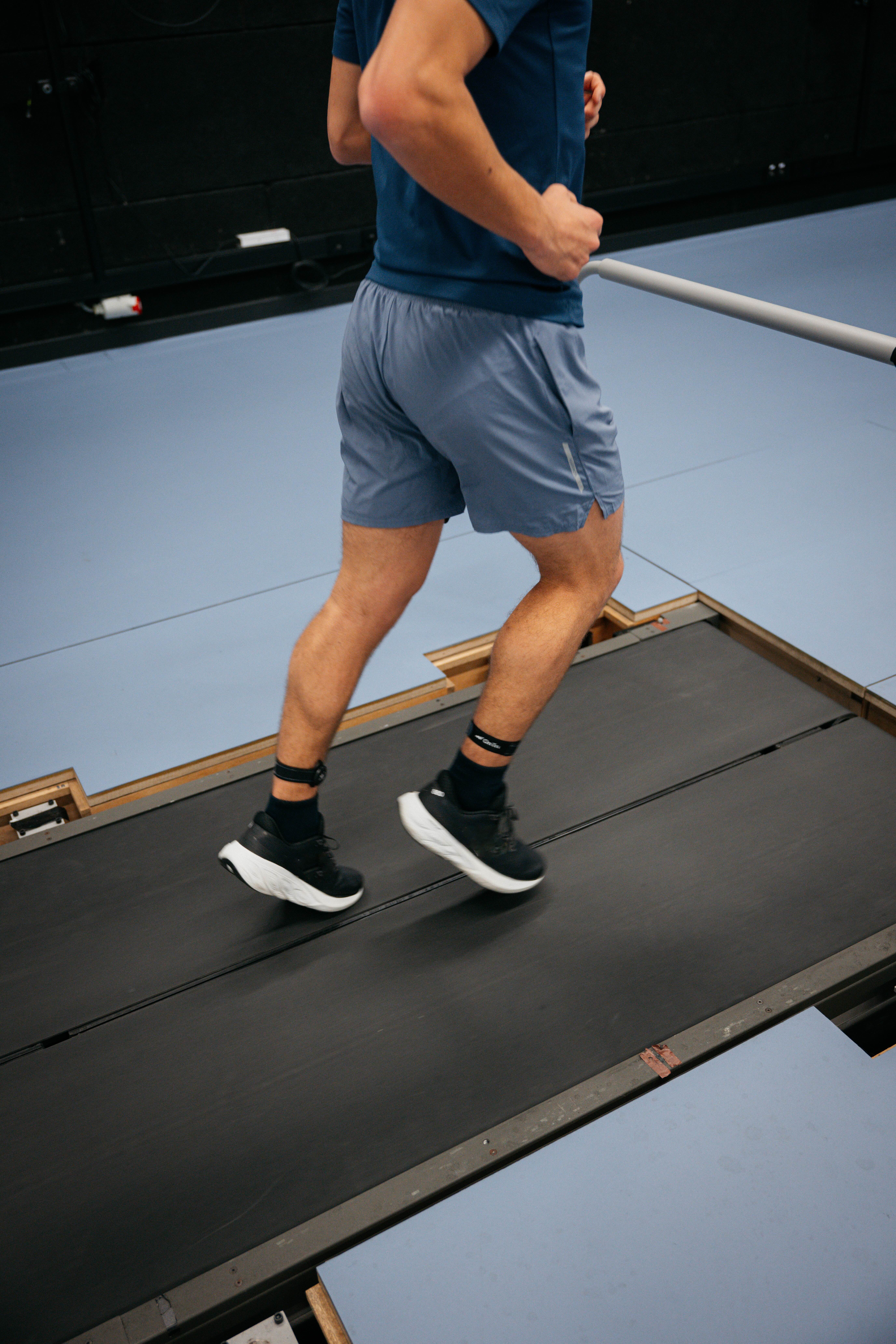
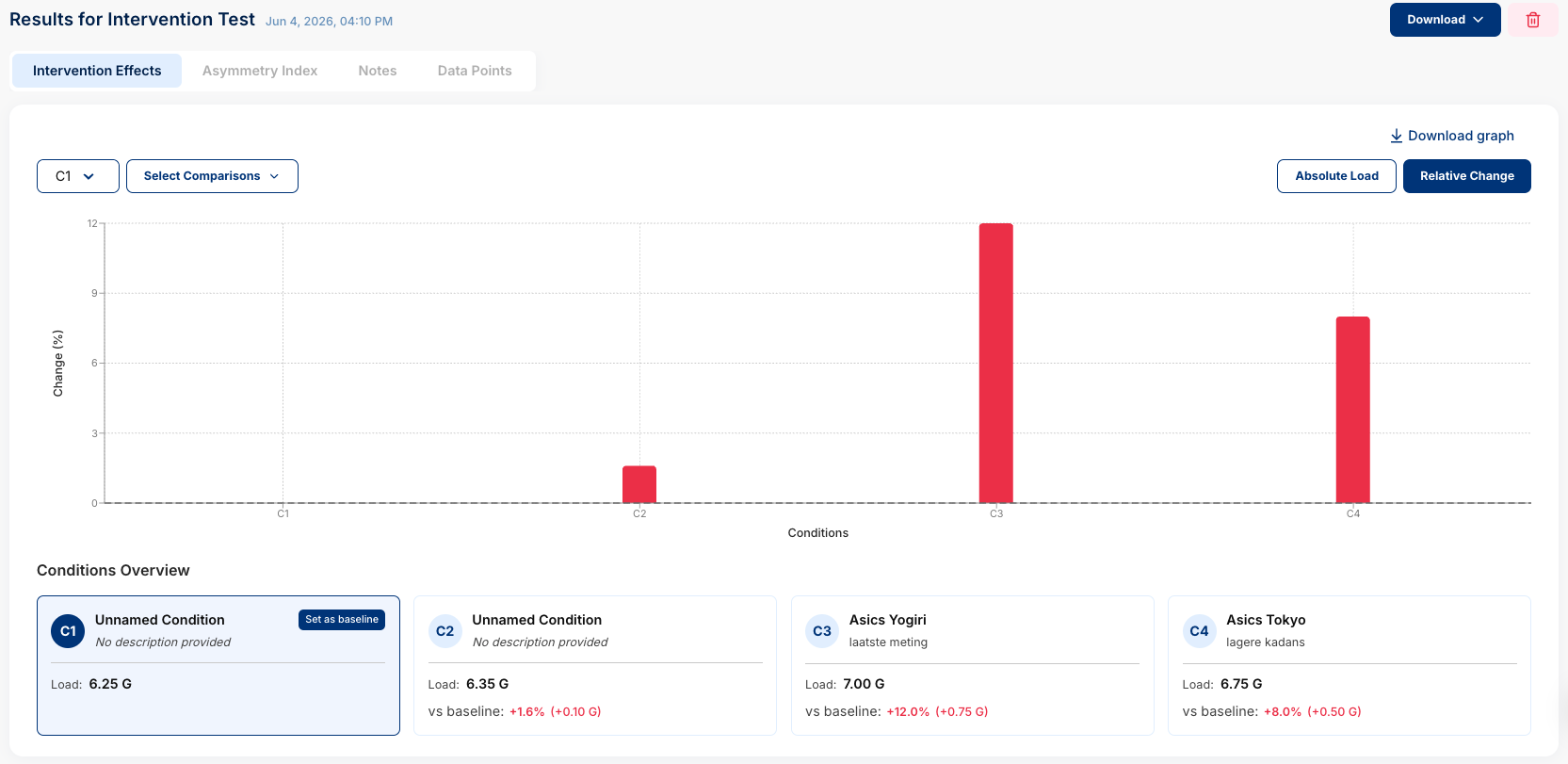
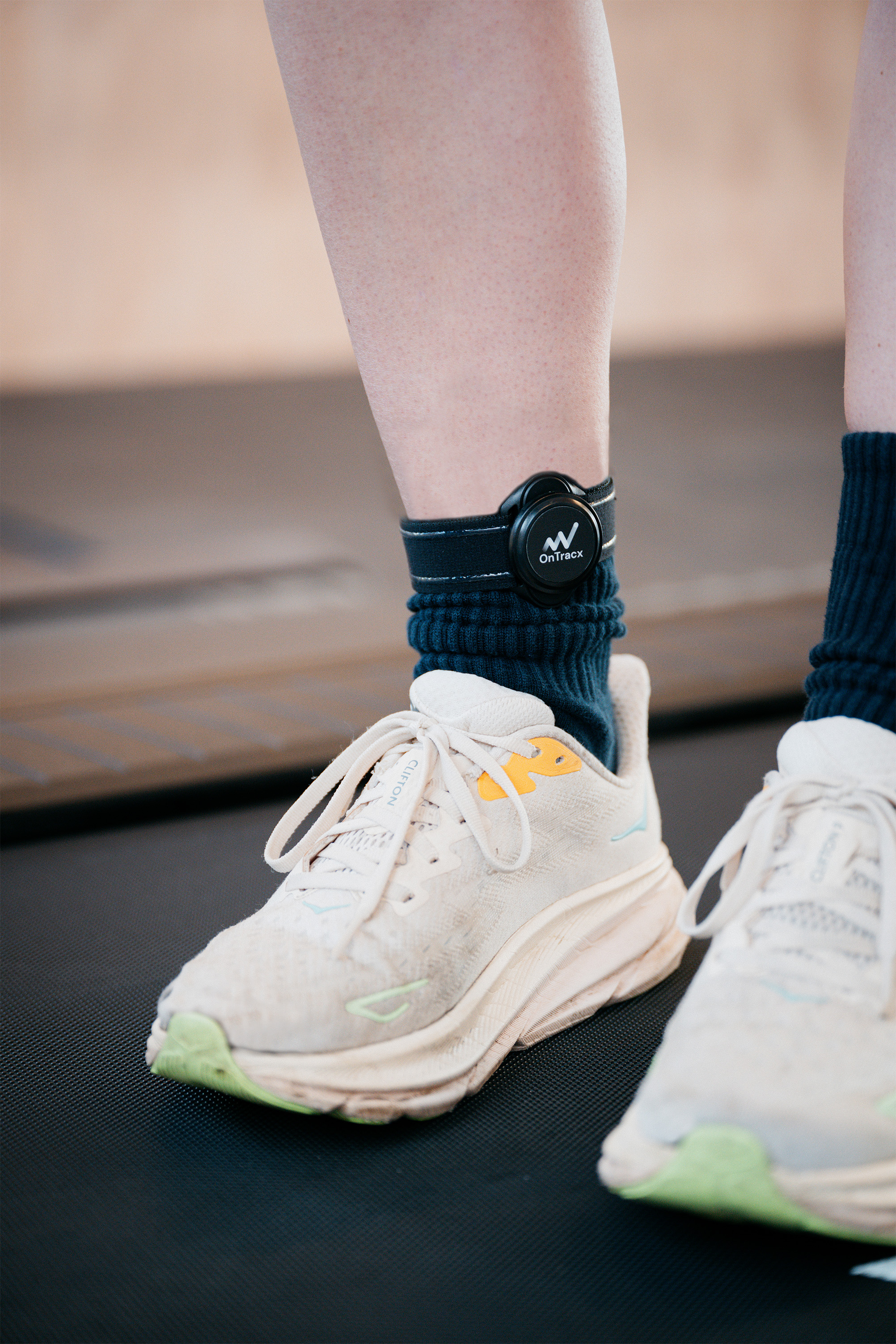
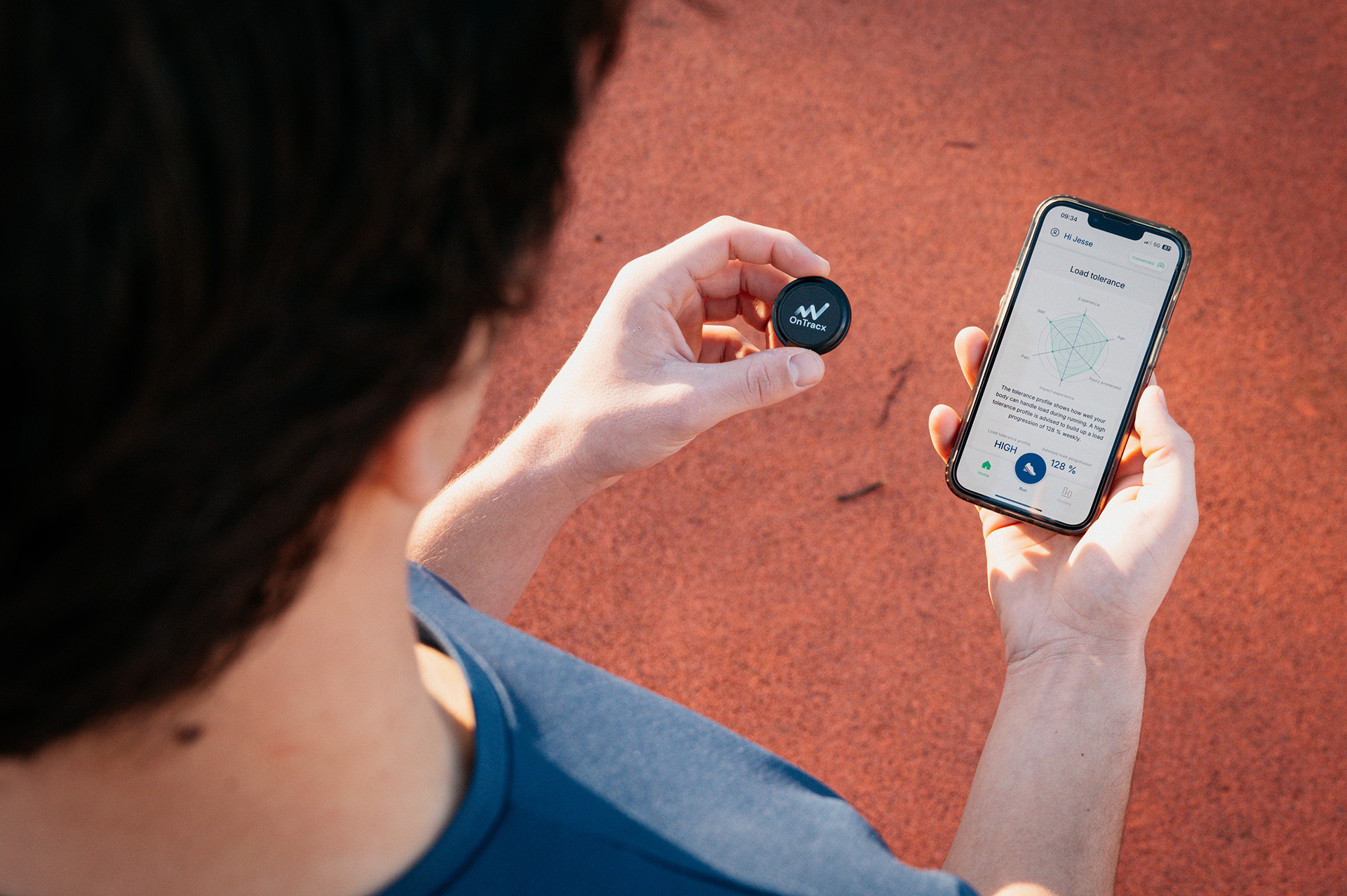
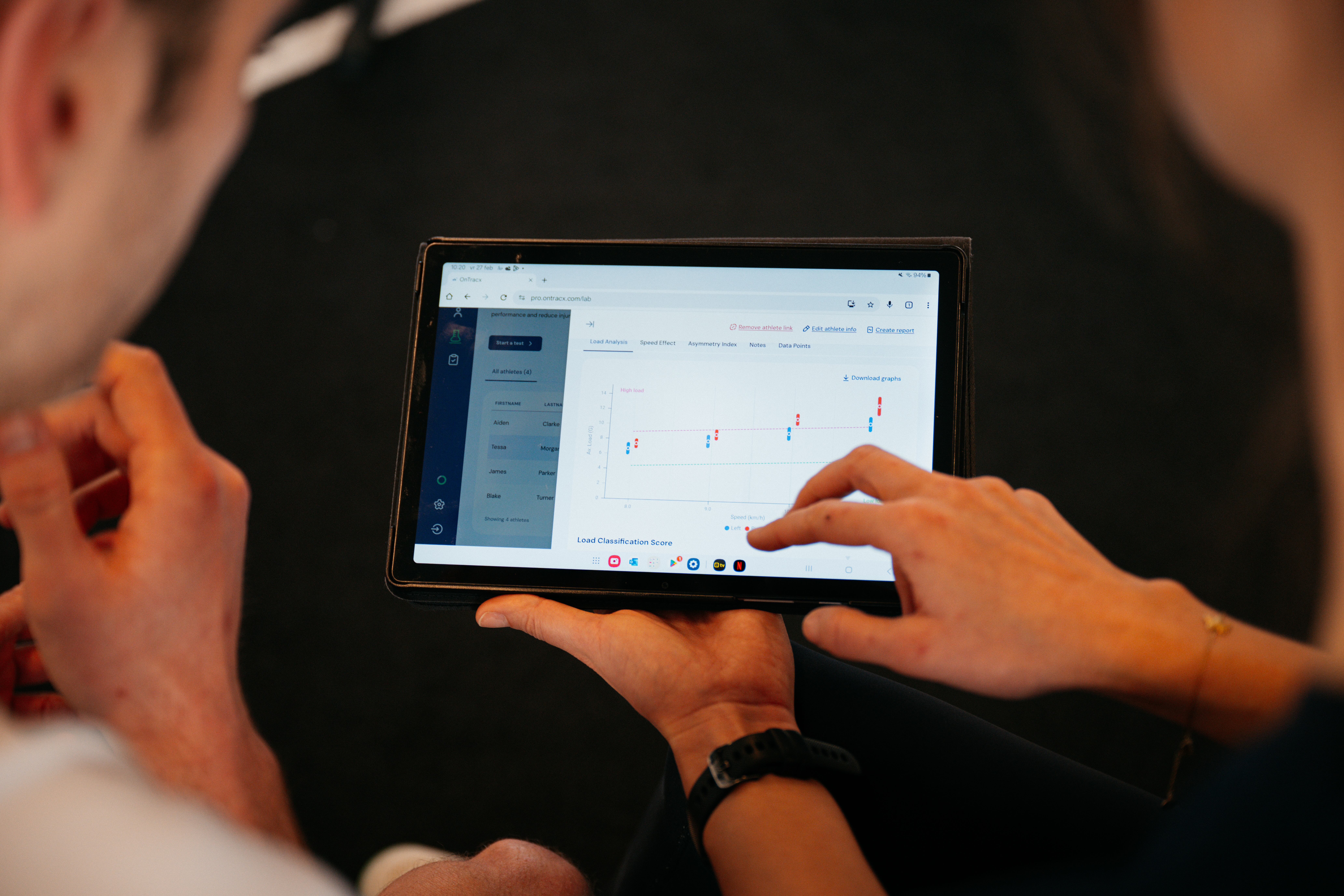
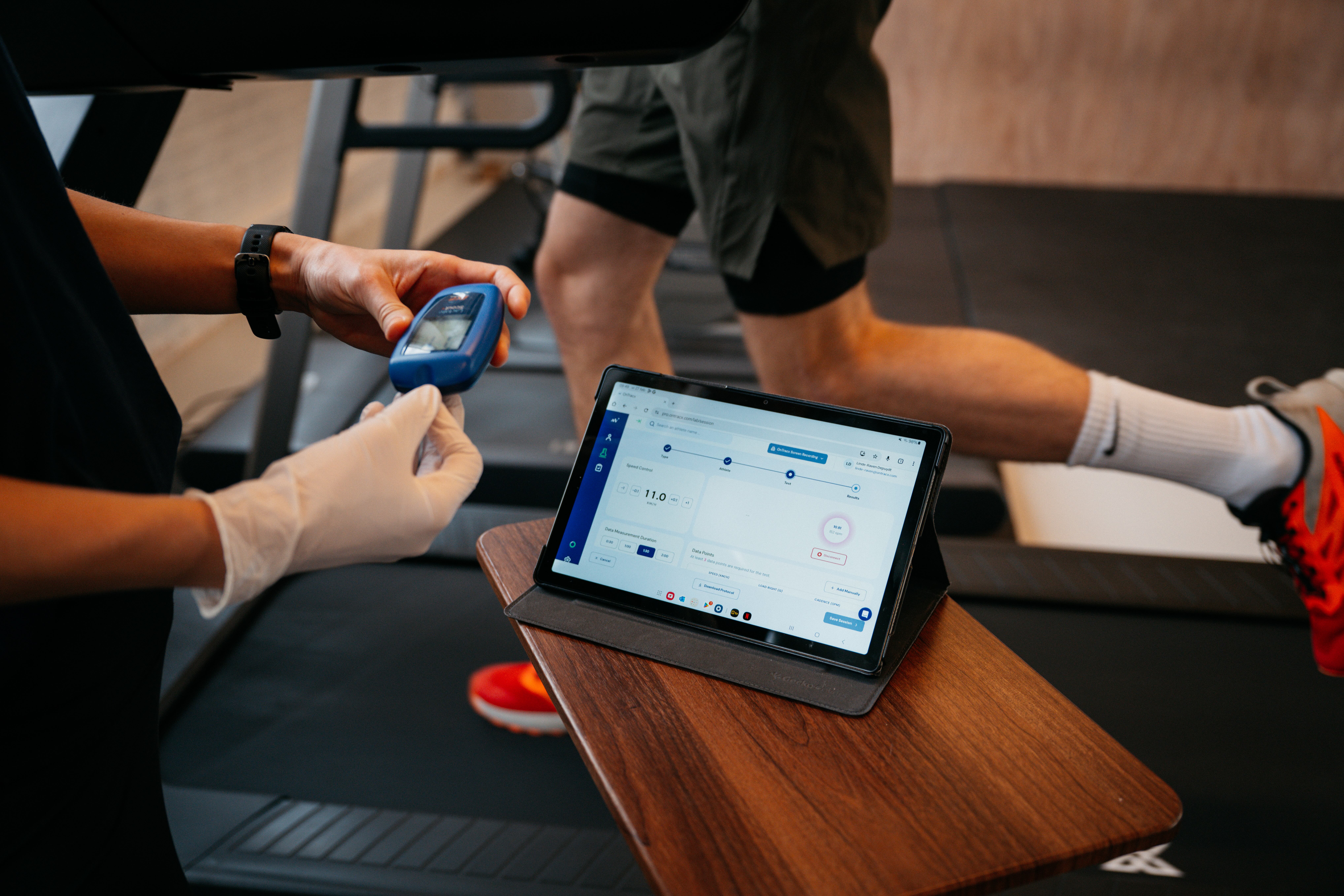
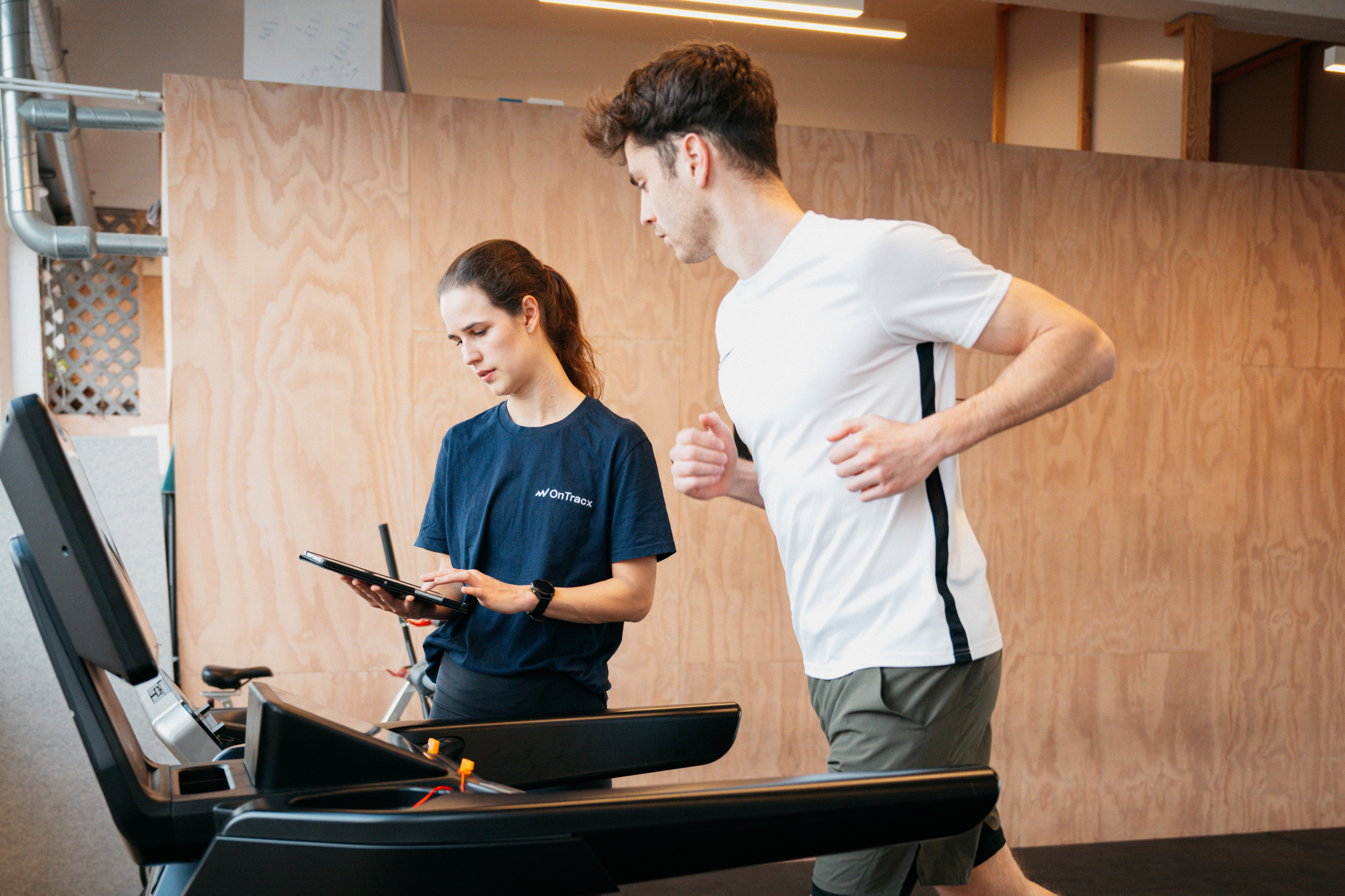
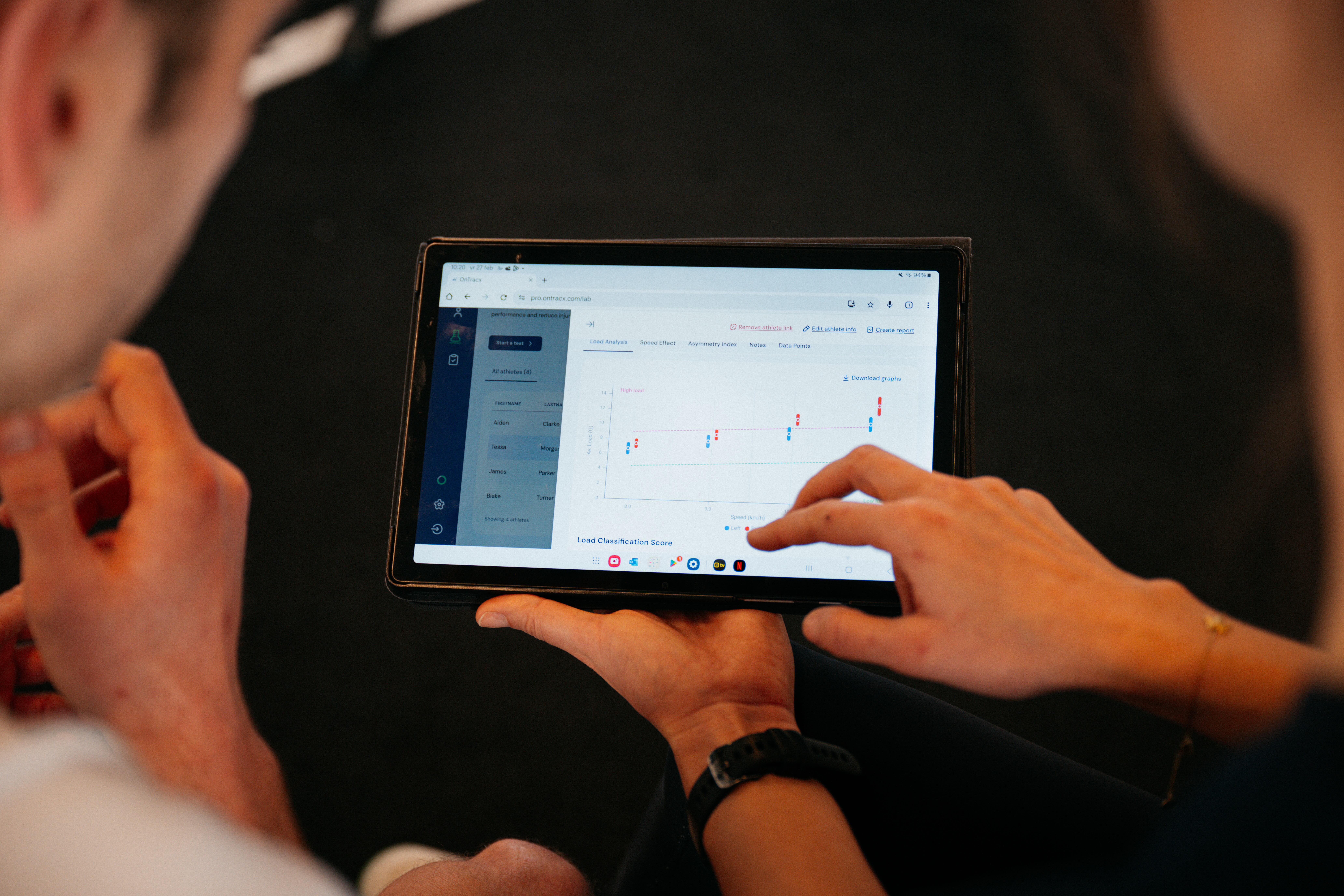
One month after starting physiotherapy, an OnTracx assessment was performed on a treadmill using different running speeds, cadences, and shoe types.
RETURN-TO-RUN PROGRAM
Progression
Phase 1 — controlled return to running
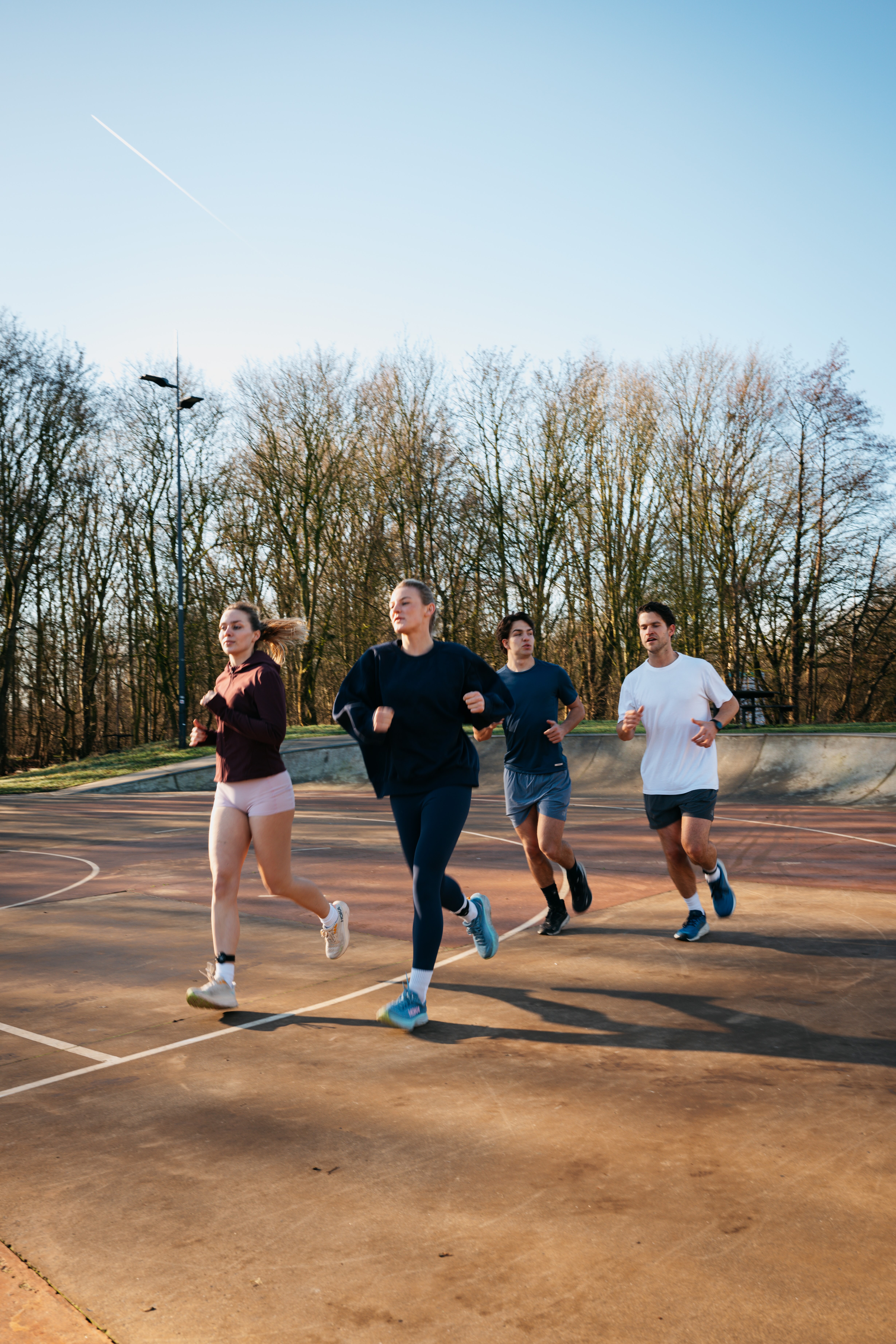
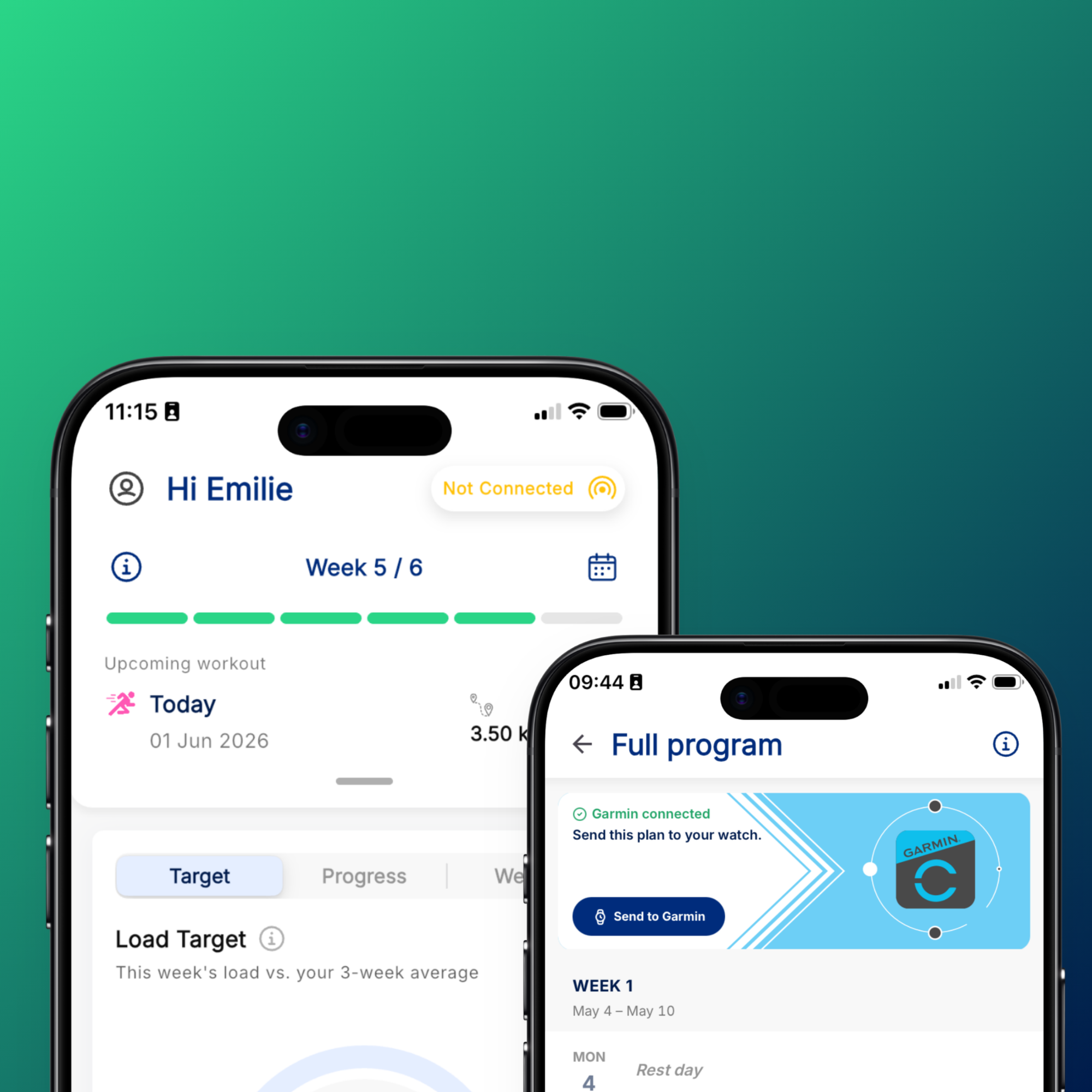
Following symptom improvement and the OnTracx assessment, running was restarted with sessions of 5 km. A minimum of three days of rest was maintained between running sessions.
Pain was monitored using a VAS score to guide progression.
Phase 2 — gradual increase in running volume
The patient was advised to increase cadence from approximately 155 spm toward 165 spm.
Currently, the patient is running 3 sessions per week of approximately 8 km. At this stage, this is considered the maximum sustainable volume, as some symptoms begin to return when further increasing load.
Continued focus remains on strength training and stability work.
Target — sustainable endurance running
The goal is to gradually return toward 4–5 running sessions per week with a total weekly volume of 60–70 km and continue building toward triathlon.
ONTRACX FINDINGS
Value of field monitoring
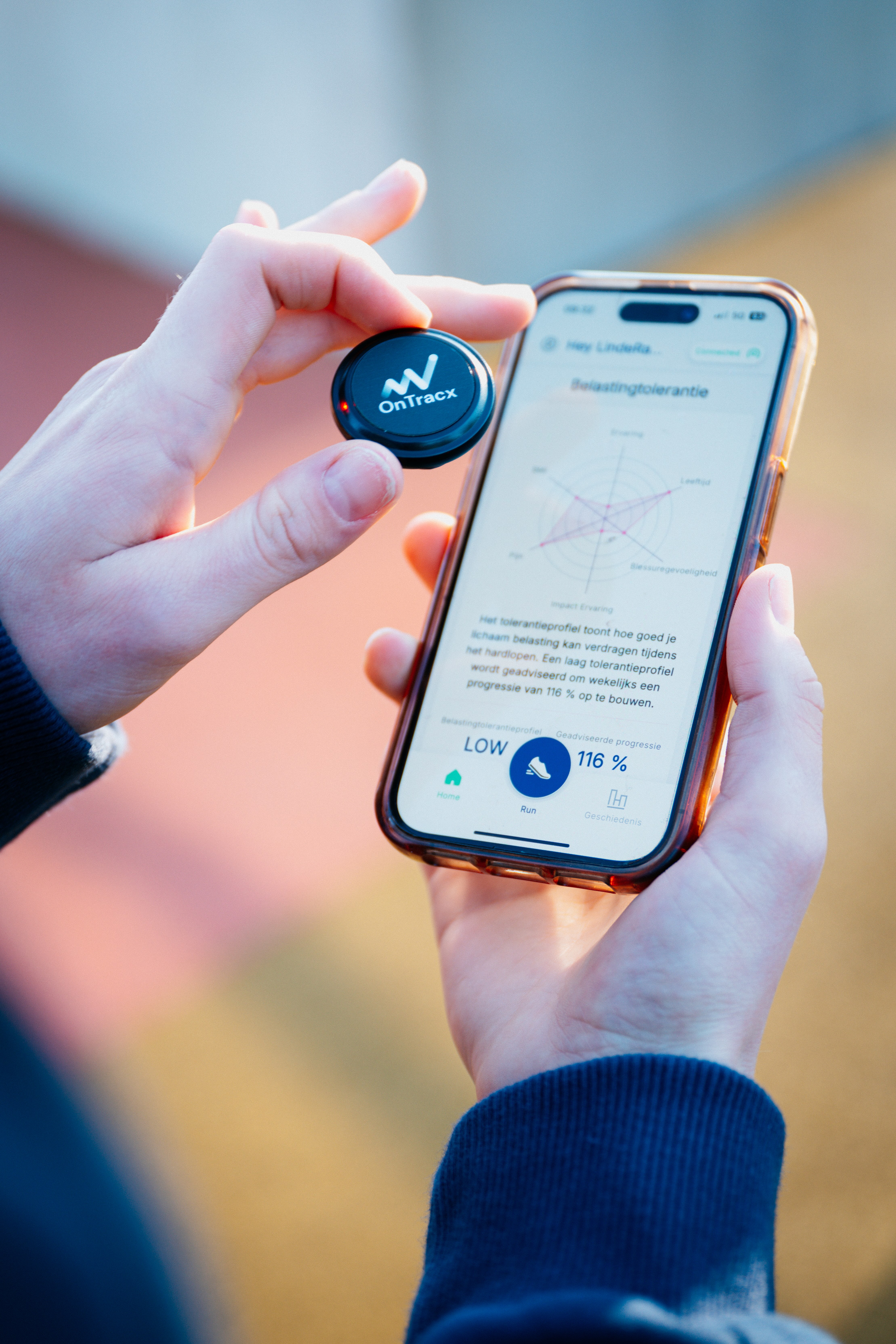
The OnTracx assessment was performed to evaluate running under different conditions, including different speeds, cadences, and shoe types.
The analysis showed differences between footwear options. With the carbon-plated shoes, the patient demonstrated increased foot instability related to pronation and higher impact loading compared with other shoes. The difference in impact was approximately 2–3 G.
A third pair of shoes with a narrower midfoot was also found to be less favourable regarding impact loading.
The assessment also showed that the patient’s cadence was relatively low, especially when increasing running speed, resulting in higher impact and loading.
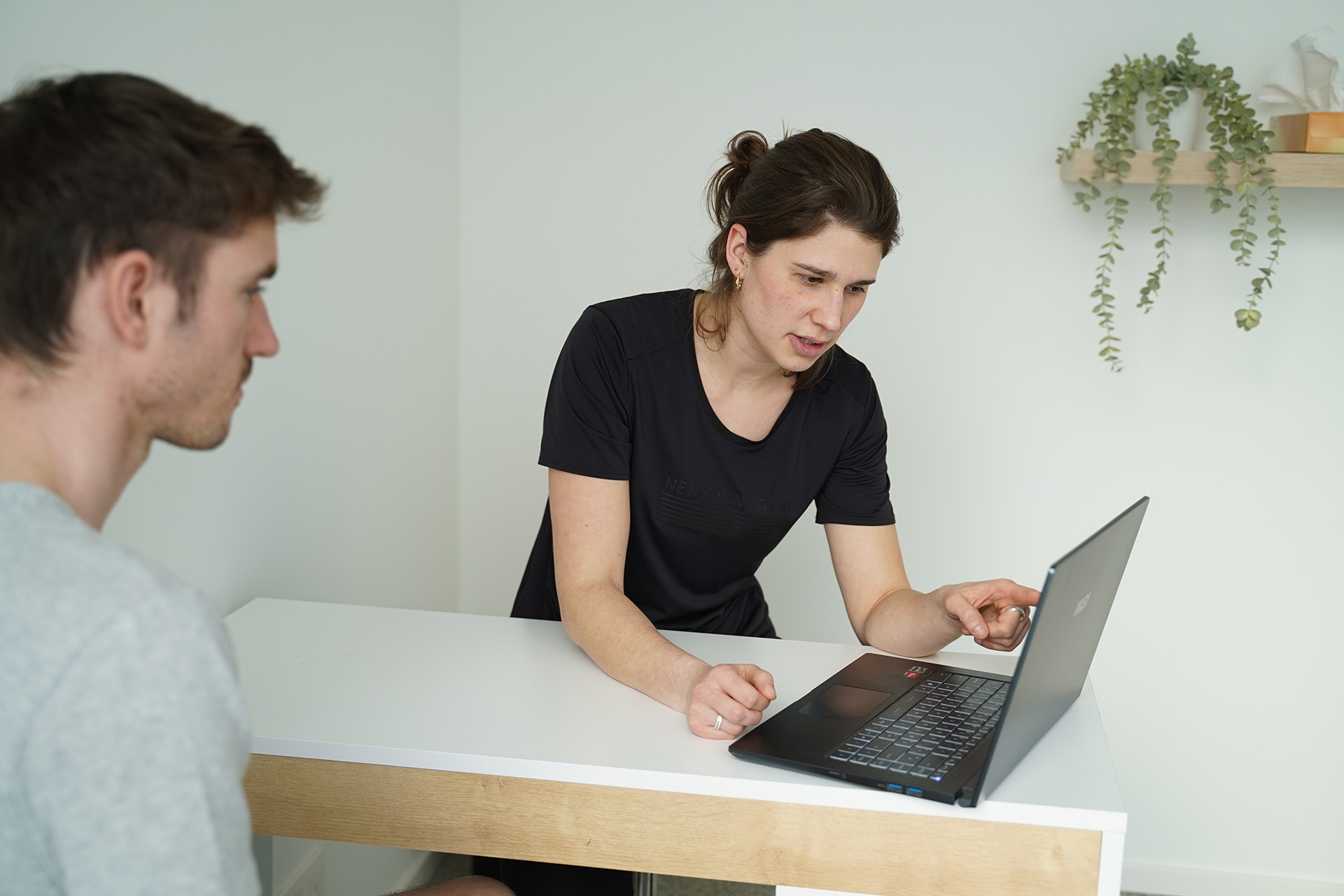
These findings provided objective confirmation of factors that were already suspected during clinical assessment. The data allowed the therapist to demonstrate the influence of footwear and cadence directly to the patient.
Based on these insights, additional advice and cues were provided to support a gradual return to running without excessive overload.
CLINICAL REASONING
Why this approach worked
The patient had previously been able to tolerate a high running volume without symptoms. However, after introducing new carbon-plated shoes shortly before a marathon, a persistent tendon irritation developed.
The rehabilitation approach focused on improving the factors that could influence future load tolerance, including foot and hip stability, while gradually rebuilding running exposure.
OnTracx provided additional objective information alongside the clinical examination. The measurements helped demonstrate the impact of different shoes and running strategies, which supported communication with the patient and helped guide recommendations during the return-to-run process.
The patient was previously relying mainly on his own perception when managing training load. Through the combination of clinical guidance and objective data, he had a clearer framework to avoid progressing too quickly and returning to overload.
Key clinical takeaway 💡
This case highlights that a movement pattern or biomechanical characteristic that has never caused symptoms can become problematic when combined with a sudden change in training conditions.
By combining clinical assessment with objective OnTracx data, the therapist was able to identify differences in footwear and running strategy that influenced loading. This supported a more informed and gradual return-to-run approach based on the relationship between load and tissue capacity.
.png)





%20(5).png)

%20(3).avif)
%20(4).avif)

.jpg)