Strength training for runners: The advice everyone agrees on
No trial has ever tested heavy strength training, the kind that keeps getting heavier as you get stronger, for injury prevention in runners. The squat-rack consensus rests on bands and bodyweight.
18
/
11
/
2026
3
min read
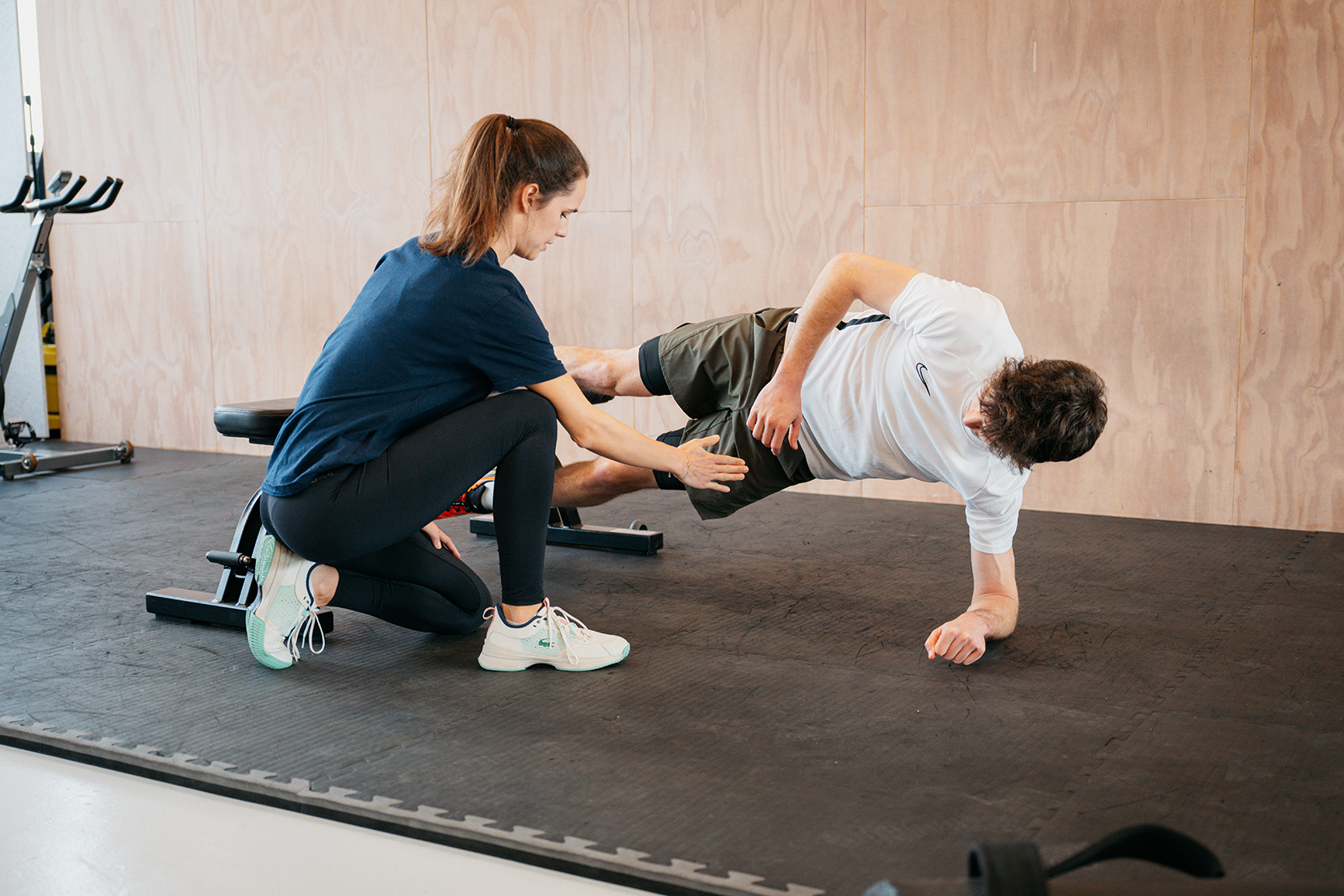
TABLE OF CONTENTS
Share


The other half of the equation
Strength training is the one piece of injury prevention or management advice every physio, coach and running podcast agrees on. It costs you two evenings a week and whatever dignity you had left in a squat rack. In ten years it went from a nice extra for runners to something that is generally part of a well-designed running and return-to-running program.
With that consensus in mind, here are three pieces of evidence that show the relationship between strength training and injuries that are supposed to hold it up: a 2018 meta-analysis of strength training as injury prevention across sports, a 2024 review of nine randomized trials in endurance runners specifically, and the Run RCT, the best single trial anyone has run on the question. They do not say the same thing, and the gap between them is the interesting part.
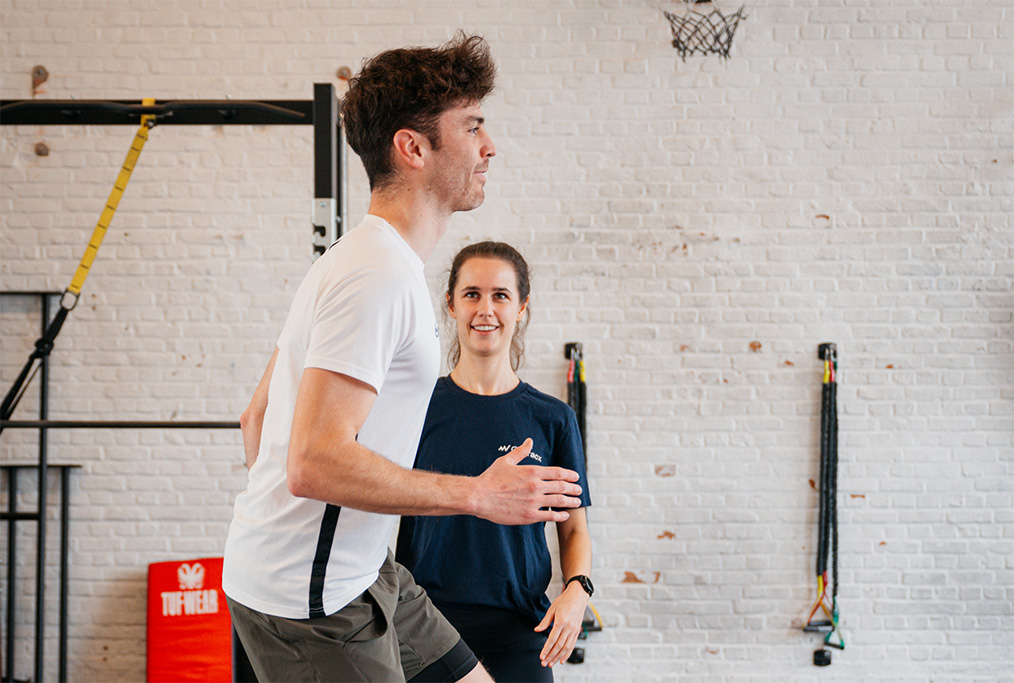
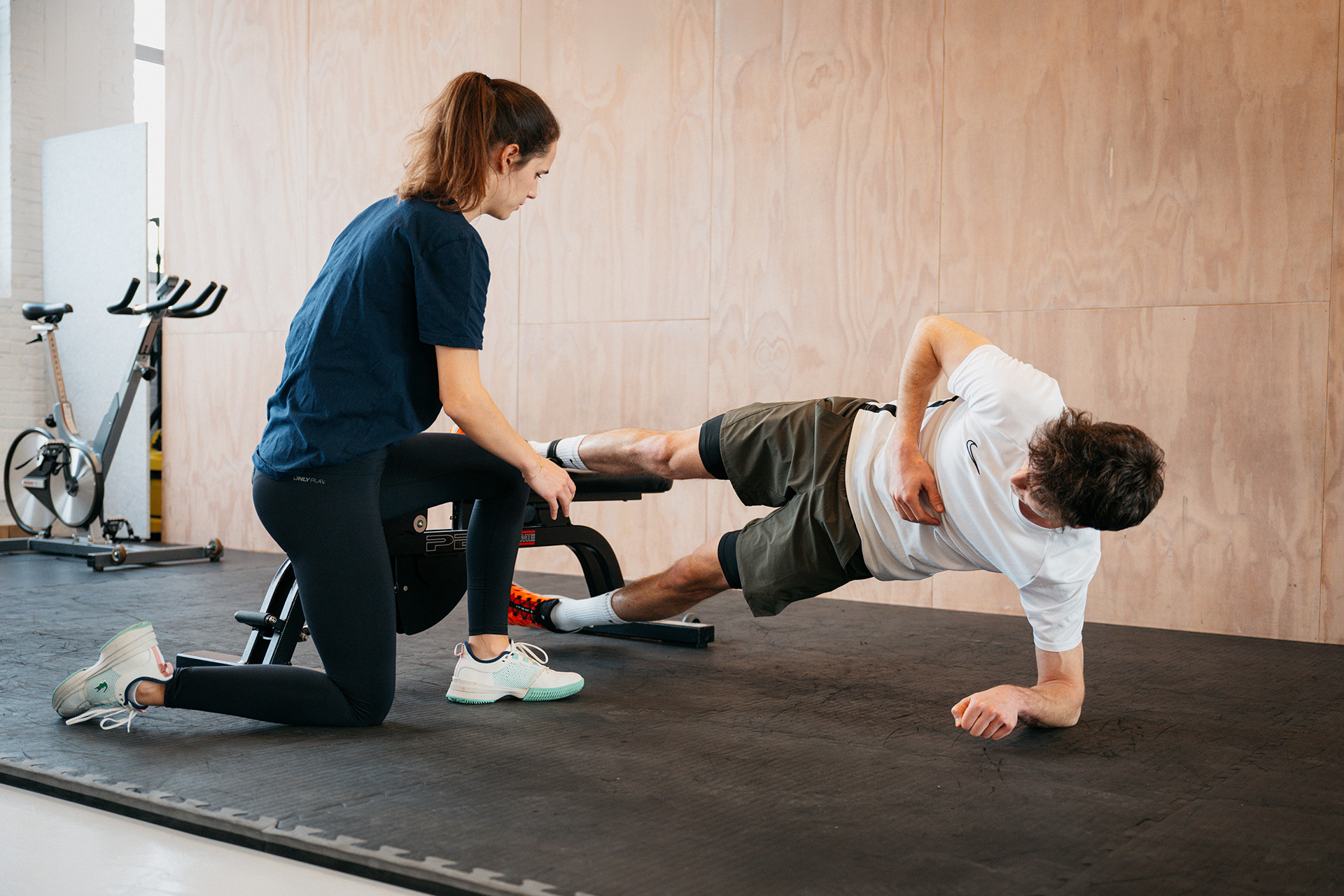
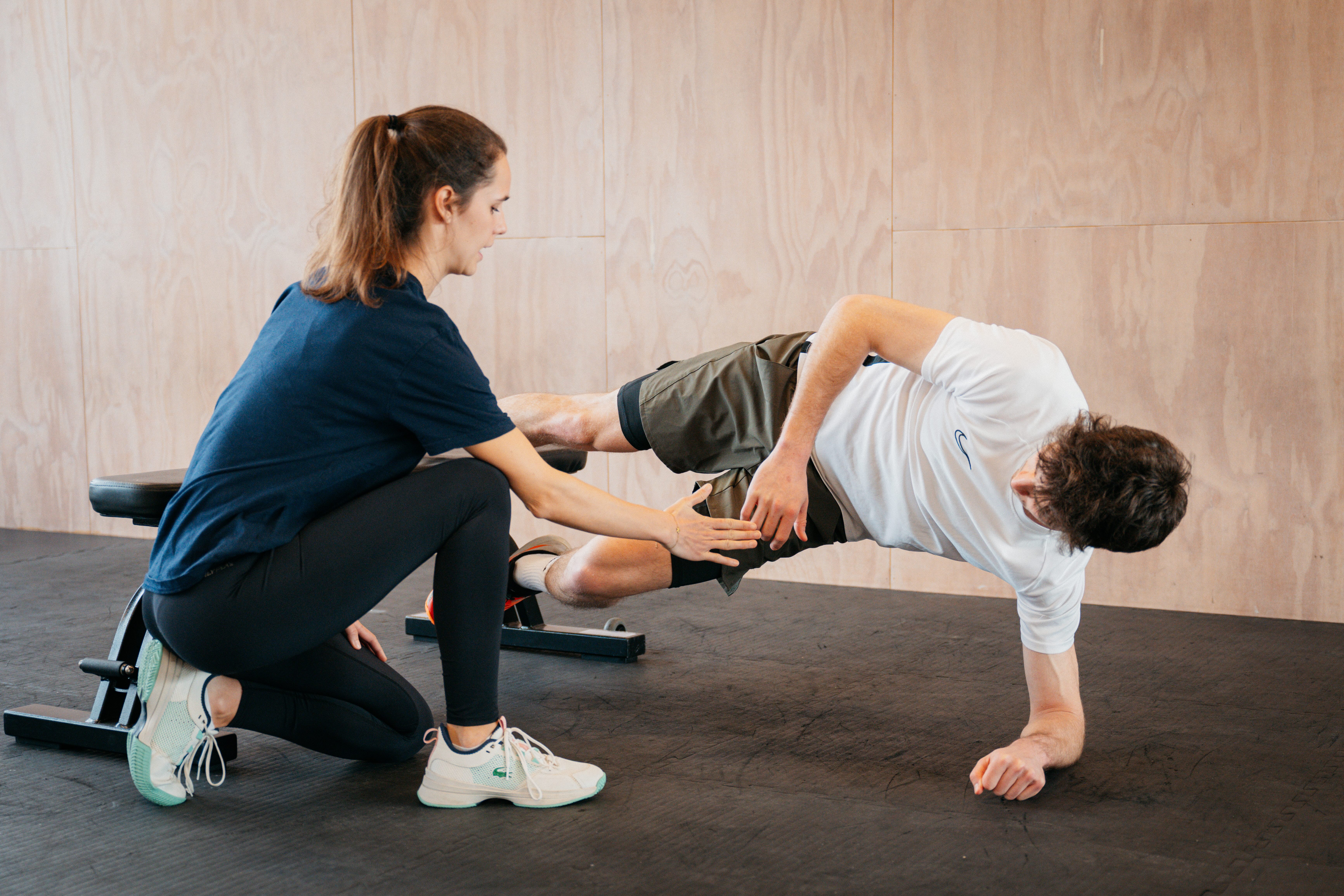
In runners, there is no pooled randomized evidence that strength training prevents injuries. In other sports the case is strong. In runners, the trials that worked, most convincingly a hip-and-core program in Finland and a foot program in Brazil, were the ones with a physiotherapist standing next to the participants.
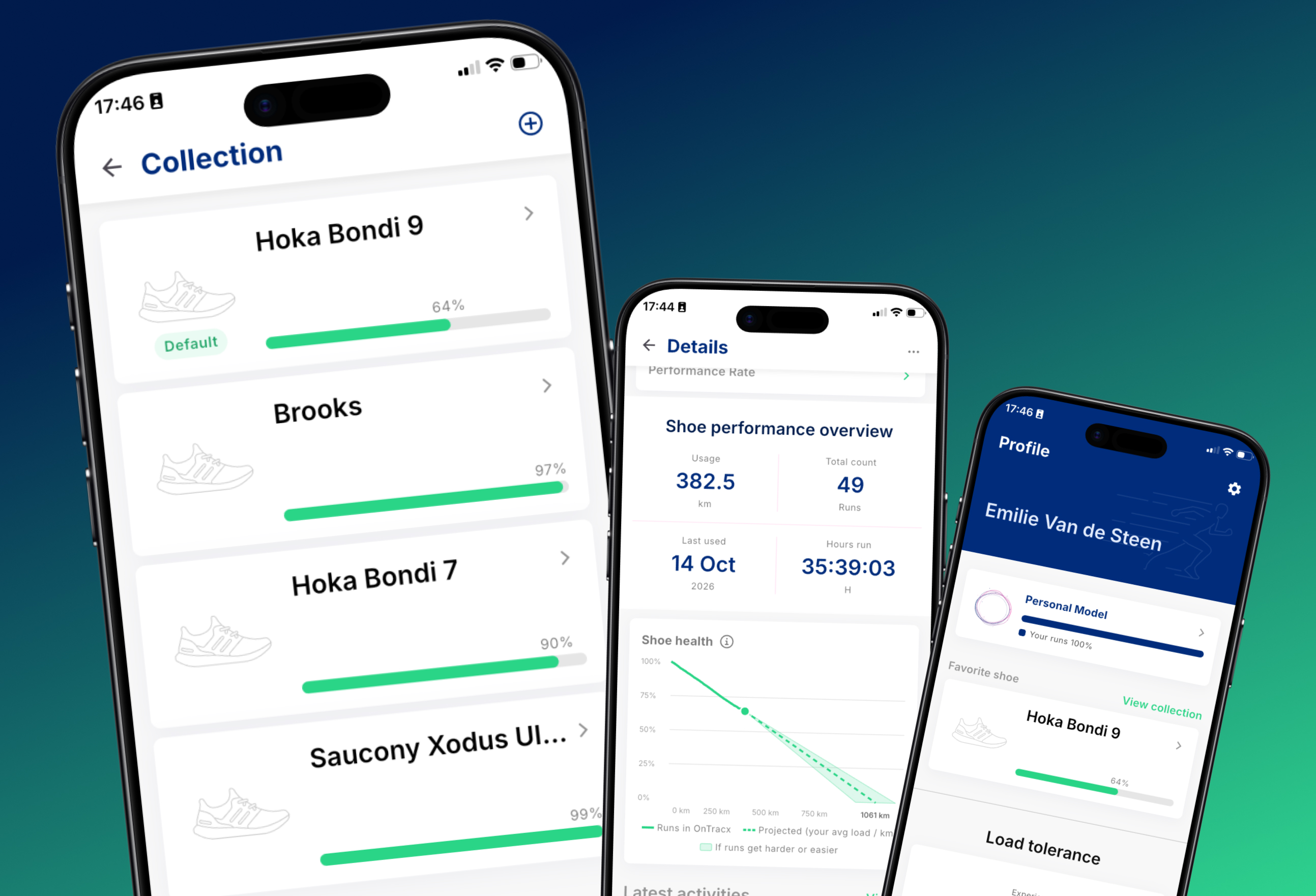
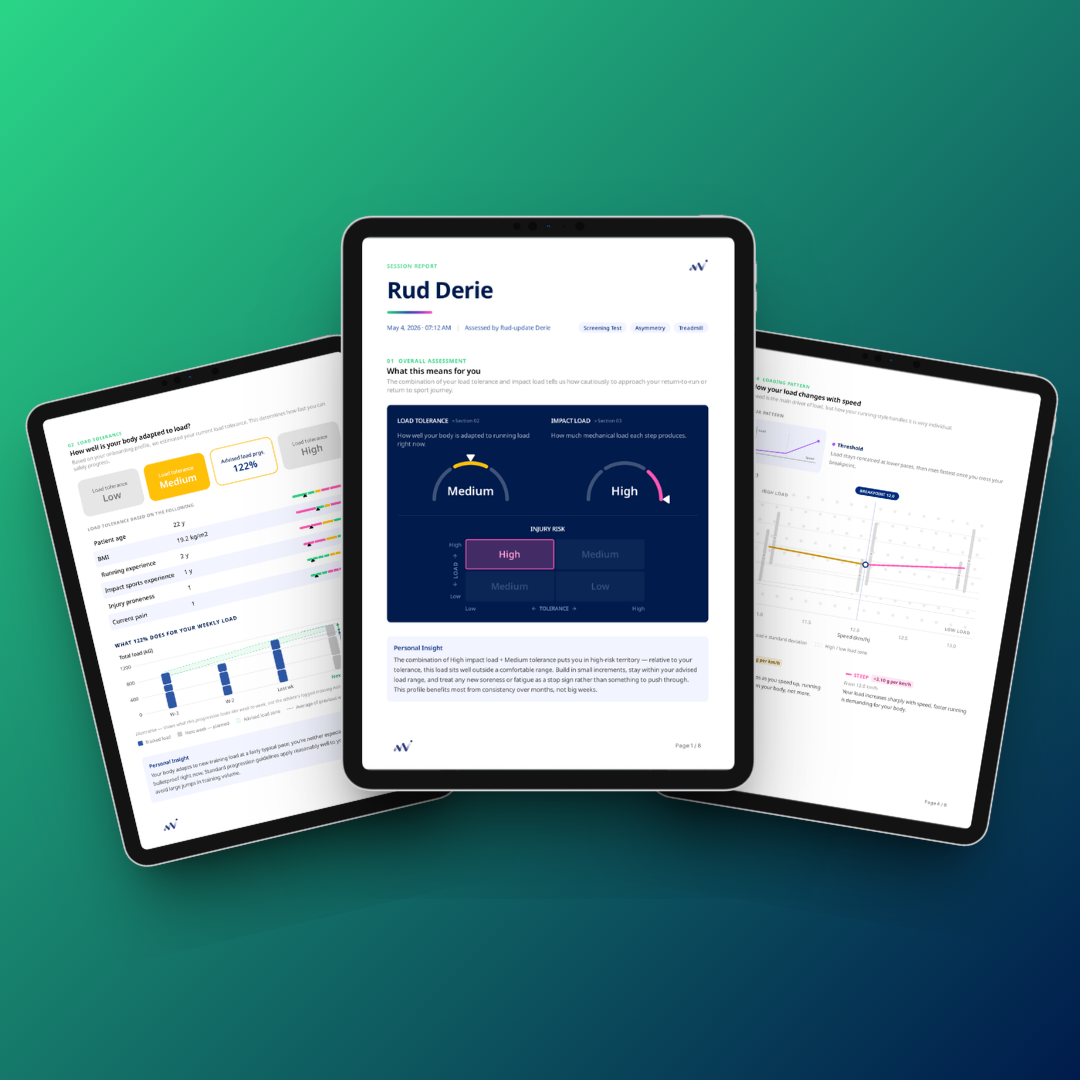
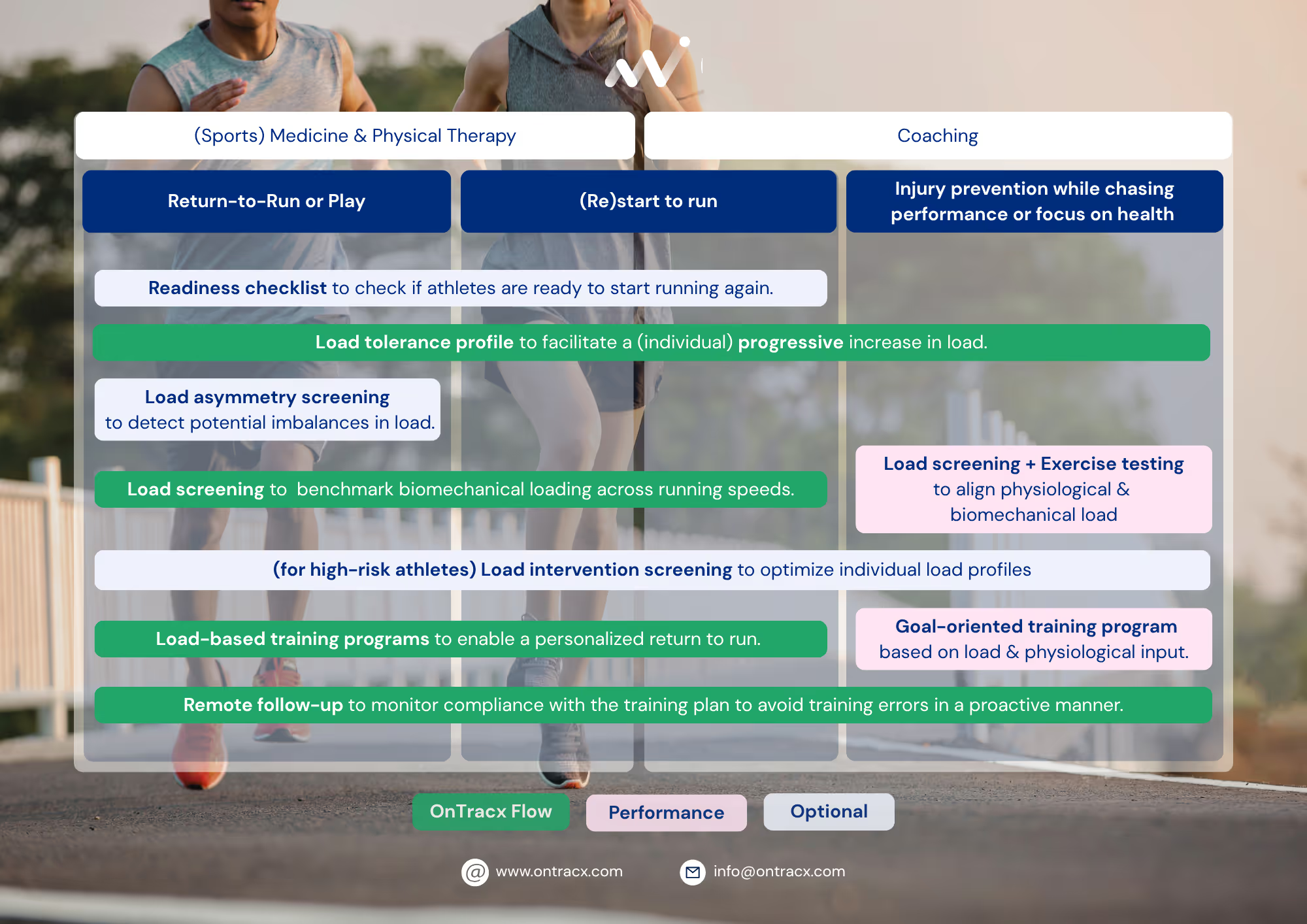
At OnTracx we have spent years on the other side of this equation entirely. The model everyone here uses, laid out by Bertelsen and colleagues in 2017, says an injury happens when load on one structure exceeds that structure's capacity. We at OnTracx have focused from the beginning on measuring the load. Capacity we have treated roughly the way weather forecasters treat the moon: real, probably relevant, not our department. But good news, we took our first steps on the other half: an exercise module where the physio puts strength work into the plan, and a tolerance profile, still in development, that treats capacity as something that moves. Which makes us a soft touch for evidence that the capacity side matters, and we know it.
The cross-sport numbers are the ones everybody quotes. Pooling 25 trials and 26,610 athletes, Lauersen found that strength training cut injuries to about a third, a risk ratio of 0.315, while stretching did precisely nothing. A follow-up put it at 0.338. That second estimate rested on six trials, mostly in soccer players and military recruits, and a hamstring strain in a sprinting sport is not the same animal as a slowly overloaded tibia.
Why it ought to work
The mechanism is not in doubt, which is part of the problem. Tendons adapt to high strain (meaning that the tendon stretches by a few percent of its own length every time you load it), and only to high strain: across 27 studies, stiffness rose with loading magnitude rather than with any special contraction type (Bohm 2015), and over 14 weeks Achilles tendons adapted at around 4.5% strain but not at around 2.9% (Arampatzis 2007). Those were small lab studies in healthy tendons, not injury trials. Walking to the fridge does not reach the threshold.
Heavy lifting works on capacity from two sides at once. It leaves the tendon stiffer and the muscle around it stronger, so the tissue tolerates more before it complains. A nice benefit: it makes the stride cheaper. Training at 80% of one-rep max or above improves running economy, with effect sizes of 0.27 and 0.43 depending on the method (Llanos-Lagos 2024). In the Bertelsen model both should count. Tougher tissue starts the run with more capacity, and a cheaper stride drains it more slowly once you are going.
The same argument works from the ground up. Ulisses Taddei, Isabel Sacco and colleagues at the University of São Paulo gave recreational runners eight weeks of exercises for the intrinsic foot muscles, meaning the small muscles that start and end inside the foot, and in a proof-of-concept trial those muscles grew by up to 22% in volume on MRI while the runners pushed off harder. That was 28 runners, though, measured after eight weeks rather than over a season. And the arch itself, how far it sagged and how stiff it was, did not change, so whatever the stronger foot was doing, propping up the arch was not obviously it.
But there are also plenty of non-causal possibilities
The trials that worked were the ones a physio ran. The ones runners did alone at home did not. The usual reading is that a physio keeps you at it, which may well be true. But think about who signs up for a supervised session twice a week for 24 weeks and then keeps showing up. Probably a careful runner already. If so, the exercises mark the careful runner rather than make one.
Supervision does a second thing that is hard to pull apart from the first. A physio who sees you twice a week also spots the limp you were planning to ignore. The Run RCT dealt with that well, because its control group was supervised too, doing stretching. Taddei's foot trial was less tidy: the foot group saw a physio every week and trained four times a week for 20 to 30 minutes, while the stretching group got five minutes of homework three times a week and some pictures online. The 2024 review (Wu et al. 2024) could not pull the two apart either: it compared trials whose control groups ranged from a guided session to nothing at all, and it only noticed the supervision pattern after the fact.
Then there is the dropout. Home programs lose close to half the people who start them, and supervision only slows the slide: in Taddei's foot trial, adherence fell from 90% in the first eight weeks to 49% by week 40. So "strength training doesn't prevent running injuries" and "runners don't do their strength training" can be the same numbers with a different label on them.
No trial has ever tested heavy strength training, the kind that keeps getting heavier as you get stronger, for injury prevention in runners. The squat-rack consensus rests on bands and bodyweight.
Back to the numbers, then. Wu covered nine trials and 1,904 endurance runners, and the overall result? Nothing significant, for either injury risk or injury rate. Seven of the nine were rated low quality, and only four used strength exercises at all. The Run RCT is the bright spot: 325 novice runners, 245 of them women, and a supervised hip-and-core program cut lower-limb injuries with a hazard ratio of 0.66 and dropped the weekly prevalence of overuse injuries by 39%. The same trial's ankle-and-foot arm did nothing and threw up more acute injuries, on 23 events against 4, which is too few to lean on.
The other bright spot is about feet, which sits awkwardly next to that ankle-and-foot result. In São Paulo, Taddei and colleagues gave 118 recreational long-distance runners either eight weeks of supervised foot-core training, twelve exercises for the muscles of the foot and ankle, or a short stretching routine. Over the following year, 20 runners in the stretching group got injured against 8 in the foot group, which the authors put at a 2.42 times higher injury risk for the controls. That rests on 28 injuries and a p-value of 0.035, though, and the biggest gap turned up at the knee and thigh rather than the foot, which is either a stronger foot protecting everything above it or what small numbers look like once you sort them by body part.
Against that, 720 first-time New York marathoners doing ten minutes three times a week at home came out at a risk ratio of 0.97 (Toresdahl 2020), which is a polite way of writing zero.
This is where it gets uncomfortable on our side of the fence. OnTracx measures the load half of the Bertelsen equation in considerable detail and the capacity half not at all, which is a strange way to use a framework with two terms in it. Logging strength sessions next to running load would at least put both halves on one screen, though a logged session is not an adhered session, and adherence appears to be most of the ballgame.
What to do on Tuesday evening anyway
The prevention evidence is thin. The evidence for treating an injury you already have is not. For midportion Achilles tendinopathy, slow heavy calf raises did as well as the old eccentric heel-drop routine, at 12 weeks and still at a year, and more people stuck with them, 92% against 78% (Beyer 2015). Pool 68 trials and nothing you add on top of exercise, from shockwave to injections, clearly beats exercise on its own (Challoumas 2023). And you can usually keep running while you fix it. Under Silbernagel's pain-monitoring rules, you keep running as long as the pain stays under 5 out of 10 and is gone again the next morning. Runners who did that were just as well off after a year as runners who rested for six weeks.
So the defensible version is narrower than the one you hear. Two or three sessions a week. Hip and core work first, with foot-core work alongside it, because that is where the two convincing runner trials are. Then heavy calf and leg work, because that is where the tendon and economy evidence sits. Keep both going while you build your running back up, instead of dropping them the week you start jogging again. Loughborough sports scientist Richard Blagrove and his co-authors put the caveat plainly: "Supervision may be essential for exercise-based intervention programs to reduce risk of running injuries, possibly due to increased compliance." So the program is probably not what is holding you back. Showing up is.